
 Quality Management



















 IT Service Management



 Project Management



 Agile Management




 Web Development



 Cloud Computing


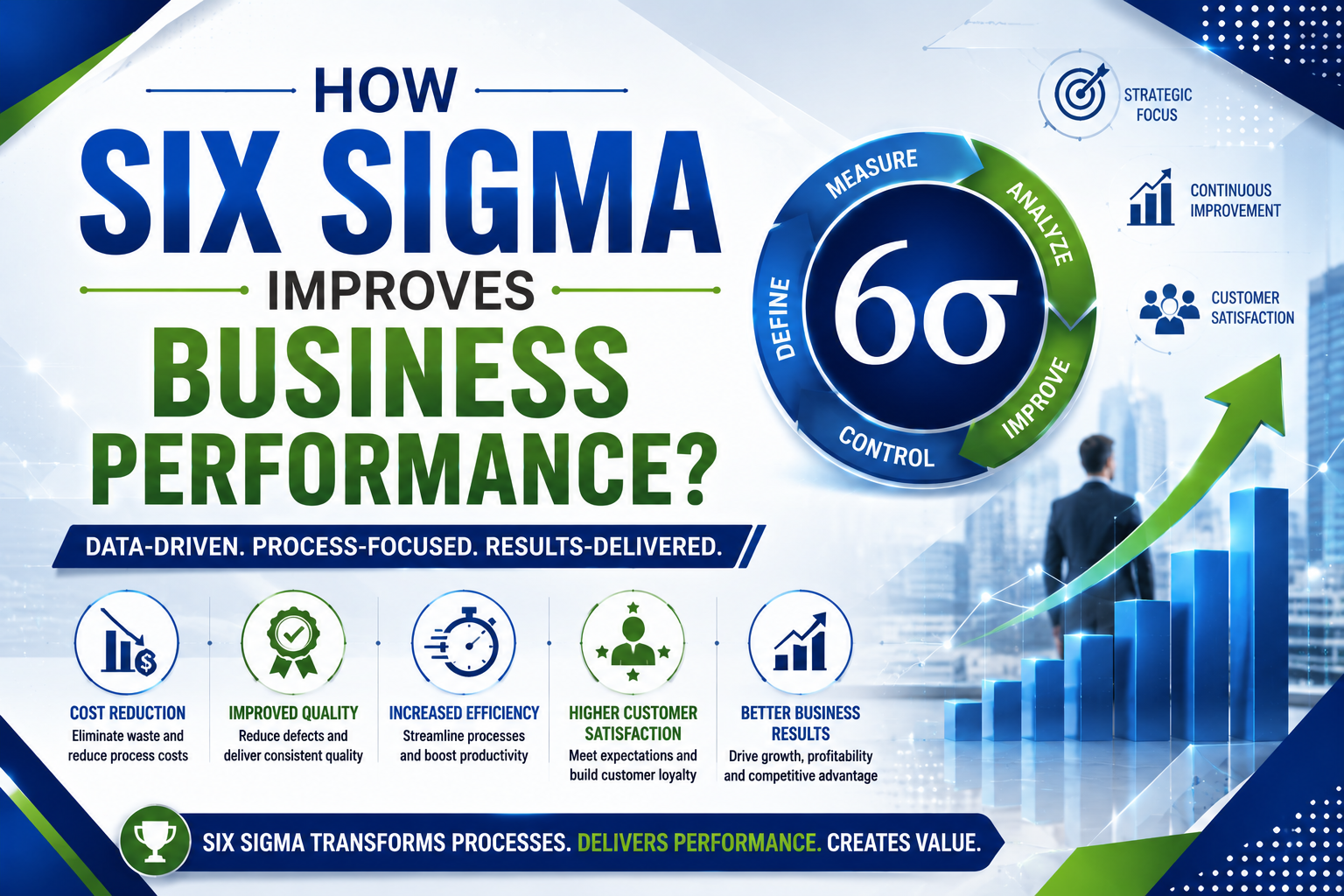
In today’s competitive marketplace, businesses are constantly searching for ways to enhance their performance and streamline operations. One powerful methodology that has gained significant traction is Six Sigma. This approach not only focuses on process improvement strategies but also emphasizes quality and efficiency, contributing to overall operational excellence. In this blog, we will delve into the benefits of Six Sigma and how it can lead to substantial cost reduction and improved business processes for organizations in India.
Understanding Six Sigma
Six Sigma is a data-driven methodology that aims to improve the quality of a company’s output by identifying and removing the causes of defects and minimizing variability in manufacturing and business processes. Developed by Motorola in the 1980s, this system has evolved into a comprehensive business improvement method used by organizations worldwide.
The Core Principles of Six Sigma
At its core, Six Sigma is built on five key principles, often referred to as DMAIC:
- Define: Clearly outline the problem and project goals.
- Measure: Collect data and measure current performance.
- Analyze: Identify root causes of defects and issues.
- Improve: Implement solutions to address root causes.
- Control: Monitor improvements to ensure sustained success.
Six Sigma Benefits for Businesses
Implementing Six Sigma can yield a plethora of benefits for businesses across various sectors. Let’s explore some of the most significant advantages:
1. Enhanced Quality Control
One of the primary Six Sigma benefits is its focus on quality improvement. By utilizing statistical methods, organizations can pinpoint defects and variations in processes. This leads to fewer errors, higher quality products, and improved customer satisfaction.
2. Cost Reduction
By identifying inefficiencies and eliminating waste, Six Sigma can lead to substantial cost reduction. Companies can save money on production costs, rework, and scrap. In the long run, these savings contribute to a healthier bottom line.
3. Improved Customer Satisfaction
When businesses implement Six Sigma, they often see a direct correlation between quality improvements and customer satisfaction. Satisfied customers are more likely to become repeat buyers, enhancing brand loyalty and driving revenue growth.
4. Streamlined Processes
Six Sigma emphasizes systematic process improvement. By analyzing workflows and eliminating bottlenecks, organizations can achieve greater efficiency. This not only accelerates production times but also enhances overall productivity.
5. Employee Engagement
Six Sigma encourages a culture of continuous improvement and collaboration. Employees are trained in Six Sigma methodologies, empowering them to identify issues and propose solutions. This engagement boosts morale and fosters a sense of ownership among the workforce.
6. Data-Driven Decision Making
With its foundation in data analysis, Six Sigma promotes informed decision-making. Businesses can leverage data to understand trends, identify areas for improvement, and make strategic choices that drive success.
Key Process Improvement Strategies with Six Sigma
To fully harness the benefits of Six Sigma, organizations should adopt specific process improvement strategies. Here are some effective strategies to consider:
1. Training and Certification
Investing in Six Sigma training for employees is crucial. Certification programs, such as Green Belt and Black Belt, provide team members with the skills needed to implement Six Sigma methodologies effectively.
2. Leadership Support
Successful Six Sigma initiatives require strong support from leadership. Leaders should champion the cause, allocate resources, and promote a culture of continuous improvement within the organization.
3. Data Collection and Analysis
Effective data collection methods are essential for Six Sigma. Businesses should utilize tools like surveys, process mapping, and statistical software to gather relevant data for analysis.
4. Cross-Functional Teams
Establishing cross-functional teams can enhance collaboration and ensure diverse perspectives are considered during problem-solving sessions. This approach leads to more comprehensive solutions.
5. Continuous Improvement Culture
Six Sigma is not a one-time initiative but a continuous journey. Organizations should foster a culture that encourages ongoing evaluation and enhancement of processes, ensuring that improvements are sustained over time.
Real-Life Examples of Six Sigma in Action
Numerous organizations in India and around the world have successfully implemented Six Sigma, reaping its benefits. Here are a few noteworthy examples:
1. Tata Motors
Tata Motors adopted Six Sigma to enhance its manufacturing processes. By focusing on quality improvement, they successfully reduced defects, leading to a significant increase in customer satisfaction and a decrease in production costs.
2. Wipro
Wipro, a leading IT services company, implemented Six Sigma to improve service delivery. The result was enhanced operational efficiency and reduced turnaround times, ultimately improving client satisfaction.
FAQs about Six Sigma
What industries benefit from Six Sigma?
Six Sigma can be applied in various industries, including manufacturing, healthcare, finance, and IT. Any organization looking to improve quality and efficiency can benefit from this methodology.
How long does it take to implement Six Sigma?
The time required to implement Six Sigma varies depending on the organization’s size, complexity, and commitment. Small projects might take a few months, while larger initiatives could span several years.
Is Six Sigma only for large companies?
No, Six Sigma is suitable for businesses of all sizes. Small and medium enterprises can leverage its principles to enhance efficiency and quality, ultimately driving growth.
What is the cost of Six Sigma training?
The cost of Six Sigma training can vary widely based on the certification level and training provider. It is an investment that often pays off through the efficiency gains and cost reductions achieved.
Conclusion
In conclusion, Six Sigma is a powerful tool for businesses seeking to improve their performance and achieve operational excellence. By embracing this quality improvement system, organizations can enjoy enhanced quality control, significant cost reduction, and improved customer satisfaction. By implementing effective process improvement strategies and fostering a culture of continuous improvement, businesses can position themselves for long-term success.
If your organization is ready to embark on the Six Sigma journey, now is the time to take action. Invest in training, engage your employees, and start making data-driven decisions that will propel your business forward. Don't hesitate to reach out for more insights and guidance on how Six Sigma can transform your operations!
Call to Action: Ready to enhance your business performance with Six Sigma? Contact us today to learn more about our training programs and consulting services!




Leave a Comment