
 Quality Management



















 IT Service Management



 Project Management



 Agile Management



 Web Development



 Cloud Computing


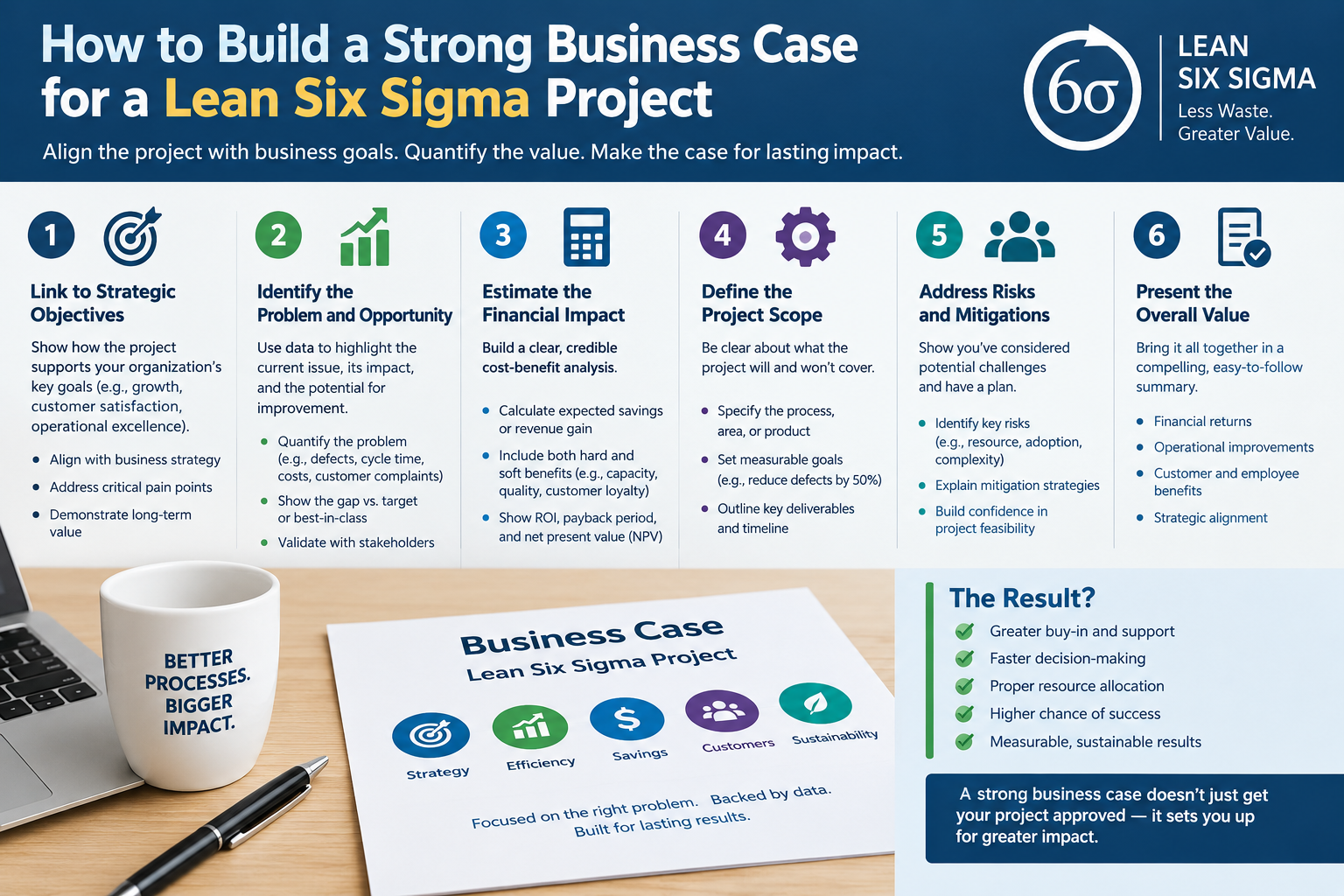
In today’s competitive landscape, organizations in India are constantly seeking innovative ways to enhance their operational efficiency and customer satisfaction. One of the tried and tested methodologies that has gained prominence is Lean Six Sigma. However, before embarking on a Lean Six Sigma project, it’s essential to develop a robust six sigma business case that justifies the investment and outlines the expected benefits. In this blog, we will explore how to create a compelling business case for a Lean Six Sigma project, focusing on key elements such as project justification, process improvement ROI, and the overall benefits of Six Sigma initiatives.
Understanding Lean Six Sigma
Lean Six Sigma fuses two powerful methodologies—Lean, which aims to reduce waste and improve flow, and Six Sigma, which focuses on reducing variation and improving quality. When implemented effectively, Lean Six Sigma can lead to significant improvements in business processes, resulting in increased profitability and customer satisfaction.
Why You Need a Strong Business Case
Before diving into a Lean Six Sigma project, creating a strong business case is crucial for several reasons:
- Secures Buy-In: A well-articulated business case helps in securing buy-in from stakeholders and decision-makers.
- Guides Project Scope: It sets the tone for the project, defining its objectives and scope.
- Measures ROI: A clear business case allows you to measure the process improvement ROI and track the project's success.
Components of a Strong Lean Six Sigma Business Case
To construct a compelling business case for your Lean Six Sigma project, consider the following key components:
1. Problem Statement
Your business case should begin with a clear and concise problem statement. Identify the specific issues you aim to address through the Lean Six Sigma project. Use data and metrics to quantify the problem, as this will strengthen your justification.
2. Project Justification
In this section, outline why the project is necessary. Discuss the current challenges and how they impact operational efficiency, quality, and customer satisfaction. Highlight the potential consequences of not addressing these issues. This is where the lean six sigma project justification comes into play, emphasizing the urgency and importance of the project.
3. Goals and Objectives
Clearly define the goals and objectives of the project. Use SMART criteria (Specific, Measurable, Achievable, Relevant, Time-bound) to articulate what success looks like. This will provide clarity and direction throughout the project lifecycle.
4. Proposed Solutions
Outline the proposed Lean Six Sigma solutions that will address the identified problems. Discuss how these solutions will be implemented and the methodologies that will be employed. Including a high-level roadmap can also be beneficial.
5. Expected Benefits
One of the most critical aspects of your business case is to highlight the expected benefits. Discuss how the project will lead to improved operational efficiency, reduced costs, enhanced customer satisfaction, and ultimately, increased profitability. Specify the tangible and intangible benefits, as both are important for stakeholder buy-in. This section emphasizes the six sigma project benefits that your organization can expect.
6. Cost Analysis
Provide a detailed cost analysis that outlines the financial implications of the project. Include costs related to resources, training, and implementation. This should be matched against the expected benefits to present a clear picture of the project’s potential process improvement ROI.
7. Risk Assessment
No project is without risks. Conduct a risk assessment to identify potential challenges that could arise during implementation. Outline mitigation strategies to address these risks, ensuring stakeholders feel confident in your project management capabilities.
8. Implementation Plan
Include a brief implementation plan that outlines the key phases of the project, timelines, and responsible parties. This will help stakeholders visualize the project’s flow and understand their involvement.
Crafting the Improvement Project Proposal
Once you have gathered all the necessary information, it’s time to compile it into a coherent improvement project proposal. Your proposal should be structured and easy to read, with a logical flow from one section to the next. Use visuals such as charts and graphs to support your data and make your case more compelling.
FAQs
1. What is the primary goal of a Lean Six Sigma project?
The primary goal of a Lean Six Sigma project is to improve process efficiency by eliminating waste and reducing variation, which ultimately leads to enhanced quality and customer satisfaction.
2. How do you measure the success of a Lean Six Sigma project?
Success can be measured through various metrics, including cost savings, cycle time reduction, improved customer satisfaction scores, and overall process efficiency.
3. Can small businesses benefit from Lean Six Sigma?
Absolutely! Lean Six Sigma is not limited to large organizations. Small businesses can also implement these methodologies to streamline processes and improve their bottom line.
4. What are some common challenges in implementing Lean Six Sigma?
Common challenges include resistance to change, lack of training, insufficient leadership support, and unclear project objectives. Addressing these challenges upfront can lead to a more successful implementation.
Conclusion
Building a strong business case for your Lean Six Sigma project is essential for securing buy-in and ensuring successful implementation. By following the outlined components and addressing potential challenges, you can create a compelling proposal that highlights the importance of process improvement in your organization. Remember, a well-justified project not only drives operational efficiency but also contributes to long-term success and competitiveness.
Are you ready to take the next step in enhancing your business processes? Contact us today to learn more about how we can help you implement a Lean Six Sigma project that delivers real results!



Leave a Comment