
 Quality Management


















 IT Service Management



 Project Management


 Agile Management



 Web Development


 Cloud Computing
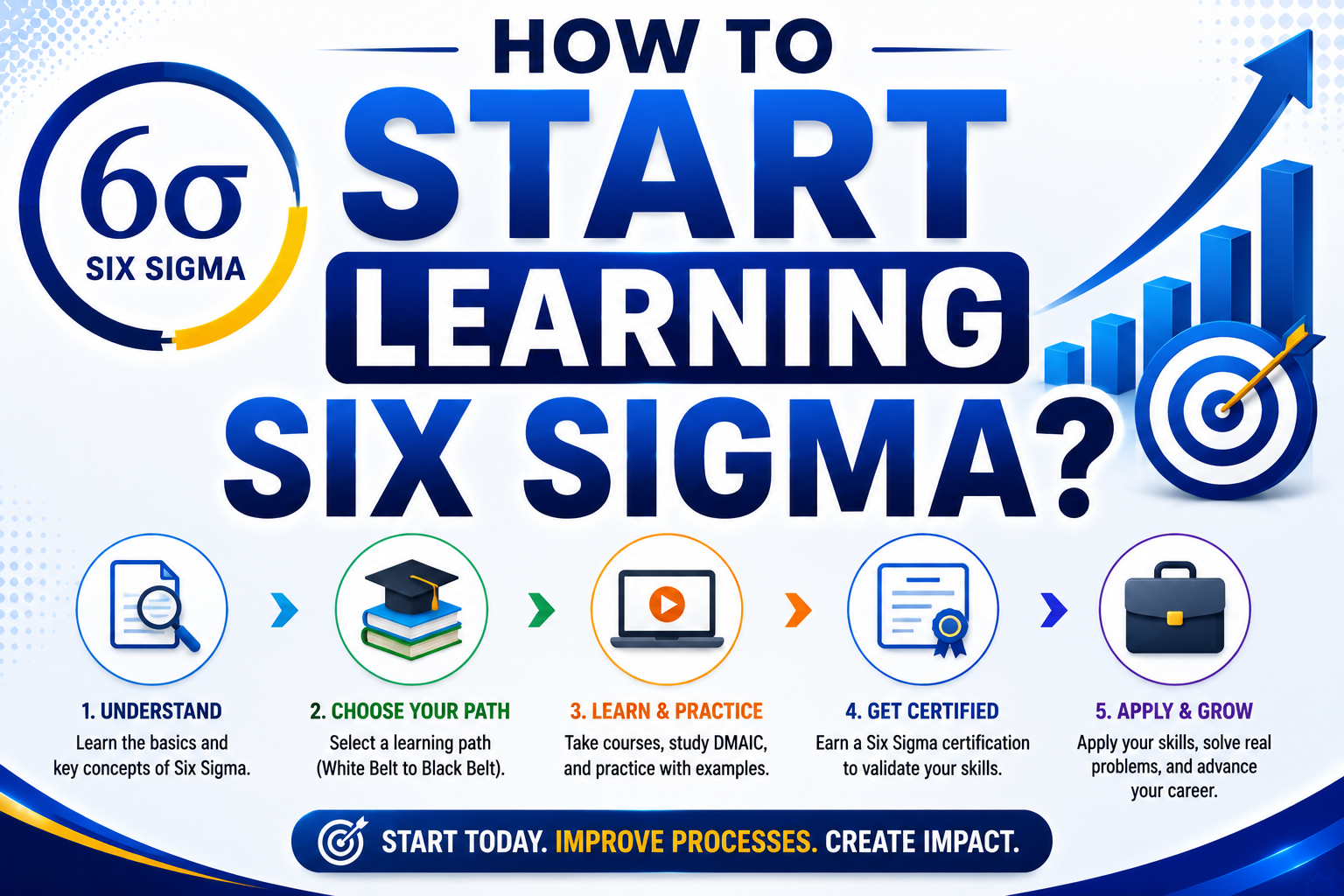
If you're interested in quality management and process improvement, you've likely come across Six Sigma. But how do you start learning Six Sigma and make it a part of your professional skill set? In this guide, we'll take a deep dive into the essentials of Six Sigma, covering everything from beginner courses to a detailed Six Sigma roadmap, tailored for an Indian audience.
What is Six Sigma?
Six Sigma is a set of techniques and tools for process improvement. It was originally developed by Motorola in the 1980s and has since been adopted by many organizations worldwide. The primary goal of Six Sigma is to reduce defects and improve the quality of processes, products, and services, leading to increased customer satisfaction.
Why Learn Six Sigma?
Six Sigma is not just for quality professionals; it can benefit anyone looking to enhance their skills in process management. Here are some reasons why learning Six Sigma is a great investment:
- Career Advancement: Many organizations, including multinational companies in India, value Six Sigma certification, and it can significantly enhance your job prospects.
- Improved Problem-Solving Skills: Learning Six Sigma equips you with analytical and problem-solving skills that are invaluable in any industry.
- Increased Efficiency: Understanding Six Sigma principles can help you streamline processes and improve operational efficiency.
How to Learn Six Sigma: A Step-by-Step Approach
Learning Six Sigma may seem daunting, but with a structured approach, you can master it effectively. Here's a roadmap to guide you through the process:
Step 1: Understand the Basics of Six Sigma
Before diving into courses, it's essential to familiarize yourself with Six Sigma concepts and terminology. Here are some key terms to know:
- DMAIC: This is the core process of Six Sigma, which stands for Define, Measure, Analyze, Improve, and Control.
- Defects: Any instance where a product or service fails to meet customer expectations.
- Process Capability: The ability of a process to produce output within specification limits.
Step 2: Enroll in a Beginner Six Sigma Course
The next step in your Six Sigma journey is to enroll in a beginner Six Sigma course. Here are some options to consider:
- Online Courses: Platforms like Coursera, Udemy, and LinkedIn Learning offer comprehensive beginner Six Sigma courses. These are often self-paced and come with various resources to aid your learning.
- Local Training Institutes: Numerous institutions in India, such as the Indian Statistical Institute and various management institutes, offer classroom-based training, which can be beneficial for those who prefer face-to-face learning.
Step 3: Get Certified
Obtaining a Six Sigma certification can enhance your credibility and highlight your commitment to quality improvement. The most recognized certifications are:
- Yellow Belt: A great starting point for beginners, focusing on the fundamentals of Six Sigma.
- Green Belt: Suitable for those who want to take on more responsibility in improvement projects.
- Black Belt: This certification is for individuals who wish to lead Six Sigma projects and mentor others.
Step 4: Practical Application
Once you've gained a foundational understanding and obtained a certification, it's time to put your knowledge into practice. Look for opportunities within your organization to apply Six Sigma methodologies. This could involve:
- Participating in Projects: Join teams focused on quality improvement or process optimization.
- Conducting Workshops: Share your knowledge with colleagues to reinforce your learning and gain practical insights.
Step 5: Continuous Learning
Six Sigma is an ever-evolving field. Consider joining professional organizations, attending seminars, and reading books on Six Sigma to stay updated with the latest trends and best practices. Networking with other professionals can provide valuable insights and opportunities for collaboration.
Six Sigma Roadmap: Your Path to Mastery
A Six Sigma roadmap will help you visualize your learning journey. Here's a simple roadmap to guide your progression:
- Foundation Level: Start with basic courses, understand Six Sigma principles, and acquire a Yellow Belt certification.
- Intermediate Level: Enroll in Green Belt courses, work on real-life projects, and seek mentorship from experienced professionals.
- Advanced Level: Pursue Black Belt certification, lead projects, and share your expertise with others.
- Expert Level: Consider Master Black Belt certification and explore specialized areas of Six Sigma.
Frequently Asked Questions (FAQs)
1. How long does it take to learn Six Sigma?
The time it takes to learn Six Sigma varies based on your commitment and the course you choose. Typically, a beginner course can range from a few weeks to a couple of months.
2. Is Six Sigma relevant in India?
Absolutely! Many organizations in India, from manufacturing to service sectors, are adopting Six Sigma methodologies to improve their processes and reduce costs.
3. Can I learn Six Sigma for free?
While many courses come with a fee, there are several free resources available online, including articles, webinars, and videos that can help you understand the basics of Six Sigma.
4. What is the difference between Green Belt and Black Belt certifications?
Green Belt certification focuses on the application of Six Sigma tools and methodologies in projects, while Black Belt certification covers advanced concepts and prepares you to lead Six Sigma projects and mentor others.
5. Are there job opportunities for Six Sigma professionals in India?
Yes, there is a growing demand for Six Sigma professionals in various industries, including manufacturing, IT, healthcare, and finance. Organizations are increasingly looking for certified experts to lead their process improvement initiatives.
Conclusion
Learning Six Sigma is a valuable investment for anyone looking to enhance their career and contribute to quality improvement in their organization. By following the structured roadmap outlined in this guide, you can effectively navigate your way through the learning process, from beginner courses to advanced certifications.
If you're ready to embark on your Six Sigma journey, consider enrolling in a beginner Six Sigma course today! Take the first step towards mastering the art of process improvement and watch your career soar.
Call to Action: Start your Six Sigma learning today! Check out our recommended beginner Six Sigma courses and kickstart your journey towards becoming an expert in quality management.



Leave a Comment