
 Quality Management



















 IT Service Management



 Project Management



 Agile Management




 Web Development



 Cloud Computing


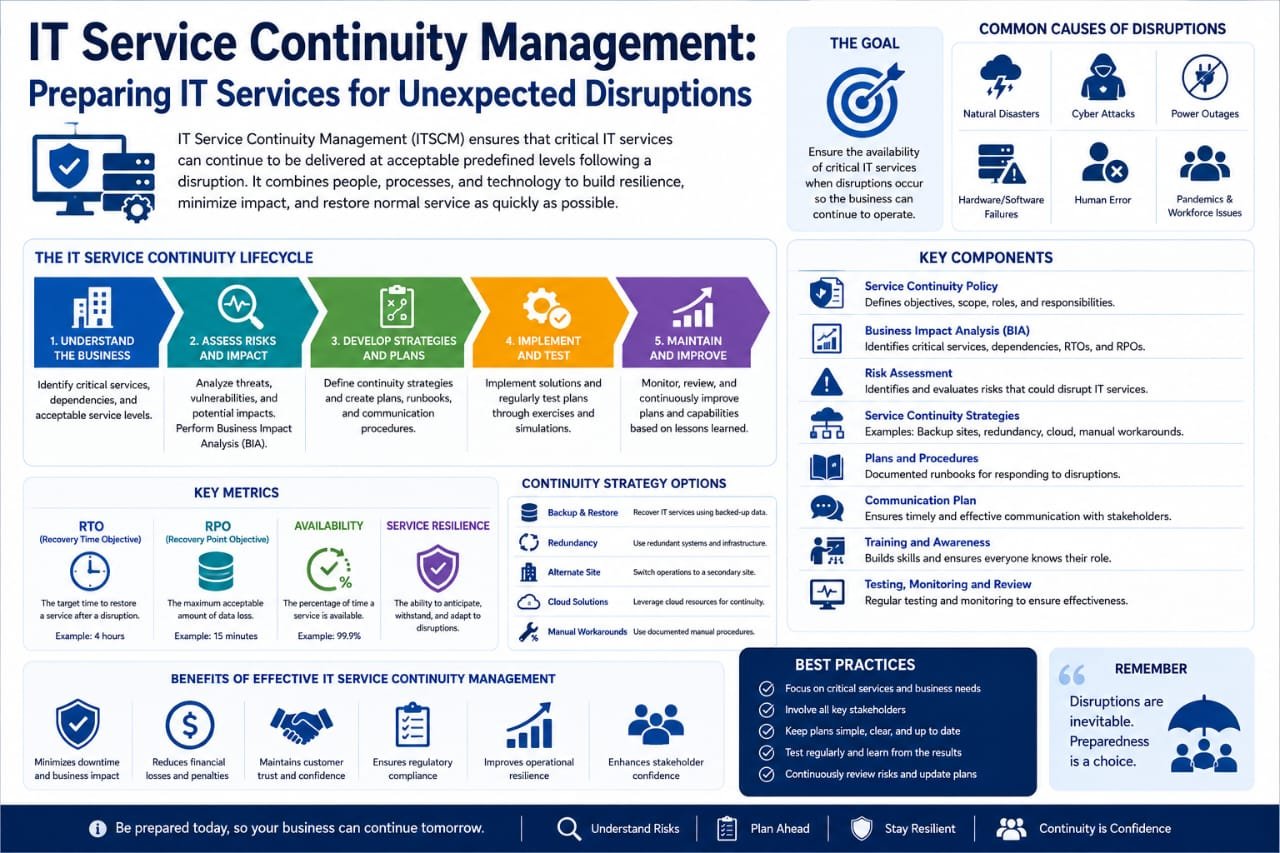
In today's fast-paced digital world, organizations rely heavily on IT services to drive their operations. However, unexpected disruptions—be it due to natural disasters, cyber-attacks, or system failures—can severely impact business continuity. This is where IT Service Continuity Management (ITSCM) comes into play, ensuring that your IT services remain operational, even in the face of adversity.
Understanding IT Service Continuity Management
IT Service Continuity Management (ITSCM) is a crucial component of IT service management that focuses on maintaining and restoring IT services in the event of a disruption. Drawing from the ITIL (Information Technology Infrastructure Library) framework, ITSCM integrates with other IT service management processes to provide a comprehensive approach to risk management and disaster recovery.
The Importance of ITSCM in Today’s Business Landscape
With the rise of digital transformation, businesses in India are increasingly dependent on their IT infrastructure. A single disruption can lead to significant financial losses, tarnished reputations, and decreased customer trust. Thus, implementing effective ITSCM strategies is vital for:
- Minimizing Downtime: Efficient ITSCM processes ensure that services can be restored quickly, minimizing the impact on business operations.
- Enhancing IT Service Resilience: By identifying potential risks and preparing for them, organizations can build resilience into their IT services.
- Ensuring Compliance: Many industries have regulatory requirements that mandate robust disaster recovery and business continuity plans.
Core Components of IT Service Continuity Management
ITSCM encompasses several key components that work together to create a cohesive strategy for managing IT service disruptions:
1. Business Impact Analysis (BIA)
The first step in ITSCM is conducting a Business Impact Analysis. This process identifies critical IT services and assesses the potential impact of their disruption. By understanding which services are vital to operations, organizations can prioritize their recovery efforts effectively.
2. Risk Assessment
Following the BIA, a Risk Assessment is performed to identify potential threats to IT services. This includes evaluating internal and external risks—such as natural disasters, cybersecurity threats, and human errors. Understanding these risks allows organizations to develop appropriate mitigation strategies.
3. Continuity Strategy Development
With a clear understanding of the risks, organizations can formulate a Continuity Strategy. This strategy outlines how IT services will be maintained or restored during a disruption. It includes details on backup solutions, alternative systems, and resource allocation.
4. Implementation of IT Disaster Recovery (DR) Plans
IT Disaster Recovery is a vital aspect of ITSCM. Organizations must implement DR plans that specify how to recover IT services and data after a disruption. This may involve data backups, cloud solutions, and off-site storage to ensure that critical information is secure and accessible in times of crisis.
5. Testing and Maintenance
Regular testing and maintenance of the ITSCM plan are essential to ensure its effectiveness. Conducting drills and simulations allows organizations to identify potential gaps and make necessary adjustments to their strategies.
Implementing IT Service Resilience
To achieve true IT service resilience, organizations must go beyond just having a plan. Here are some strategies to enhance IT service resilience:
1. Embrace Redundancy
Building redundancy into your IT infrastructure can significantly enhance resilience. This includes having backup systems, alternative data centers, and failover solutions to ensure continuity during outages.
2. Invest in Training and Awareness
Employees play a crucial role in maintaining IT service continuity. Investing in regular training and awareness programs ensures that staff are equipped to respond effectively during disruptions.
3. Leverage Cloud Solutions
Cloud computing offers flexibility and scalability, making it an ideal solution for enhancing IT service resilience. By utilizing cloud services, organizations can ensure that critical applications and data are accessible from anywhere, even during local disruptions.
4. Collaborate with IT Service Providers
Partnering with reliable IT service providers can enhance your organization’s ITSCM efforts. These providers can offer expertise, resources, and support to develop and maintain robust continuity plans.
FAQs About IT Service Continuity Management
What is IT Service Continuity Management?
IT Service Continuity Management (ITSCM) is a process that ensures the continued delivery of IT services during and after a disruption, aiming to minimize downtime and maintain business operations.
How does ITIL relate to IT Service Continuity Management?
ITIL (Information Technology Infrastructure Library) provides a framework for IT service management, which includes ITSCM as a key process for managing and restoring IT services during disruptions.
What are the key benefits of implementing ITSCM?
Implementing ITSCM helps minimize downtime, enhances service resilience, ensures compliance with regulations, and protects the organization’s reputation and financial stability.
How often should ITSCM plans be tested?
ITSCM plans should be tested regularly—ideally at least once a year—to ensure their effectiveness and to identify areas for improvement.
Conclusion
In a world where disruptions are inevitable, IT Service Continuity Management is not just a luxury—it's a necessity. By proactively preparing for unexpected events, organizations can safeguard their IT services, protect their reputation, and maintain customer trust. With a focus on resilience and a well-structured ITSCM strategy, businesses in India can navigate the challenges of the digital landscape with confidence.
Call to Action
If your organization is yet to establish an effective IT Service Continuity Management plan, now is the time to act. Reach out to our expert team today for a consultation on how to enhance your IT service resilience and ensure business continuity in the face of unexpected disruptions.



Leave a Comment