
 Quality Management



















 IT Service Management



 Project Management



 Agile Management




 Web Development



 Cloud Computing


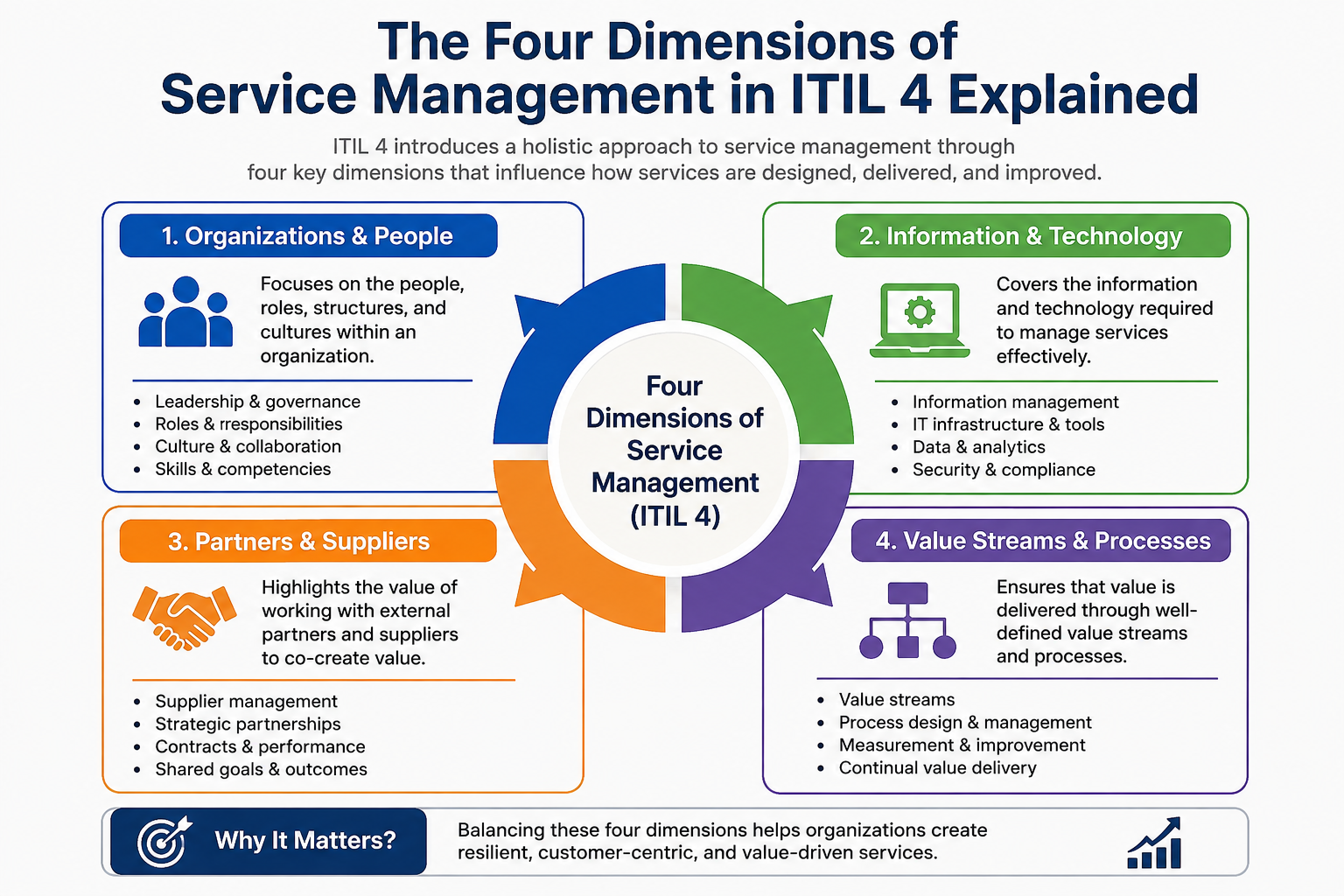
In today's fast-paced digital world, organizations are continually seeking ways to enhance their service management processes to meet customer expectations effectively. One of the most impactful frameworks for achieving this is the ITIL framework. The latest version, ITIL 4, introduces a set of ITIL guiding principles that provide a foundation for organizations to improve their IT service management (ITSM) practices. In this blog post, we will explore the ITIL 4 principles and discuss how to apply them in real organizations, especially within the Indian context.
Understanding ITIL 4 Guiding Principles
The ITIL guiding principles serve as universal recommendations that can help organizations adopt a service management approach. They are designed to be flexible and adaptable, making them applicable across different sectors and industries. The seven principles of ITIL 4 are:
- Focus on Value
- Start Where You Are
- Progress Iteratively with Feedback
- Collaborate and Promote Visibility
- Think and Work Holistically
- Keep It Simple and Practical
- Optimize and Automate
Applying ITIL 4 Principles in Real Organizations
1. Focus on Value
The first principle emphasizes the importance of delivering value to customers. Organizations should understand what value means for their stakeholders and align their services accordingly. In India, where diverse industries operate, understanding customer needs can vary greatly. Companies should conduct regular surveys and engage in conversations with clients to identify their expectations. By doing so, businesses can tailor their services to enhance customer satisfaction.
2. Start Where You Are
Before implementing any new initiatives, it's crucial to assess the current state of your ITSM processes. This principle encourages organizations to analyze existing resources and capabilities. For Indian organizations, this might involve conducting a maturity assessment to identify strengths and weaknesses. By leveraging existing assets, companies can ensure a smoother transition to improved service management practices.
3. Progress Iteratively with Feedback
Implementing changes in a phased manner allows organizations to gather feedback and make necessary adjustments. This iterative approach is particularly beneficial in dynamic markets like India, where customer preferences may shift rapidly. By piloting new services or processes on a small scale, businesses can evaluate their effectiveness and make informed decisions before full-scale implementation.
4. Collaborate and Promote Visibility
Collaboration is key to successful ITSM implementation. Encourage cross-functional teams to work together, breaking down silos within the organization. In the Indian context, where hierarchical structures might be prevalent, fostering a culture of collaboration can enhance communication and transparency. Utilizing collaboration tools and platforms can further promote visibility across teams, ensuring everyone is aligned towards common goals.
5. Think and Work Holistically
The holistic approach emphasizes considering the entire organization when making changes. IT services should not be viewed in isolation from other business functions. In India, where many organizations operate in a complex ecosystem, it is vital to understand how various components interact. Regularly reviewing interdependencies can help identify opportunities for improvement and streamline processes.
6. Keep It Simple and Practical
Simplicity is often overlooked in ITSM processes. The principle of keeping it simple encourages organizations to avoid unnecessary complexity. In the Indian context, where resources may be limited, simplifying processes can lead to significant efficiency gains. Focus on the essentials and eliminate redundant steps to enhance the overall service delivery.
7. Optimize and Automate
Automation can significantly enhance efficiency and reduce human error. The last guiding principle encourages organizations to identify repetitive tasks that can be automated. In India, where labor costs can be high, automating certain processes can lead to cost savings and improved service quality. However, it's essential to strike a balance between automation and human intervention to maintain a personal touch in service delivery.
Challenges in Implementing ITIL Principles in India
While the ITIL implementation is a strategic move for many organizations, there are challenges that may arise, particularly in the Indian context. Some of these challenges include:
- Cultural Resistance: Organizations may face resistance from employees who are accustomed to traditional practices.
- Resource Constraints: Limited resources can hinder the ability to implement ITIL practices effectively.
- Need for Training: Staff may require training to adapt to new processes and technologies.
Best Practices for ITIL Implementation
To overcome these challenges, organizations can adopt several ITSM best practices:
- Engage Leadership: Ensure that leadership supports the ITIL initiative and communicates its importance to the organization.
- Provide Training: Invest in training programs to equip employees with the necessary skills to implement ITIL practices.
- Start Small: Begin with pilot projects to demonstrate the value of ITIL principles before scaling up.
- Measure Success: Establish key performance indicators (KPIs) to track progress and identify areas for improvement.
Conclusion
The ITIL guiding principles provide a robust framework for organizations looking to enhance their IT service management practices. By focusing on value, collaboration, and simplicity, Indian organizations can navigate the complexities of service management effectively. Embracing these principles not only leads to improved service delivery but also fosters a culture of continuous improvement.
FAQs
What are the ITIL 4 principles?
The ITIL 4 principles are: Focus on Value, Start Where You Are, Progress Iteratively with Feedback, Collaborate and Promote Visibility, Think and Work Holistically, Keep It Simple and Practical, and Optimize and Automate.
How can organizations apply ITIL principles?
Organizations can apply ITIL principles by assessing their current processes, gathering feedback, fostering collaboration, focusing on simplicity, and leveraging automation where possible.
What challenges may arise during ITIL implementation?
Common challenges include cultural resistance, resource constraints, and the need for staff training.
What are some best practices for successful ITIL implementation?
Best practices include engaging leadership, providing training, starting small with pilot projects, and measuring success through KPIs.
Call to Action
If your organization is looking to enhance its IT service management practices through the ITIL framework, now is the time to take action! Start by assessing your current processes and considering how the ITIL 4 principles can be applied in your context. For expert guidance and support in implementing ITIL practices, contact us today!





Leave a Comment