
 Quality Management



















 IT Service Management



 Project Management



 Agile Management




 Web Development



 Cloud Computing


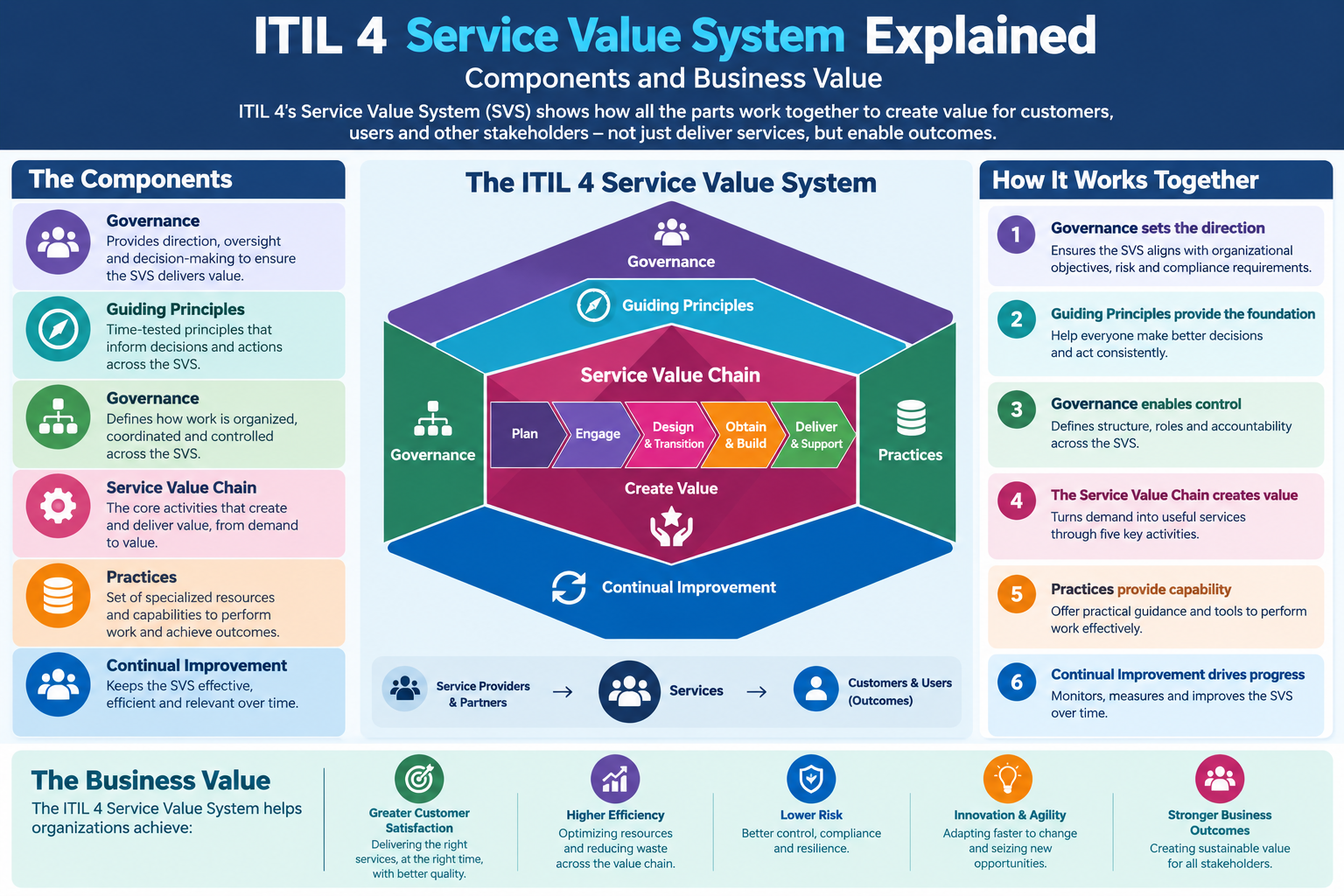
In today's fast-paced digital landscape, businesses strive for efficiency and excellence in their IT service management (ITSM). The ITIL 4 Service Value System (SVS) emerges as a crucial framework that integrates various components to deliver maximum value. This blog will explore the components of the ITIL 4 SVS, its significance in enhancing business value, and how it aligns with the broader ITIL framework.
What is the ITIL 4 Service Value System?
The ITIL 4 Service Value System represents a holistic approach to service management, focusing on the creation of value through services. It is a comprehensive framework that connects various elements of service management, ensuring that organizations can effectively manage their service offerings and deliver value to customers.
At its core, the ITIL 4 SVS emphasizes the importance of collaboration, integration, and a customer-centric approach. It encourages organizations to look beyond the individual processes and consider how various components interact to create a seamless value delivery system.
Key Components of the ITIL 4 Service Value System
The ITIL 4 SVS comprises several interconnected components that work together to facilitate value creation. Here are the primary components:
1. The Service Value Chain
The Service Value Chain is the heart of the ITIL 4 SVS. It consists of a series of interconnected activities that organizations undertake to deliver services and create value. The activities include:
- Plan: Define the organization’s objectives and the services that support them.
- Improve: Continually enhance services, processes, and value delivery.
- Engage: Establish strong relationships with stakeholders and understand their needs.
- Design & Transition: Develop and implement new or changed services effectively.
- Obtain/Build: Acquire the necessary resources to deliver services.
- Deliver & Support: Ensure that services are delivered and supported in line with stakeholder expectations.
2. The ITIL Practices
ITIL practices are the organizational resources and capabilities needed to perform specific activities within the service value chain. These practices encompass various aspects of IT service management, such as:
- Change Control: Manage changes to minimize disruption.
- Incident Management: Restore normal service operations quickly.
- Problem Management: Identify and manage the root causes of incidents.
- Service Desk: Provide a single point of contact for users.
In total, ITIL 4 identifies 34 practices to support organizations in their service management endeavors.
3. The Guiding Principles
The guiding principles of ITIL 4 help organizations make decisions and drive actions. These principles include:
- Focus on Value: Always consider the value delivered to stakeholders.
- Start Where You Are: Leverage existing resources and processes.
- Progress Iteratively with Feedback: Make gradual improvements based on stakeholder feedback.
- Collaborate and Promote Visibility: Foster teamwork and transparency.
- Think and Work Holistically: Consider all aspects of the service delivery.
- Keep It Simple and Practical: Avoid unnecessary complexity.
- Optimize and Automate: Streamline processes and use technology to improve efficiency.
4. Governance
Governance in the ITIL 4 SVS ensures that policies and processes are aligned with the organization’s objectives. It establishes accountability and oversight, ensuring that services are delivered in a compliant and consistent manner.
5. Continual Improvement
Continual improvement is a fundamental aspect of the ITIL 4 SVS. Organizations are encouraged to assess their performance regularly, identify areas for enhancement, and implement changes to improve service quality and value delivery.
The Business Value of ITIL 4 Service Value System
The ITIL 4 Service Value System offers numerous benefits that contribute to enhanced business value:
1. Improved Service Quality
By implementing the ITIL framework, organizations can enhance the quality of their services. The structured approach to service management helps in identifying and addressing issues proactively, leading to fewer service disruptions and higher customer satisfaction.
2. Increased Efficiency
The integration of various components within the ITIL 4 SVS allows organizations to streamline their processes. By optimizing workflows and automating repetitive tasks, businesses can reduce operational costs and improve productivity.
3. Greater Customer Satisfaction
A customer-centric approach ensures that organizations are attuned to the needs of their stakeholders. By focusing on value delivery, businesses can create services that meet or exceed customer expectations, resulting in higher satisfaction and loyalty.
4. Enhanced Agility
The ITIL 4 SVS enables organizations to adapt quickly to changing market demands. The emphasis on continual improvement allows businesses to pivot and innovate, ensuring they remain competitive in a dynamic environment.
5. Better Risk Management
With effective governance and risk management practices in place, organizations can identify potential risks early on and take proactive measures to mitigate them. This minimizes the likelihood of service failures and enhances overall resilience.
FAQs About ITIL 4 Service Value System
What is the primary goal of the ITIL 4 Service Value System?
The primary goal of the ITIL 4 Service Value System is to provide a framework for organizations to create value through effective and efficient service management.
How does ITIL 4 differ from previous versions?
ITIL 4 introduces a more holistic approach, integrating practices with guiding principles and emphasizing the importance of value co-creation.
Can small businesses benefit from ITIL 4?
Yes, small businesses can benefit from adopting ITIL 4 practices to improve service delivery, enhance efficiency, and boost customer satisfaction.
Is ITIL certification necessary to implement the ITIL 4 framework?
While certification can provide valuable knowledge, it is not strictly necessary for implementation. Organizations can adopt ITIL 4 principles and practices based on their specific needs.
Conclusion
The ITIL 4 Service Value System is a transformative framework that empowers organizations to enhance their IT service management capabilities. By understanding the components of the SVS and leveraging its principles, businesses can foster a culture of continual improvement, drive value creation, and ultimately achieve their strategic objectives.
Ready to elevate your IT service management practices? Explore the possibilities with the ITIL 4 SVS and unlock new avenues for growth and success!
Call to Action
If you're interested in learning more about implementing the ITIL framework or seeking guidance on best practices for enhancing your service management approach, contact us today! Let us help you harness the full potential of ITIL 4 to drive your business forward.



Leave a Comment