
 Quality Management



















 IT Service Management



 Project Management



 Agile Management




 Web Development



 Cloud Computing


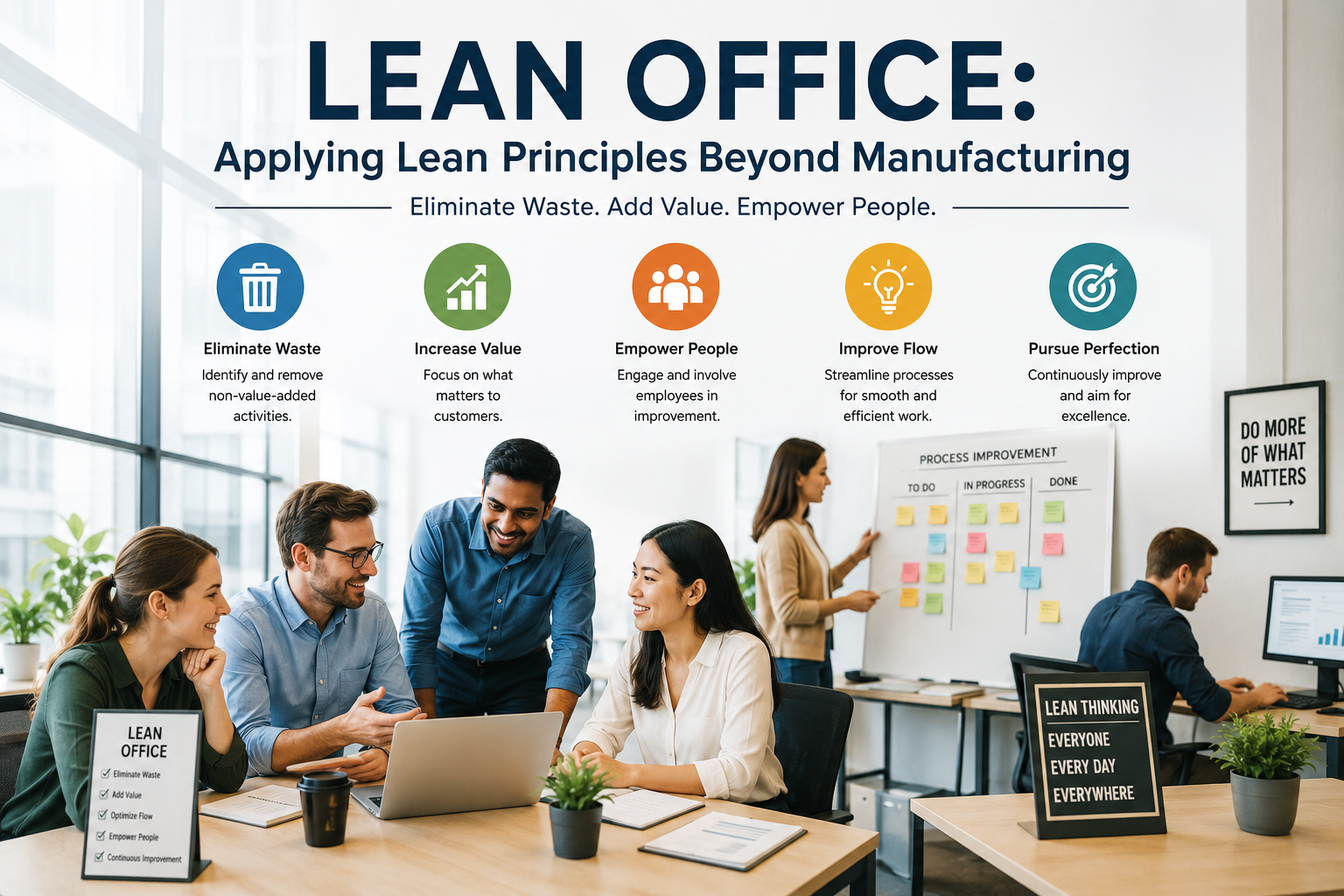
In the fast-paced world of business, efficiency is key. While lean principles have traditionally been associated with manufacturing processes, their application in office settings can lead to remarkable improvements. This blog explores how the lean office concept can revolutionize administrative processes and enhance overall business efficiency in India.
Understanding Lean Principles
Lean management is a philosophy that focuses on minimizing waste while maximizing productivity. Originally developed for manufacturing, these principles can seamlessly translate into office environments. By identifying and eliminating non-value-added activities, businesses can streamline their operations and create a more efficient workflow.
Key Lean Principles
- Value: Define what value means from the customer's perspective.
- Value Stream: Map out all the steps in the process to identify waste.
- Flow: Ensure that the process flows smoothly without interruptions.
- Pull: Produce only what is needed when it is needed.
- Perfection: Continuously improve processes to enhance efficiency.
The Benefits of a Lean Office
Applying lean principles in an office setting can lead to numerous advantages:
1. Enhanced Productivity
By focusing on office process improvement, businesses can significantly enhance productivity. Eliminating redundant tasks allows employees to concentrate on high-value activities, ultimately leading to better performance and job satisfaction.
2. Cost Reduction
Lean management practices can help organizations identify inefficiencies and reduce operational costs. Whether it’s minimizing paper usage or streamlining communication, every small improvement contributes to the bottom line.
3. Improved Quality
With lean principles, the emphasis is on continuous improvement. This practice fosters a culture of quality, ensuring that employees are always looking for ways to enhance their work processes and deliver better results.
4. Better Collaboration
Lean office environments encourage collaboration among teams. By breaking down silos and promoting open communication, organizations can foster a more cooperative atmosphere that leads to innovative solutions.
Implementing Lean Principles in Your Office
Transitioning to a lean office requires a strategic approach. Here are some practical steps to apply lean principles effectively:
1. Assess Current Processes
Begin by mapping out your current administrative processes. Identify areas where waste occurs and determine which steps add value. This assessment serves as the foundation for your office process improvement efforts.
2. Involve Your Team
Lean management is a team effort. Engage your employees in discussions about inefficiencies they observe in their work. Their insights are invaluable for identifying bottlenecks and areas for improvement.
3. Prioritize Improvements
Not all improvements will yield the same results. Prioritize changes that will have the most significant impact on business efficiency. Focus on quick wins that can motivate the team and build momentum for larger changes.
4. Train and Empower Employees
Training is crucial in fostering a lean culture. Provide employees with the knowledge and tools they need to implement lean practices effectively. Empower them to take ownership of their processes and encourage them to suggest further improvements.
5. Monitor and Adjust
Once changes are implemented, it’s essential to monitor their effectiveness. Use key performance indicators (KPIs) to track progress and make adjustments as necessary. Continuous monitoring allows for ongoing improvements.
Case Studies: Lean Office Success Stories
Several organizations in India have successfully implemented lean principles in their offices, leading to remarkable outcomes:
Case Study 1: A Financial Services Firm
A leading financial services firm adopted lean management to streamline its loan processing department. By mapping out the entire process, they identified redundancies and eliminated unnecessary paperwork. This resulted in a 30% reduction in processing time and increased customer satisfaction.
Case Study 2: An IT Company
An IT company utilized lean principles to optimize its project management processes. By fostering better communication between teams and implementing regular feedback loops, they improved project turnaround times by 25%, significantly enhancing client relationships.
Common Challenges in Lean Office Implementation
While the benefits of a lean office are substantial, organizations may encounter challenges during implementation:
1. Resistance to Change
Employees may be resistant to change due to fear of the unknown. Clear communication about the benefits and involving them in the process can help alleviate these concerns.
2. Lack of Leadership Support
For lean initiatives to succeed, they require buy-in from leadership. Leaders must actively support and participate in the transition to foster a culture of continuous improvement.
3. Inadequate Training
If employees are not adequately trained in lean principles, they may struggle to implement changes effectively. Investing in comprehensive training programs is essential.
FAQs
What is a lean office?
A lean office is an administrative environment that applies lean principles to minimize waste and enhance productivity, focusing on continuous improvement and efficiency.
How can lean principles improve office processes?
Lean principles help identify and eliminate non-value-added activities, streamline workflows, and foster a culture of continuous improvement, leading to enhanced business efficiency.
Can lean management be applied to small businesses?
Absolutely! Lean management principles are scalable and can be effectively applied in small businesses to optimize operations and reduce costs.
What are some tools used in lean office implementations?
Common tools include Value Stream Mapping, 5S (Sort, Set in order, Shine, Standardize, Sustain), and Kaizen (continuous improvement). These tools help visualize processes and drive improvements.
Conclusion
Embracing the lean office concept can lead to transformative changes in your organization. By applying lean principles to administrative processes, businesses can significantly enhance efficiency, reduce costs, and foster a culture of continuous improvement. In a competitive environment, adopting such practices is not just beneficial—it’s essential.
Call to Action
Ready to transform your office processes and enhance business efficiency? Contact us today to learn more about implementing lean management principles tailored to your organization’s needs!



Leave a Comment