
 Quality Management



















 IT Service Management



 Project Management



 Agile Management




 Web Development



 Cloud Computing


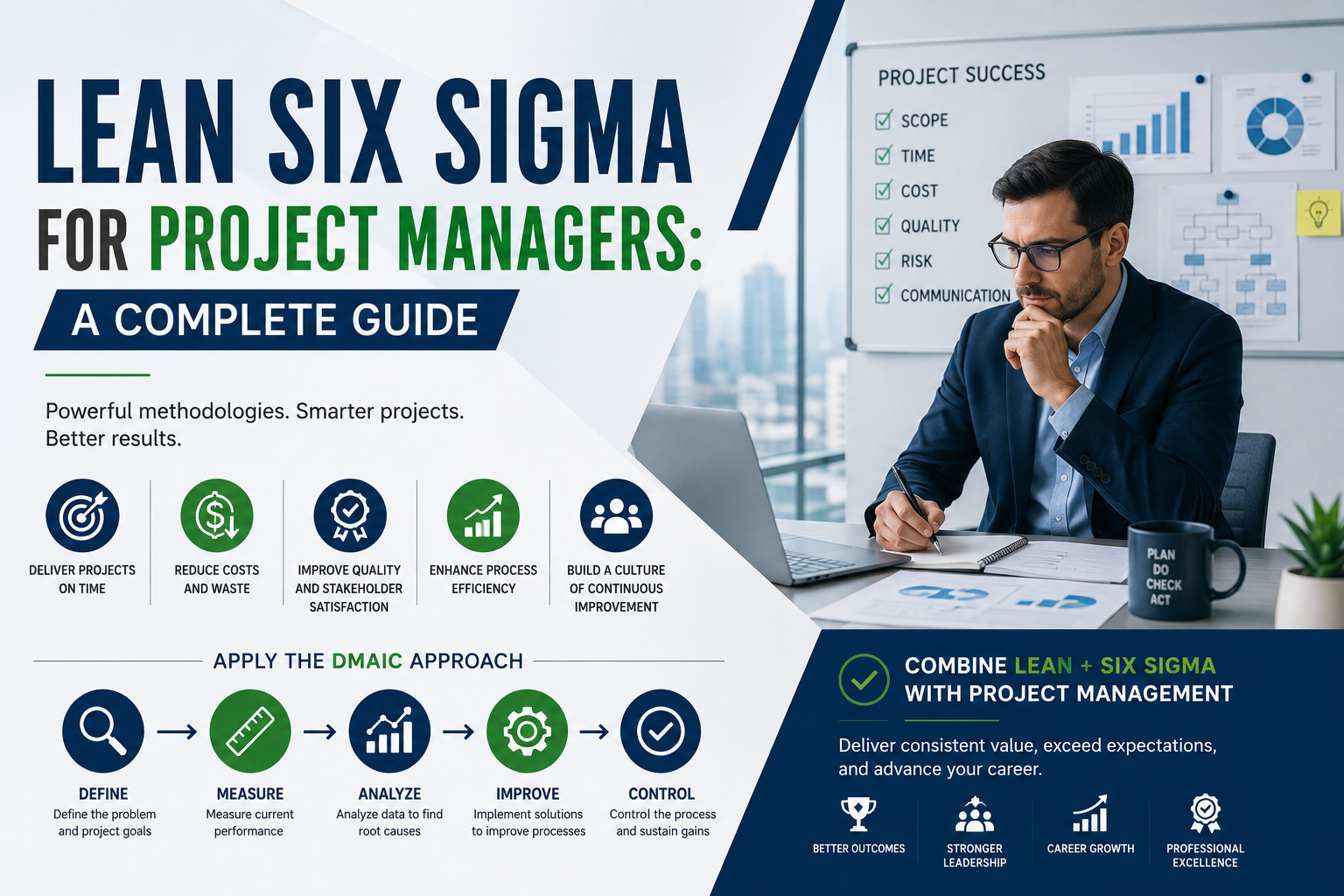
As the competitive landscape continues to evolve, project managers in India are increasingly seeking effective methodologies to enhance their project outcomes. One such methodology that has gained considerable traction is Lean Six Sigma. This comprehensive guide will delve into how Lean Six Sigma can empower project managers, highlighting project improvement techniques, process optimization projects, and project quality management.
What is Lean Six Sigma?
Lean Six Sigma is a synergistic combination of Lean manufacturing principles and Six Sigma strategies. While Lean focuses on eliminating waste and improving efficiency, Six Sigma emphasizes reducing variation and enhancing quality. Together, they provide a robust framework for project managers to streamline processes, reduce costs, and improve quality, making it an essential tool in the Indian corporate environment.
Why Lean Six Sigma for Project Managers?
For project managers, the application of Lean Six Sigma can lead to significant improvements in project quality management. Here are some reasons why adopting this methodology is crucial:
1. Enhanced Efficiency
Lean Six Sigma empowers project managers to identify inefficiencies within their processes. By utilizing project improvement techniques, they can streamline workflows, reduce cycle times, and ultimately deliver projects more swiftly, which is vital in today’s fast-paced business world.
2. Improved Quality
Incorporating Lean Six Sigma into project quality management ensures that the final deliverable meets or exceeds client expectations. By minimizing defects and variations, project managers can provide consistent quality, which is crucial for building long-term relationships with stakeholders.
3. Data-Driven Decision Making
Lean Six Sigma relies heavily on data analysis. Project managers equipped with these skills can make informed decisions based on statistical evidence rather than assumptions, leading to better project outcomes.
Key Principles of Lean Six Sigma
Understanding the core principles of Lean Six Sigma is vital for any project manager looking to implement this methodology. Here are the key principles:
1. Define
In the Define phase, project managers clearly outline the project goals, scope, and the issues that need to be addressed. This is crucial for aligning the team’s efforts with the overarching objectives of the organization.
2. Measure
The Measure phase involves collecting data related to the current process. This data serves as a benchmark for identifying areas of improvement. Project managers often employ various tools such as process mapping and performance metrics during this phase.
3. Analyze
During the Analyze phase, project managers use the data collected to identify root causes of problems. Techniques such as Fishbone diagrams or Pareto charts can be employed to visualize these issues effectively.
4. Improve
The Improve phase focuses on developing solutions to address the identified issues. Project managers can implement pilot projects to test these solutions before a full-scale rollout, ensuring that the improvements are effective and sustainable.
5. Control
Finally, the Control phase involves setting up monitoring systems to maintain the improvements made. Project managers must ensure that the processes remain within established standards to prevent regression.
Implementing Lean Six Sigma in Project Management
Now that we understand the principles, let’s explore how project managers can implement Lean Six Sigma in their projects:
1. Training and Certification
One of the first steps for project managers is to undergo Lean Six Sigma training and certification. Various institutes in India offer courses ranging from Yellow Belt to Black Belt, equipping project managers with the necessary skills.
2. Forming a Cross-Functional Team
Lean Six Sigma projects thrive on collaboration. Project managers should form cross-functional teams that include members from various departments. This diversity fosters innovative problem-solving and ensures a holistic approach to process optimization projects.
3. Project Selection
Not all projects may benefit from Lean Six Sigma. Project managers need to select projects that have clear improvement opportunities. They should focus on areas where customer satisfaction is low or where costs are excessively high.
4. Regular Reviews and Adjustments
Lean Six Sigma is not a one-time effort. Project managers must conduct regular reviews to assess the effectiveness of the implemented solutions and make adjustments as needed. Continuous improvement is a core tenet of this methodology.
Success Stories: Lean Six Sigma in Indian Industries
Several industries in India have successfully adopted Lean Six Sigma principles, leading to remarkable improvements in their operations.
1. Manufacturing Sector
Manufacturers like Tata Motors have utilized Lean Six Sigma to enhance production efficiency and reduce waste, resulting in significant cost savings and improved product quality.
2. Healthcare
The healthcare sector has also benefited from Lean Six Sigma. Hospitals such as Apollo Hospitals implemented these methodologies to streamline patient care processes, significantly improving patient satisfaction and service delivery times.
3. IT Industry
In the IT sector, companies like Infosys have embraced Lean Six Sigma to improve software development processes, resulting in reduced project cycle times and enhanced customer satisfaction.
FAQs about Lean Six Sigma for Project Managers
Q1: What are the primary benefits of Lean Six Sigma for project managers?
A1: The primary benefits include enhanced efficiency, improved quality, and data-driven decision-making, all of which lead to better project outcomes.
Q2: How long does it take to become Lean Six Sigma certified?
A2: The duration varies by certification level, but generally, it can take anywhere from a few weeks to several months, depending on the program structure.
Q3: Can Lean Six Sigma be applied to non-manufacturing sectors?
A3: Yes, Lean Six Sigma is applicable in various sectors, including healthcare, finance, and IT, as it focuses on process improvement and quality management.
Q4: Is Lean Six Sigma suitable for small projects?
A4: Absolutely! Lean Six Sigma can be tailored to fit projects of any size, making it a versatile tool for project managers.
Conclusion
Incorporating Lean Six Sigma into project management is a strategic move that can lead to significant enhancements in project quality management and process optimization projects. By understanding its principles and implementing effective project improvement techniques, project managers can achieve remarkable results. As the Indian market continues to grow and evolve, mastering Lean Six Sigma will undoubtedly provide a competitive edge.
Call to Action
If you’re ready to transform your project management approach, consider enrolling in a Lean Six Sigma course today! Equip yourself with the skills necessary to drive efficiency, enhance quality, and deliver exceptional results. Start your Lean Six Sigma journey now!



Leave a Comment