
 Quality Management



















 IT Service Management



 Project Management



 Agile Management




 Web Development



 Cloud Computing


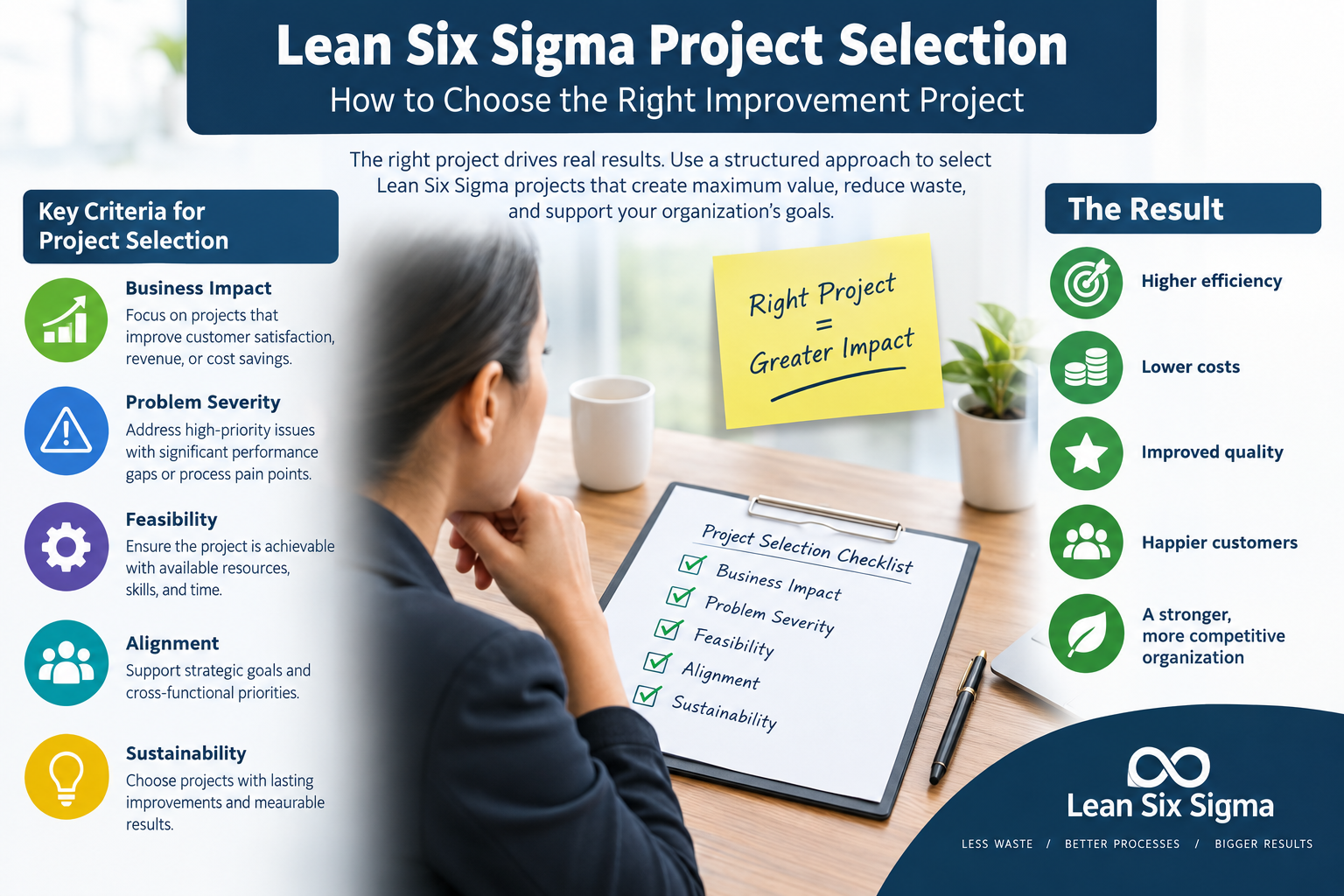
In the fast-paced business environment of India, organizations are constantly seeking ways to enhance efficiency, reduce waste, and improve overall quality. One of the most effective methodologies for achieving these goals is Lean Six Sigma. However, the first step to successful implementation is lean six sigma project selection. With numerous options available, selecting the right project can be a daunting task. In this blog, we will explore how to choose the right improvement project, ensuring that your efforts yield maximum benefits.
Understanding Lean Six Sigma
Lean Six Sigma combines the principles of Lean manufacturing, which focuses on reducing waste, and Six Sigma, which aims to improve quality by minimizing variation. This powerful methodology not only enhances operational efficiency but also drives significant cost savings. In India, where competition is fierce, adopting Lean Six Sigma can provide a substantial competitive advantage.
The Importance of Project Selection in Lean Six Sigma
Successful project selection is crucial for the success of any Lean Six Sigma initiative. A well-chosen project can lead to significant improvements, while a poorly selected project may result in wasted resources and time. Here are some reasons why improvement project selection is vital:
- Alignment with Business Goals: Projects should align with the organization's strategic objectives to ensure they contribute to overall success.
- Resource Utilization: Selecting the right project allows for optimal utilization of resources, including time, money, and manpower.
- Employee Engagement: Involving employees in meaningful projects enhances their engagement and motivation, leading to better outcomes.
Steps to Select the Right Lean Six Sigma Project
1. Identify Key Business Challenges
The first step in lean six sigma project selection is to identify the key challenges your organization faces. This could involve analyzing customer feedback, reviewing operational metrics, or conducting employee surveys. Understanding these challenges will help you pinpoint areas that require improvement.
2. Involve Stakeholders
Engaging stakeholders from various departments ensures that you consider multiple perspectives and insights. This collaboration can lead to more comprehensive project ideas. Hold brainstorming sessions to gather input from team members who will be impacted by the project.
3. Prioritize Projects Based on Impact and Feasibility
Once you have a list of potential projects, assess them based on their potential impact and feasibility. Consider factors such as:
- Cost-Benefit Analysis: Evaluate the expected costs versus the benefits of each project.
- Time Required: Assess how long each project will take to implement.
- Resource Availability: Determine if you have the necessary resources, including personnel and technology.
4. Use a Scoring System
To make an objective decision, consider using a scoring system to rank each project. Assign scores based on criteria such as alignment with strategic goals, expected benefits, and ease of implementation. This quantitative approach can help clarify which projects should take priority.
5. Pilot Testing
Before fully committing to a project, consider running a pilot test to evaluate its effectiveness. This trial phase allows you to identify any potential issues and make necessary adjustments before full-scale implementation.
Six Sigma Project Ideas for Indian Businesses
Here are some six sigma project ideas that can drive improvements in various sectors within India:
- Reducing Customer Complaints: Analyze customer feedback to identify root causes and implement solutions to enhance customer satisfaction.
- Streamlining Supply Chain Processes: Evaluate logistics and inventory management to reduce costs and improve efficiency.
- Enhancing Employee Training Programs: Assess the effectiveness of current training methods and implement improvements to boost employee performance.
- Improving Product Quality: Implement quality control measures to reduce defects and enhance overall product standards.
- Optimizing Service Delivery: Analyze service processes to reduce wait times and enhance customer experiences.
Common Challenges in Project Selection and How to Overcome Them
Selecting the right project is not without its challenges. Here are some common pitfalls and strategies to overcome them:
1. Lack of Clear Objectives
Without clear objectives, it can be challenging to choose the right project. Ensure that you define specific, measurable goals that the project should achieve.
2. Resistance to Change
Change can be met with resistance from employees. To mitigate this, involve team members in the selection process and communicate the benefits of the project clearly.
3. Insufficient Data
Making decisions without adequate data can lead to poor project selection. Invest time in data collection and analysis to inform your choices.
Conclusion
Effective six sigma project management begins with proper project selection. By identifying key business challenges, involving stakeholders, and using a systematic approach to prioritize projects, you can ensure that your Lean Six Sigma initiatives yield substantial results. Remember, the right project not only enhances operational efficiency but also contributes to overall organizational success.
FAQs
1. What is Lean Six Sigma?
Lean Six Sigma is a methodology that combines Lean manufacturing principles, which focus on waste reduction, and Six Sigma, which aims to improve quality by minimizing variation.
2. How do I identify potential Six Sigma projects?
Start by analyzing customer feedback, operational metrics, and employee surveys to identify key challenges that need improvement.
3. What are some common Six Sigma project ideas?
Common Six Sigma project ideas include reducing customer complaints, streamlining supply chain processes, enhancing employee training, improving product quality, and optimizing service delivery.
4. How can I ensure successful project implementation?
Successful project implementation requires clear objectives, stakeholder involvement, pilot testing, and ongoing monitoring to assess progress and make necessary adjustments.
Call to Action
If you're ready to take your organization's performance to the next level through Lean Six Sigma, start by selecting the right improvement project today! For more insights and guidance on Lean Six Sigma methodologies, subscribe to our newsletter or contact us for personalized advice. Together, we can drive efficiency and quality in your business!




Leave a Comment