
 Quality Management



















 IT Service Management



 Project Management


 Agile Management



 Web Development


 Cloud Computing

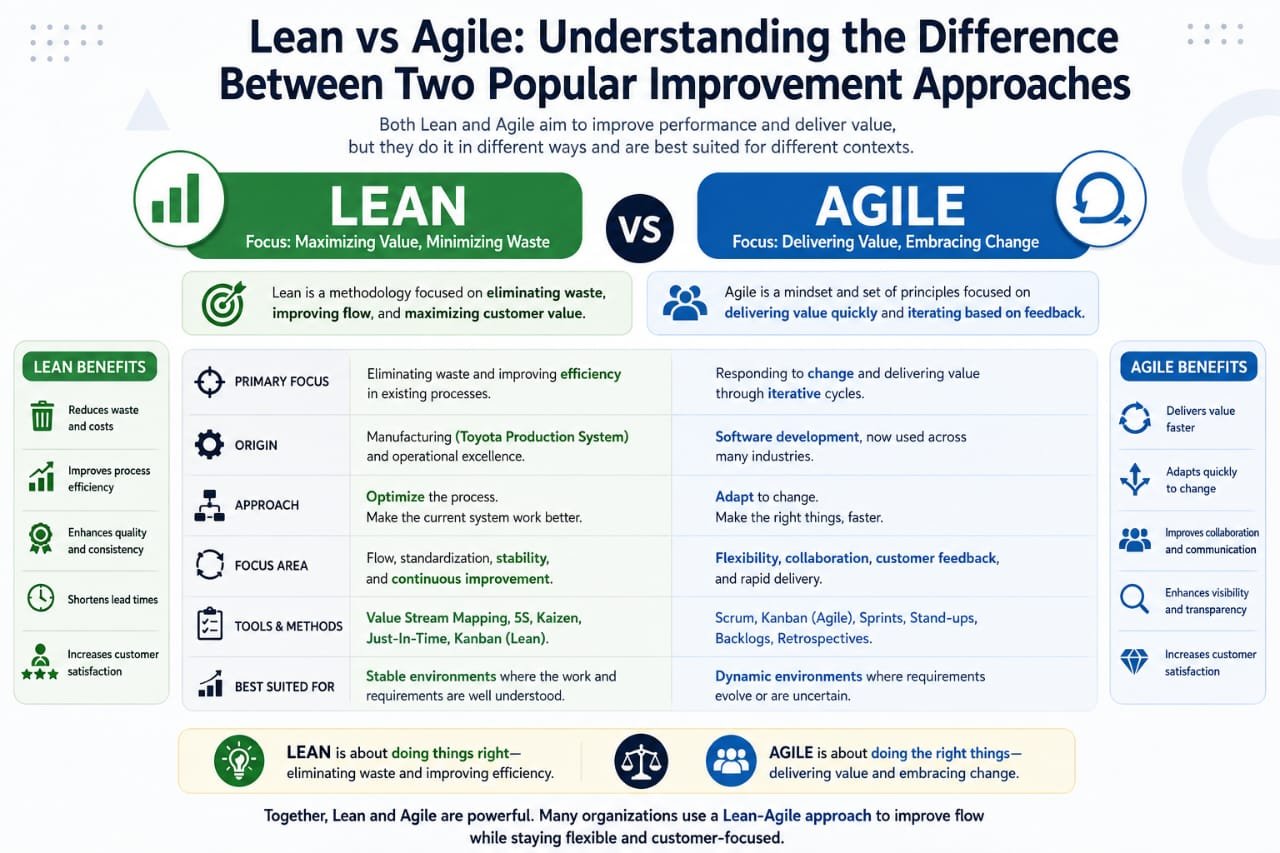
In today's fast-paced business environment, organizations are constantly seeking ways to enhance efficiency and reduce waste. Two popular improvement approaches that have gained significant traction are Lean vs Agile. While both methodologies aim to optimize processes and deliver value, they do so in different ways. In this blog, we will delve into the nuances of Lean methodology and Agile methodology, exploring their principles, applications, and how they can be effectively implemented in the Indian context.
What is Lean Methodology?
Lean methodology originated from the manufacturing sector, particularly in Japan, with Toyota being its most notable proponent. The core idea behind Lean is to maximize customer value while minimizing waste. This approach emphasizes the importance of continuous improvement and operational efficiency. The main principles of Lean methodology include:
- Value Identification: Understanding what the customer values and focusing on delivering that value.
- Value Stream Mapping: Analyzing the flow of materials and information to identify areas of waste.
- Eliminating Waste: Removing non-value-adding activities to streamline processes.
- Continuous Improvement: Fostering a culture of ongoing improvement through employee involvement.
What is Agile Methodology?
Agile methodology, on the other hand, was developed primarily for software development. It emphasizes flexibility, collaboration, and customer feedback. Agile methodologies are characterized by iterative development, where projects are divided into small, manageable increments called "sprints." The key principles of Agile methodology include:
- Customer Collaboration: Engaging customers throughout the development process to ensure their needs are met.
- Responding to Change: Being adaptable to changing requirements and market conditions.
- Delivering Working Software: Focusing on delivering functional software in short cycles.
- Team Empowerment: Encouraging self-organizing teams that can make decisions and take ownership of their work.
Lean vs Agile: Key Differences
While Lean and Agile share the common goal of improving processes and delivering value, they differ significantly in their approach and application. Here are some key differences:
Focus and Scope
Lean is primarily focused on optimizing processes and eliminating waste across the entire value stream. It applies to various industries, including manufacturing, healthcare, and services. Agile, however, is more targeted towards software development and project management, emphasizing flexibility and rapid delivery.
Principles and Practices
Lean methodology relies heavily on principles such as value stream mapping and waste reduction. It promotes a systematic approach to improvement. In contrast, Agile methodology embraces principles like iterative development and collaboration, focusing on adaptability rather than strict processes.
Implementation
Implementing Lean involves a thorough analysis of workflows and procedures to identify inefficiencies. Agile implementation, on the other hand, requires fostering a culture of collaboration and open communication among team members, often through daily stand-up meetings and regular feedback sessions.
Customer Involvement
In Lean, customer involvement is important but often occurs at the beginning of the process. Agile places a stronger emphasis on continuous customer collaboration throughout the project lifecycle, ensuring that the end product aligns closely with customer expectations.
Integrating Lean and Agile: The Best of Both Worlds
Many organizations in India are recognizing the potential benefits of integrating Lean and Agile methodologies. This hybrid approach, often referred to as "Lean-Agile," combines the strengths of both methodologies to enhance efficiency and responsiveness. Here’s how organizations can leverage the Agile Lean principles:
- Streamlined Processes: Use Lean principles to identify and eliminate waste in Agile processes, ensuring that teams can focus on delivering value.
- Continuous Feedback: Implement Agile practices to gather regular feedback from customers and stakeholders, allowing for quick adjustments to project direction.
- Empowered Teams: Foster a culture of empowerment, encouraging teams to take ownership of their processes while adhering to Lean's focus on efficiency.
- Value Delivery: Prioritize delivering value to customers by aligning Lean’s value stream approach with Agile’s iterative delivery model.
Challenges in Implementing Lean and Agile in India
While the benefits of Lean and Agile methodologies are evident, organizations in India may face several challenges during implementation:
- Resistance to Change: Employees may be accustomed to traditional ways of working and may resist adopting new methodologies.
- Skill Gaps: Lack of knowledge and expertise in Lean and Agile practices can hinder successful implementation.
- Cultural Differences: The hierarchical structure in some organizations may conflict with the collaborative nature of Agile.
FAQs on Lean vs Agile
1. Can Lean and Agile be used together?
Yes, Lean and Agile can be effectively integrated to create a hybrid approach that maximizes efficiency and responsiveness.
2. Which methodology is better for startups?
Agile methodology is often more suitable for startups due to its flexibility and focus on rapid iteration, allowing for quick adjustments based on market feedback.
3. Is Lean applicable in service industries?
Absolutely! Lean methodology can be applied in various sectors, including healthcare, retail, and service industries, to optimize processes and reduce waste.
4. How can organizations overcome resistance to Lean and Agile?
Organizations can overcome resistance by providing training, involving employees in the change process, and demonstrating the benefits of the new methodologies.
Conclusion
In conclusion, understanding the differences between Lean vs Agile is crucial for organizations seeking to improve their processes and deliver better value to customers. By embracing the principles of both Lean and Agile methodologies, businesses in India can foster a culture of continuous improvement, enhance operational efficiency, and remain competitive in an ever-evolving market.
If you're looking to implement Lean or Agile methodologies in your organization, contact us today to learn more about how we can help you succeed in your journey towards improved efficiency and customer satisfaction.

Leave a Comment