
 Quality Management



















 IT Service Management



 Project Management



 Agile Management




 Web Development



 Cloud Computing


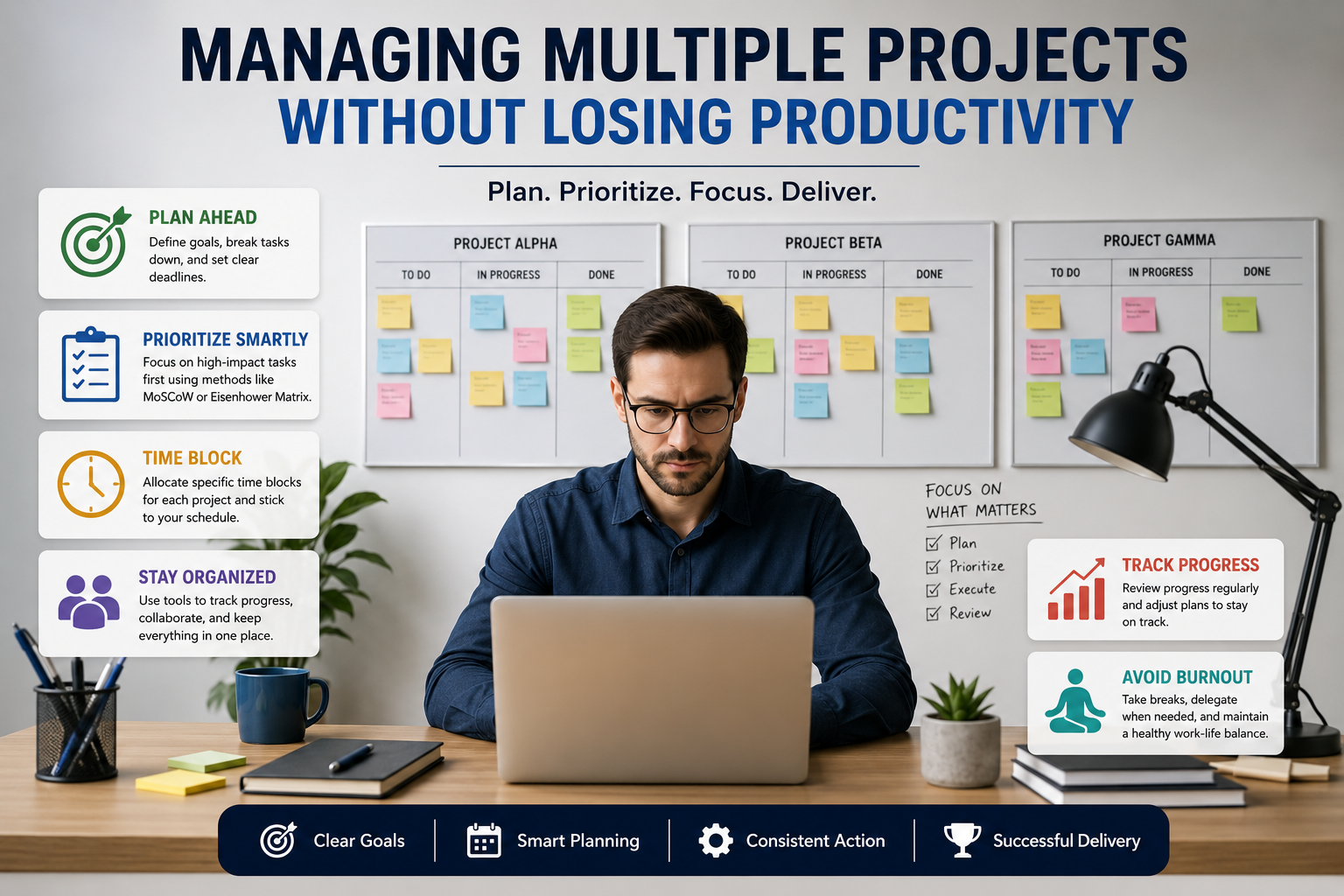
In today's fast-paced business environment, managing multiple projects simultaneously is a common challenge faced by professionals across various industries. With the right strategies, tools, and mindset, you can effectively navigate the complexities of multiple project management without sacrificing productivity. This comprehensive guide will explore essential techniques, including project prioritization, portfolio management, project scheduling, and project coordination, that can help you streamline your workflow and achieve success.
Understanding Multiple Project Management
Multiple project management refers to the ability to oversee and coordinate several projects at once. It requires a strategic approach to ensure that resources are utilized efficiently and that each project's goals are met in a timely manner. This entails effective planning, execution, and monitoring of projects, allowing you to balance various demands while maintaining high productivity levels.
The Importance of Project Prioritization
One of the critical elements of successful multiple project management is project prioritization. Not all projects hold the same level of importance, and understanding which ones to tackle first can significantly influence your overall productivity. Here are some strategies for effective project prioritization:
- Assess Urgency and Impact: Evaluate each project based on its deadlines and potential impact on your organization. Projects with tight deadlines or significant consequences should be prioritized.
- Use the Eisenhower Matrix: This tool helps you classify tasks into four categories: urgent and important, important but not urgent, urgent but not important, and neither urgent nor important. Focus on what matters most.
- Consult Stakeholders: Engage with team members and stakeholders to gather insights on project priorities. Their input can provide valuable context and help you make informed decisions.
Implementing Effective Portfolio Management
Portfolio management involves managing a collection of projects to achieve strategic objectives. Effective portfolio management can enhance your ability to manage multiple projects by aligning them with organizational goals and optimizing resource allocation. Here are some steps to implement effective portfolio management:
- Define Clear Objectives: Establish clear goals for your project portfolio. Ensure that each project aligns with these objectives, which can help in making prioritization decisions.
- Allocate Resources Wisely: Assess the resources available and allocate them based on project needs. This ensures that high-priority projects receive the necessary attention and support.
- Monitor and Review: Regularly review your portfolio to track progress and make adjustments as needed. This allows you to identify underperforming projects and reallocate resources effectively.
Mastering Project Scheduling
Effective project scheduling is crucial for managing multiple projects without losing productivity. A well-planned schedule can provide clarity on timelines, deadlines, and resource allocation. Here are some tips for mastering project scheduling:
- Use Gantt Charts: Gantt charts provide a visual representation of project timelines, helping you see overlapping tasks and deadlines. This can aid in adjusting schedules to avoid conflicts.
- Break Down Tasks: Divide larger projects into smaller, manageable tasks. This not only makes scheduling easier but also allows for better tracking and accountability.
- Implement Time Blocking: Set aside specific blocks of time for different projects. This technique can help minimize distractions and enhance focus on individual tasks.
Enhancing Project Coordination
Efficient project coordination is essential when managing multiple projects. It involves ensuring that all team members are aligned and working towards common goals. Here are some strategies to enhance project coordination:
- Establish Clear Communication Channels: Use collaboration tools such as Slack, Microsoft Teams, or Asana to facilitate communication among team members. Clearly defined communication channels help in reducing miscommunication.
- Regular Check-ins: Schedule regular meetings to discuss project progress, challenges, and updates. This keeps everyone informed and allows for proactive problem-solving.
- Encourage Team Collaboration: Foster a collaborative environment where team members can share ideas, feedback, and support one another. This enhances team dynamics and productivity.
Utilizing Technology for Enhanced Productivity
Incorporating technology into your project management processes can significantly enhance productivity. Numerous project management tools are available that can aid in task tracking, collaboration, and reporting. Some popular tools include:
- Trello: A user-friendly tool that allows for easy task management and collaboration.
- Asana: Great for tracking project progress and managing team workloads.
- Microsoft Project: A comprehensive solution for complex project management needs.
Common Challenges in Managing Multiple Projects
While managing multiple projects can be rewarding, it also comes with its share of challenges. Some common issues include:
- Resource Constraints: Limited resources can lead to delays and burnout. It's essential to allocate resources wisely and be prepared to adjust as needed.
- Scope Creep: As projects evolve, changes in scope can lead to increased workloads. Regularly review project scopes to avoid unnecessary expansion.
- Team Dynamics: Conflicting priorities among team members can hinder productivity. Foster open communication to address concerns and align goals.
Tips for Overcoming Challenges
To overcome challenges in managing multiple projects, consider the following tips:
- Stay Organized: Maintain a well-organized workspace and digital files. This reduces time spent searching for information and helps you stay focused.
- Practice Time Management: Prioritize your time effectively, using techniques like the Pomodoro Technique to maintain focus and prevent burnout.
- Seek Support: Don't hesitate to delegate tasks or seek help from colleagues. Teamwork can significantly alleviate the burden of managing multiple projects.
FAQs
1. What is the best way to prioritize multiple projects?
To prioritize multiple projects effectively, assess their urgency and impact, use prioritization frameworks like the Eisenhower Matrix, and consult with stakeholders for input.
2. How can I improve my project scheduling skills?
Improving project scheduling skills involves using tools like Gantt charts, breaking down tasks into manageable segments, and implementing time-blocking techniques to enhance focus.
3. What are some tools for better project management?
Some popular project management tools include Trello, Asana, and Microsoft Project, each offering unique features for tracking tasks, collaboration, and reporting.
4. How do I handle scope creep in projects?
To manage scope creep, regularly review project scopes, communicate changes with stakeholders, and establish a process for evaluating and approving any new requests.
5. What role does communication play in project coordination?
Effective communication is vital for project coordination as it ensures that all team members are informed, aligned, and able to collaborate effectively, reducing the risk of misunderstandings.
Conclusion
Managing multiple projects effectively is a skill that can be developed with practice and the right strategies. By focusing on project prioritization, implementing strong portfolio management, mastering project scheduling, and enhancing project coordination, you can navigate the complexities of your workload without losing productivity. Embrace technology, foster collaboration, and stay organized to achieve your project goals successfully.
If you're ready to take your multiple project management skills to the next level, start implementing these strategies today. For more tips and resources on effective project management, subscribe to our newsletter and stay informed!



Leave a Comment