
 Quality Management



















 IT Service Management



 Project Management



 Agile Management




 Web Development



 Cloud Computing


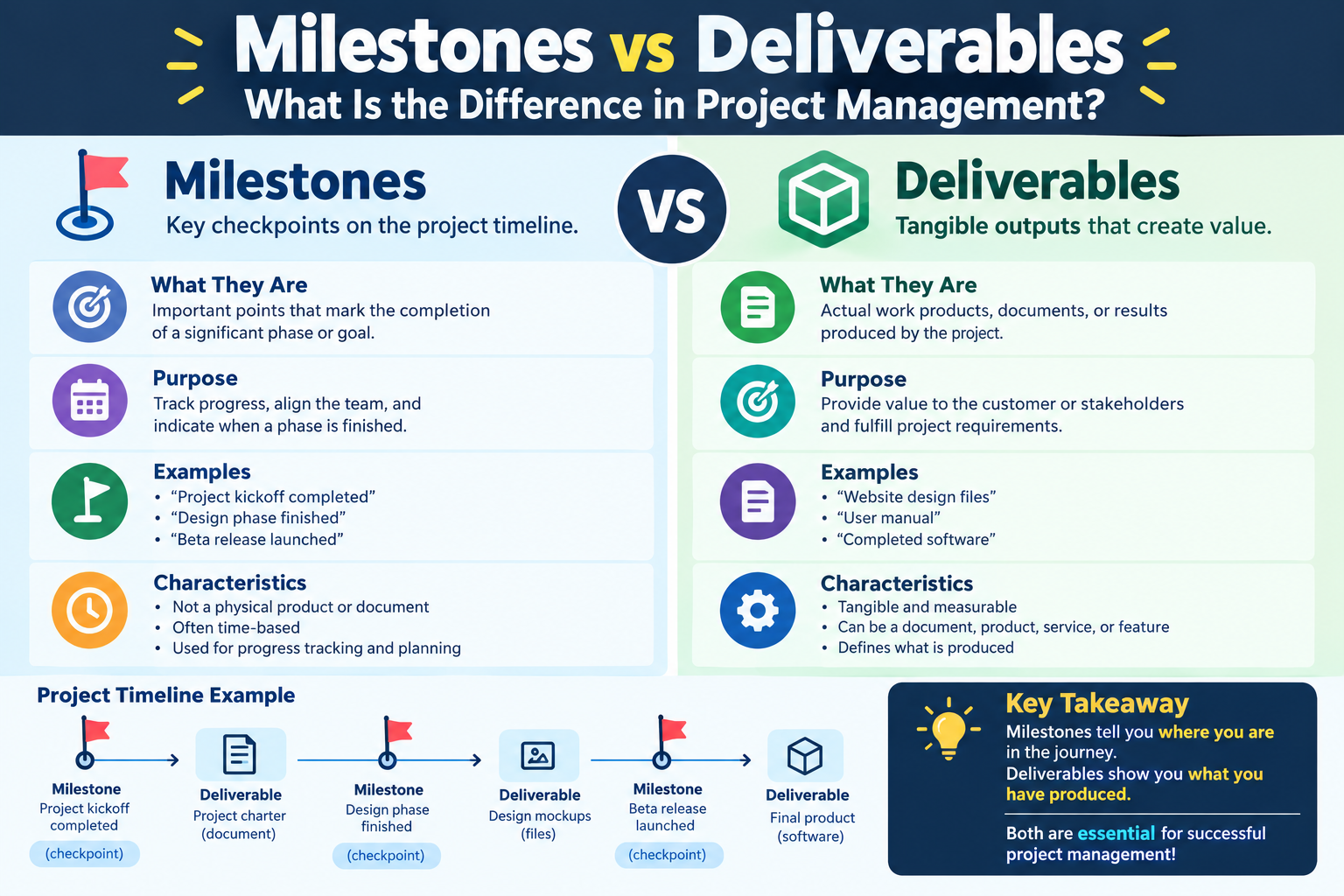
In the fast-paced world of project management, understanding the components that drive a project to success is crucial. Two terms that frequently come up are project milestones and project deliverables. While they might seem interchangeable at first glance, they serve distinct purposes in the realm of project planning and project tracking. In this article, we will delve into the differences between milestones and deliverables, explore their importance, and provide insights into effective project management practices tailored for an Indian audience.
What Are Project Milestones?
Project milestones are key points or significant events in a project timeline that indicate the completion of a major phase or task. They are often used as reference points to track progress and assess the overall health of a project. Milestones help project managers and stakeholders understand when critical parts of the project are completed and signal the transition to the next stage.
Characteristics of Project Milestones
- Time-bound: Milestones are usually associated with specific dates and act as checkpoints throughout the project lifecycle.
- Non-deliverable: They do not represent tangible outputs; instead, milestones signify the completion of certain phases or important tasks.
- Motivational Tool: They can boost team morale, as achieving a milestone is often a cause for celebration and recognition.
What Are Project Deliverables?
Project deliverables, on the other hand, are the tangible or intangible outcomes produced as a result of project activities. They represent the actual work completed and are what stakeholders expect at the end of a project. Deliverables can include reports, software, documents, products, or any other output that fulfills project objectives.
Characteristics of Project Deliverables
- Tangible Outputs: Deliverables are concrete items that can be measured, assessed, and approved by stakeholders.
- Scope Bound: They are directly tied to the project's scope and objectives, ensuring that the project meets its goals.
- Quality Standards: Deliverables often need to meet specific quality standards and criteria set by stakeholders.
Understanding the Differences: Milestones vs Deliverables
Now that we have defined both terms, let’s explore the key differences between milestones vs deliverables in project management:
1. Nature of Outputs
As mentioned earlier, milestones are markers of progress, while deliverables are the results of that progress. Milestones signify completion points, such as the end of a project phase, whereas deliverables are the outputs produced during those phases.
2. Measurement and Assessment
Milestones are assessed based on time and completion of tasks, while deliverables are evaluated based on quality, functionality, and stakeholder expectations. It is essential to track both to ensure a project's success.
3. Role in Project Management
Milestones help in project tracking by providing a timeline for when specific parts of the project should be completed. Deliverables, however, are what project managers deliver to stakeholders, representing the final outputs that fulfill the project’s objectives.
4. Impact on Project Timeline
Milestones can affect the project's timeline by dictating when certain activities should occur. Deliverables impact the timeline as well, but they focus more on the outputs needed to meet project goals.
The Importance of Milestones and Deliverables in Project Planning
Both milestones and deliverables play crucial roles in effective project planning. By understanding their differences and how they work together, project managers can enhance their planning and execution strategies.
Benefits of Defining Milestones
- Enhanced Tracking: Milestones allow for better monitoring of progress and help identify potential delays early on.
- Increased Accountability: Setting milestones creates clear expectations for team members, fostering accountability.
- Effective Communication: Milestones can simplify communication between team members and stakeholders by providing clear points of reference.
Benefits of Defining Deliverables
- Clear Expectations: Clearly defined deliverables help manage stakeholder expectations and ensure all parties are aligned on project goals.
- Quality Assurance: Focusing on deliverables allows for systematic quality checks and ensures that outputs meet desired standards.
- Project Success: By delivering the expected outputs, project managers can ensure stakeholder satisfaction and project success.
Best Practices for Managing Milestones and Deliverables
To effectively manage both milestones and deliverables, consider the following best practices:
1. Define Clear Milestones and Deliverables
At the outset of your project, ensure that both milestones and deliverables are clearly defined. Use SMART criteria (Specific, Measurable, Achievable, Relevant, Time-bound) to set these objectives.
2. Use Project Management Tools
Leverage project management software and tools to track both milestones and deliverables. Tools like Trello, Asana, or Microsoft Project can help you keep everything organized and visible.
3. Regularly Update Stakeholders
Maintain open lines of communication with stakeholders regarding progress on both milestones and deliverables. Regular updates can help manage expectations and foster collaboration.
4. Review and Adjust
Conduct regular reviews of both milestones and deliverables. If you notice any discrepancies or delays, be prepared to adjust your project plan accordingly.
FAQs
What is the main difference between milestones and deliverables?
The main difference is that milestones are key points in the project timeline that indicate progress, while deliverables are the tangible or intangible outputs produced as a result of project activities.
How do I track milestones in my project?
You can track milestones using project management tools that allow you to set deadlines, assign tasks, and monitor progress against your project timeline.
Why are deliverables important in project management?
Deliverables are important because they represent the actual results of project work and are what stakeholders expect to receive upon project completion.
Can milestones change during a project?
Yes, milestones can change based on project needs, scope adjustments, or unforeseen circumstances. Regular reviews can help identify when changes are necessary.
Conclusion
Understanding the distinction between project milestones and project deliverables is essential for effective project management. By clearly defining and tracking both, project managers can enhance planning, ensure accountability, and ultimately deliver successful projects that meet stakeholder expectations. If you're looking to streamline your project management processes and achieve better outcomes, consider integrating these insights into your practices.
If you found this article helpful, please share it with your colleagues or friends who might benefit from understanding the nuances of project management. For more tips and resources, subscribe to our newsletter!





Leave a Comment