
 Quality Management



















 IT Service Management



 Project Management



 Agile Management



 Web Development


 Cloud Computing

In the fast-paced world of IT, effective monitoring and event management is crucial for maintaining seamless operations and providing excellent IT service management (ITSM). As organizations navigate the complexities of modern technology, the ITIL 4 framework offers valuable guidelines for optimizing these processes. In this blog, we will delve into the principles of monitoring and event management, its significance in IT operations, and how it can lead to proactive IT support.
Understanding Monitoring and Event Management
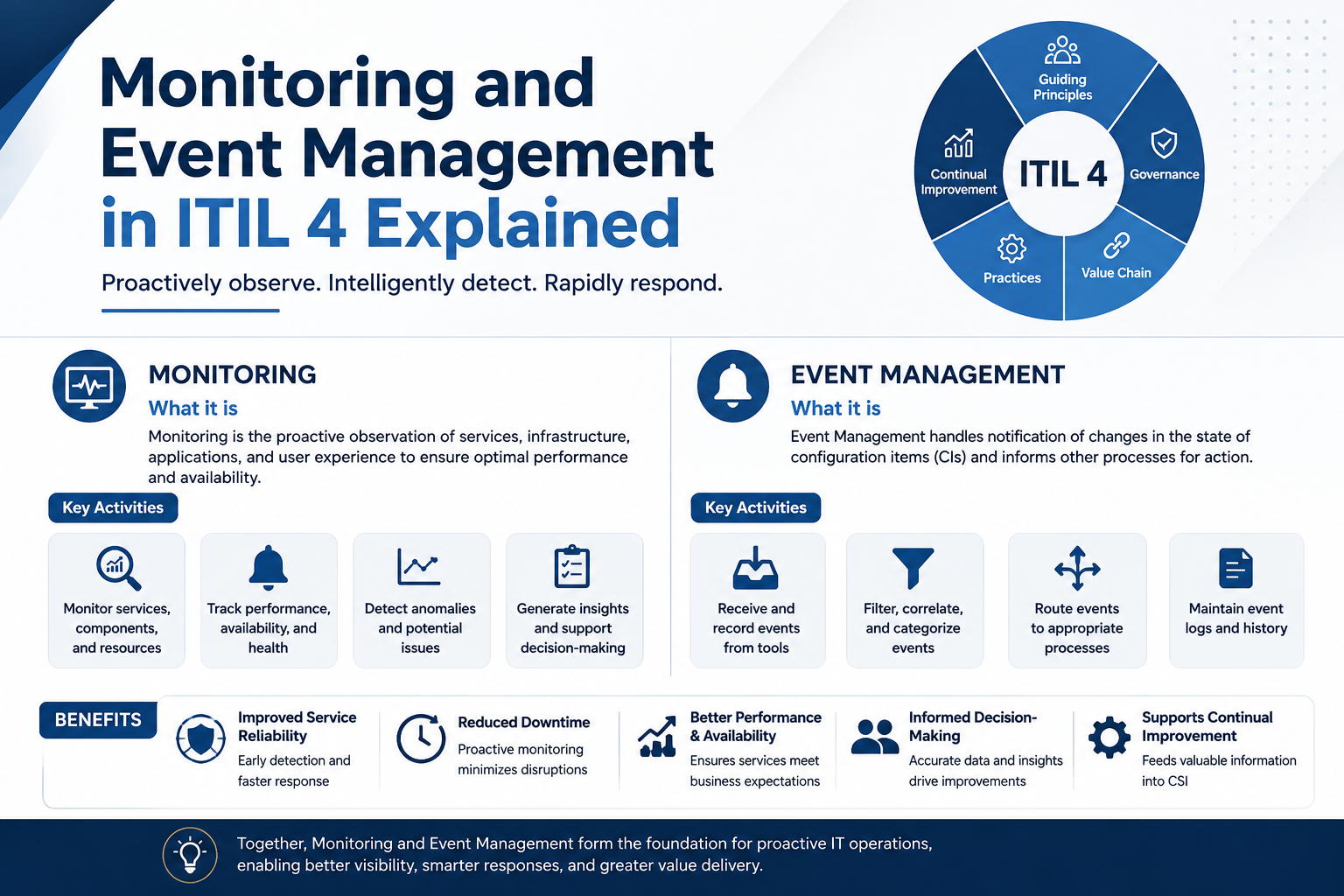
Monitoring and event management is a vital component of ITIL 4, focusing on the detection, analysis, and response to events that occur within an IT environment. An event can be defined as any observable occurrence that has significance for the management of IT services. This can include everything from system alerts to performance metrics.
By implementing effective monitoring and event management strategies, organizations can ensure that they are not only aware of potential issues but also equipped to address them promptly. This proactive approach is essential in minimizing downtime and ensuring the reliability of IT services.
The Role of IT Operations Monitoring
IT operations monitoring is a critical aspect of the overall monitoring and event management process. It involves tracking the performance and availability of IT infrastructure components, applications, and services. This monitoring can be achieved through various tools and techniques, such as:
- Network monitoring tools that track bandwidth usage and connectivity.
- Application performance monitoring to ensure optimal user experience.
- Infrastructure monitoring to keep an eye on servers, storage, and other hardware.
By utilizing these tools, organizations can gain insights into their IT environment, identify potential issues before they escalate, and maintain a high level of service availability.
The Importance of ITIL Event Management
ITIL event management plays a pivotal role in ensuring that incidents are managed efficiently. It involves the classification and prioritization of events based on their impact on IT services. This proactive approach allows IT teams to take preventive measures and minimize disruptions to business operations. Here are some key benefits of implementing ITIL event management:
- Improved Incident Response: By categorizing events, IT teams can quickly identify which issues require immediate attention, leading to faster resolution times.
- Enhanced Visibility: Continuous monitoring provides insights into the health of IT services, allowing organizations to make informed decisions.
- Reduced Downtime: Proactive event management helps in identifying potential issues before they escalate into major incidents, thus reducing downtime.
Proactive IT Support: A Game-Changer
In today’s digital landscape, businesses cannot afford to be reactive. Proactive IT support is about anticipating problems and addressing them before they impact service delivery. This approach is fundamentally supported by effective monitoring and event management.
Here’s how proactive IT support can transform your organization:
- Cost Efficiency: By preventing issues before they arise, organizations can save significant costs associated with downtime and emergency fixes.
- Increased Customer Satisfaction: A reliable IT environment enhances user experience, leading to higher satisfaction rates among customers and employees alike.
- Strategic Decision Making: Data gathered from monitoring activities can inform strategic decisions, improving overall IT service management.
Best Practices for Monitoring and Event Management
Implementing effective monitoring and event management requires a strategic approach. Here are some best practices to consider:
1. Define Clear Objectives
Establish what you want to achieve with your monitoring and event management strategy. Clear objectives help in aligning your efforts with business goals.
2. Utilize the Right Tools
Invest in robust IT operations monitoring tools that can provide real-time insights into your environment. Consider platforms that offer integration capabilities for seamless data flow.
3. Automate Processes
Automation can significantly enhance efficiency in monitoring and event management. Automated alerts and responses can help in quicker resolution of issues.
4. Regular Training and Awareness
Ensure that your IT team is well-trained in monitoring tools and event management practices. Regular training sessions can keep them updated on the latest trends and techniques.
5. Continuous Improvement
Establish a feedback loop to review and improve your monitoring and event management processes continuously. An iterative approach ensures that your strategy evolves with changing business needs.
Conclusion
Monitoring and event management is not just a necessity but a strategic advantage for organizations seeking to optimize their IT services. By embracing the principles of ITIL 4 and focusing on proactive IT support, businesses can enhance their operational efficiency and customer satisfaction. As technology continues to evolve, staying ahead with effective monitoring practices will be essential for success.
FAQs
What is the difference between monitoring and event management?
Monitoring refers to the continuous observation of IT systems to track performance and availability, while event management involves the detection, analysis, and response to significant events that could impact IT services.
How does ITIL support monitoring and event management?
ITIL provides a framework that outlines best practices for managing IT services, including guidelines for effective monitoring and event management to ensure service reliability and performance.
What tools are recommended for IT operations monitoring?
Several tools are available for IT operations monitoring, including SolarWinds, Nagios, and Zabbix, which offer features for real-time monitoring and alerting.
How can I implement proactive IT support in my organization?
To implement proactive IT support, focus on establishing a robust monitoring and event management strategy, investing in appropriate tools, and fostering a culture of continuous improvement among your IT team.
Call to Action
Are you ready to take your IT service management to the next level? Start implementing effective monitoring and event management practices today! For expert guidance and tailored solutions, contact us now!


Leave a Comment