
 Quality Management



















 IT Service Management



 Project Management



 Agile Management



 Web Development



 Cloud Computing


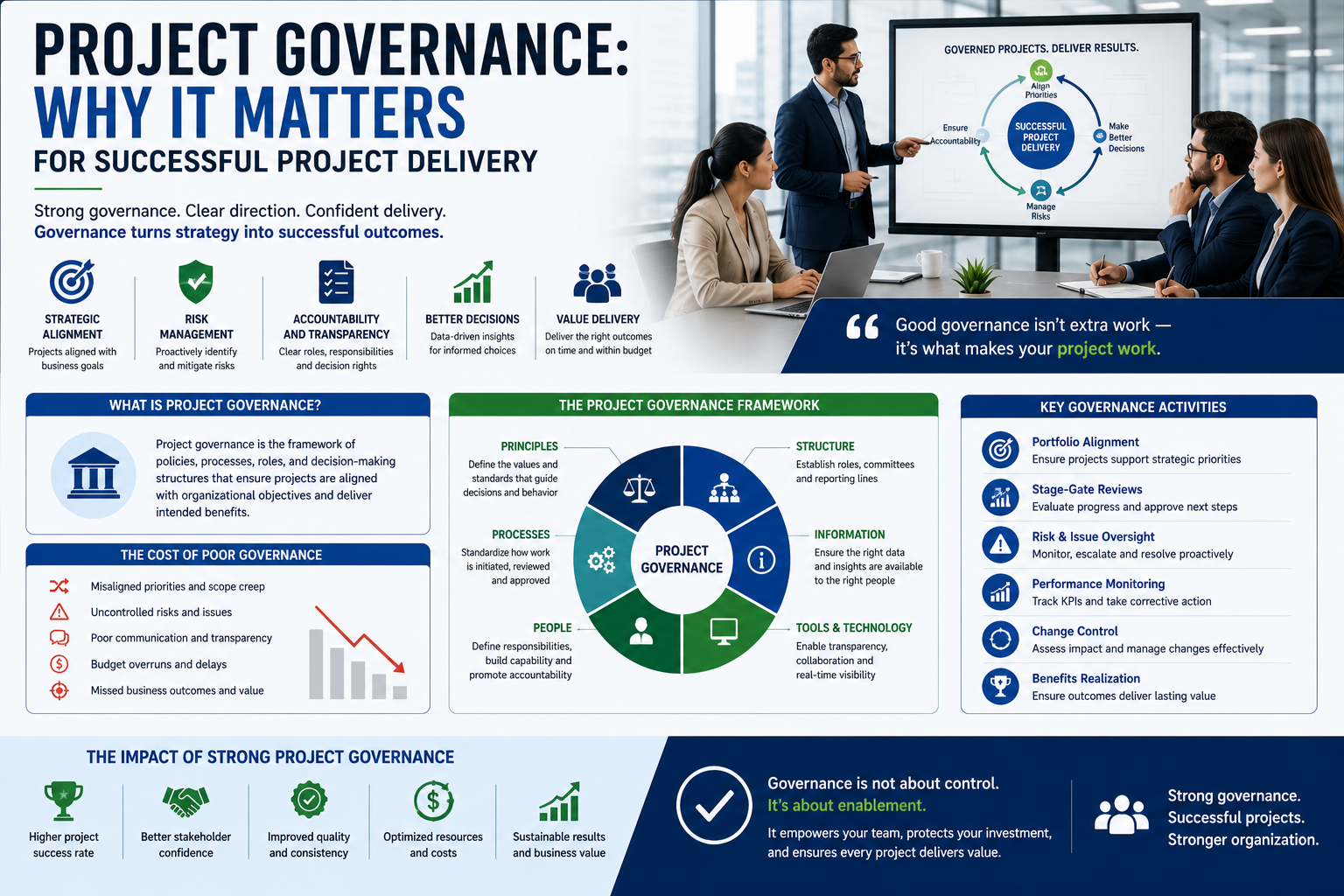
In the fast-paced world of project management, ensuring successful project delivery is paramount. One of the key pillars that support this success is project governance. It acts as a guiding framework that helps in maintaining the project's direction, quality, and overall effectiveness. In this blog, we will delve into the importance of project governance, its relationship with project management frameworks, and best practices to ensure project delivery success.
What is Project Governance?
Project governance refers to the framework, functions, and processes that guide project management activities and ensure that projects are completed on time, within budget, and according to specified quality standards. It encompasses the decision-making processes, roles, responsibilities, and policies that dictate how a project is managed and controlled.
The Importance of Project Governance
Understanding the importance of project governance is crucial for anyone involved in project management. Here’s why it matters:
1. Clear Direction and Objectives
Effective project governance helps establish clear objectives and direction, ensuring that all stakeholders are aligned. This clarity minimizes confusion and sets the stage for focused project execution.
2. Enhanced Decision-Making
With a well-defined governance structure, decision-making becomes streamlined. Stakeholders know who is responsible for what, which speeds up the process and enhances accountability.
3. Risk Management
Project governance plays a vital role in identifying, assessing, and mitigating risks. A robust governance framework allows teams to proactively address potential issues before they escalate, leading to fewer disruptions in project delivery.
4. Stakeholder Engagement
Engaging stakeholders is crucial for project success. A sound governance framework facilitates better communication and stakeholder involvement, ensuring that their needs and expectations are considered throughout the project lifecycle.
5. Performance Measurement
Project governance includes mechanisms for monitoring and evaluating project performance. This allows teams to track progress against objectives, analyze outcomes, and make necessary adjustments to ensure successful project delivery.
The Relationship Between Project Governance and Project Management Framework
To fully appreciate the role of project governance, it is essential to understand how it fits within the broader project management framework. A project management framework provides the necessary tools, techniques, and methodologies for effectively managing projects. Project governance complements this framework by adding a layer of oversight and control.
Key Components of a Project Management Framework
- Project Lifecycle: Defines the stages a project goes through from initiation to closure.
- Roles and Responsibilities: Outlines who is responsible for what within the project.
- Tools and Techniques: Provides resources for planning, executing, and monitoring project activities.
- Processes and Procedures: Sets the standard practices for managing projects.
Integrating Governance into the Project Management Framework
Integrating governance into the project management framework ensures that governance best practices are followed throughout the project lifecycle. This integration enhances project oversight, making it easier to adhere to established processes and achieve project delivery success.
Governance Best Practices for Successful Project Delivery
Implementing governance best practices is essential for ensuring project delivery success. Here are some key best practices to consider:
1. Establish a Governance Structure
Define a clear governance structure that outlines roles, responsibilities, and reporting lines. This helps ensure that everyone knows their part in the project and who to approach for decisions or issues.
2. Develop a Stakeholder Engagement Plan
Create a stakeholder engagement plan that identifies key stakeholders and outlines how they will be involved throughout the project. Regular updates and feedback loops help keep everyone informed and engaged.
3. Implement Regular Monitoring and Reporting
Set up regular monitoring and reporting mechanisms to track project progress. This includes status reports, performance metrics, and risk assessments. Transparency in reporting fosters trust among stakeholders.
4. Foster a Culture of Accountability
Encourage accountability by clearly defining roles and expectations. When team members understand their responsibilities, they are more likely to take ownership of their tasks and contribute to overall project success.
5. Continuous Improvement
After project completion, conduct a post-project review to identify lessons learned. Use this feedback to improve governance practices for future projects, creating a cycle of continuous improvement.
Challenges in Project Governance
While effective project governance is critical, it is not without its challenges. Some common obstacles include:
1. Lack of Clarity
If roles and responsibilities are not well-defined, it can lead to confusion and inefficiencies in decision-making.
2. Inadequate Stakeholder Engagement
Failing to engage stakeholders can result in misalignment between project goals and stakeholder expectations, jeopardizing project success.
3. Resistance to Change
Implementing new governance practices may face resistance from team members who are accustomed to existing processes. Addressing this resistance through effective change management is crucial.
Conclusion
In conclusion, project governance is an essential aspect of the project management framework that significantly contributes to project delivery success. By establishing clear structures, engaging stakeholders, and implementing best practices, organizations can enhance their project oversight and achieve better outcomes. As the project management landscape continues to evolve, prioritizing governance will be key to navigating challenges and driving successful project delivery.
FAQs
What is the difference between project governance and project management?
Project governance focuses on the framework, roles, and processes that guide project decision-making, while project management involves the day-to-day execution of project tasks and activities.
How can organizations improve project governance?
Organizations can improve project governance by establishing a clear governance structure, engaging stakeholders, and implementing regular monitoring and reporting practices.
Why is stakeholder engagement important in project governance?
Stakeholder engagement ensures that all parties have a voice in the project, aligning expectations and enhancing overall project success.
What are some common governance frameworks used in project management?
Common governance frameworks include PRINCE2, PMBOK, and Agile methodologies, each offering different approaches to project governance and management.
How often should project governance be reviewed?
Project governance should be reviewed regularly throughout the project lifecycle, with formal evaluations at key milestones and after project completion to identify areas for improvement.
If you’re looking to improve your project delivery success through effective governance, reach out to us today! Our team of experts is here to help you enhance your project management practices.



Leave a Comment