
 Quality Management



















 IT Service Management



 Project Management



 Agile Management




 Web Development



 Cloud Computing


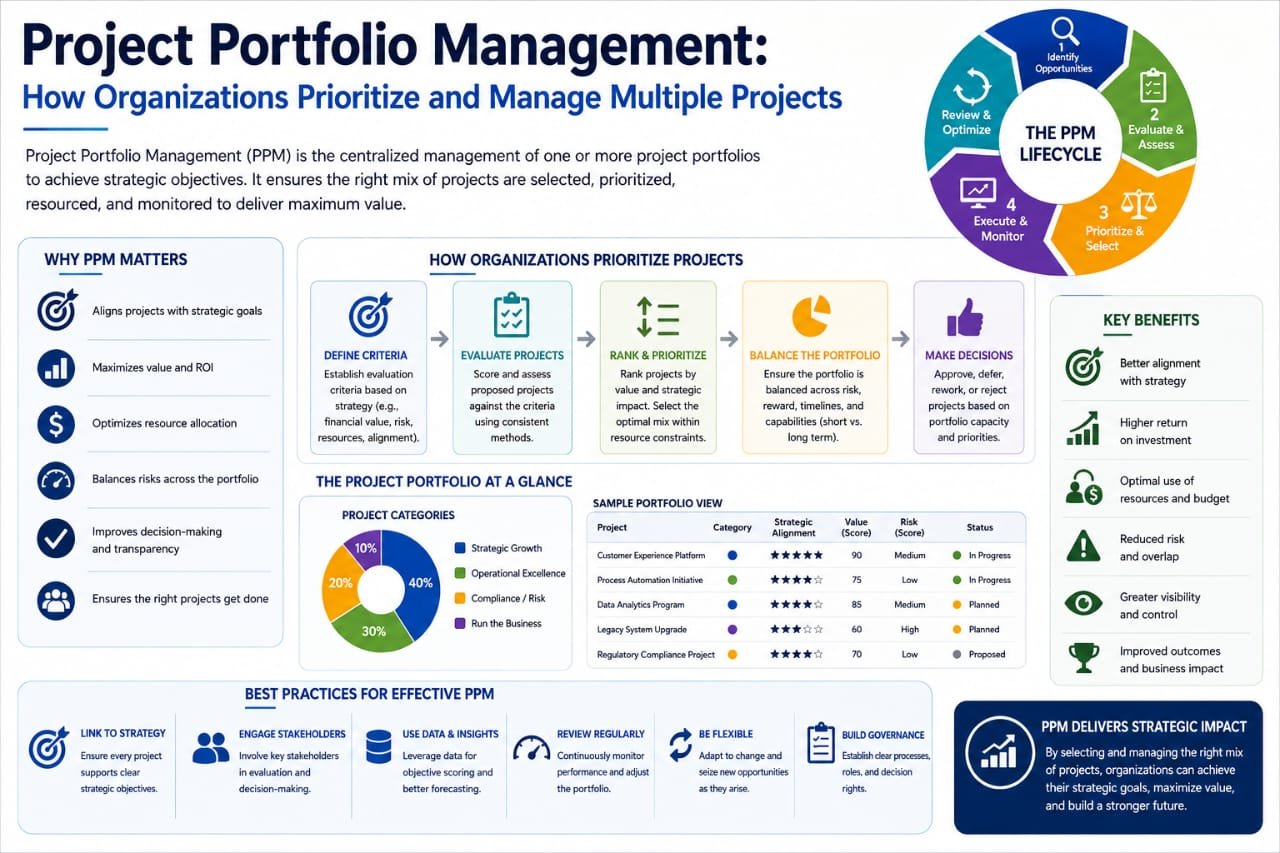
In today's fast-paced business environment, organizations face the challenge of juggling multiple projects simultaneously. This is where project portfolio management (PPM) comes into play. PPM serves as a strategic framework that enables organizations to prioritize their projects effectively and allocate resources in a manner that aligns with their business goals. In this blog, we will delve into the intricacies of PPM, its significance, and how organizations in India can adopt a robust portfolio management strategy to maximize their success.
Understanding Project Portfolio Management (PPM)
At its core, project portfolio management refers to the centralized management of one or more project portfolios. It involves the processes, methods, and technologies used by project managers and project management organizations (PMOs) to analyze and collectively manage current or proposed projects based on various key characteristics. The goal is to achieve strategic objectives while balancing risks and returns.
The Importance of PPM in Organizations
Organizations in India are increasingly recognizing the value of PPM for several reasons:
- Resource Optimization: Effective PPM allows companies to allocate resources efficiently across projects, ensuring that high-priority projects receive the attention and resources they need.
- Strategic Alignment: A well-defined portfolio management strategy ensures that all projects align with the organization’s overall business goals, making it easier to measure success.
- Risk Management: PPM helps identify potential risks across the project portfolio, allowing organizations to take proactive measures to mitigate them.
- Improved Decision-Making: By providing a holistic view of all projects, PPM facilitates better decision-making regarding project initiation, continuation, or termination.
Key Components of Effective Project Portfolio Management
To implement a successful project portfolio management strategy, organizations should focus on the following key components:
1. Project Identification and Selection
The first step in PPM is to identify potential projects that align with the organization’s strategic objectives. This involves evaluating project proposals and selecting those that offer the best potential for returns and align with the organization’s mission.
2. Project Prioritization
Once projects are identified, the next step is project prioritization. This involves assessing each project based on various criteria such as cost, time, impact, and alignment with strategic goals. Tools like the Boston Matrix or scoring models can help in this evaluation process.
3. Resource Allocation
Effective resource allocation is crucial for the success of any project. Organizations need to determine which projects will receive funding and resources based on their priority. This also includes allocating human resources, technology, and other assets.
4. Monitoring and Evaluation
Ongoing monitoring and evaluation are essential components of PPM. Organizations should regularly assess the progress of projects and make adjustments as necessary to ensure that they stay aligned with strategic goals.
Challenges in Project Portfolio Management
While PPM offers numerous advantages, it also comes with its share of challenges:
- Cultural Resistance: Employees may resist changes in processes or systems introduced as part of PPM.
- Lack of Clear Objectives: Without well-defined strategic goals, it can be challenging to prioritize projects effectively.
- Data Overload: Organizations may struggle with managing and analyzing the vast amounts of data generated from projects.
Best Practices for Successful PPM
To overcome these challenges and maximize the benefits of project portfolio management, organizations should consider implementing the following best practices:
1. Define Clear Objectives
Establishing clear strategic objectives is critical for effective PPM. All projects should align with these objectives to ensure that resources are directed toward initiatives that truly matter.
2. Engage Stakeholders
Involve key stakeholders in the project selection and prioritization processes. Their insights can provide valuable perspectives on project feasibility and strategic alignment.
3. Leverage Technology
Utilize PPM software tools that can help streamline processes, improve communication, and provide real-time insights into project performance.
4. Foster a Collaborative Culture
Encourage collaboration among project teams and departments. A culture of teamwork can enhance communication and lead to more innovative solutions.
FAQs About Project Portfolio Management
What is project portfolio management (PPM)?
Project portfolio management (PPM) is the centralized management of one or more project portfolios, focusing on maximizing the value of projects while aligning them with strategic business goals.
Why is project prioritization important in PPM?
Project prioritization is crucial because it helps organizations allocate resources effectively, ensuring that high-impact projects receive the attention they need to succeed.
What are the benefits of having a portfolio management strategy?
A well-defined portfolio management strategy enhances resource optimization, strategic alignment, risk management, and decision-making, ultimately leading to improved project outcomes.
How can organizations overcome challenges in PPM?
Organizations can overcome challenges in PPM by defining clear objectives, engaging stakeholders, leveraging technology, and fostering a collaborative culture.
Conclusion
In conclusion, project portfolio management is an essential discipline for organizations aiming to navigate the complexities of managing multiple projects. By adopting a structured approach to project prioritization and implementing best practices, companies can enhance their portfolio management strategy and drive better business outcomes. As the landscape of project management continues to evolve, organizations that embrace PPM will be better positioned to succeed in an increasingly competitive market.
Call to Action
If you're ready to transform your project management approach and want to learn more about implementing effective project portfolio management in your organization, contact us today. Let’s discuss how we can help you prioritize and manage your projects for maximum impact!



Leave a Comment