
 Quality Management



















 IT Service Management



 Project Management



 Agile Management




 Web Development



 Cloud Computing


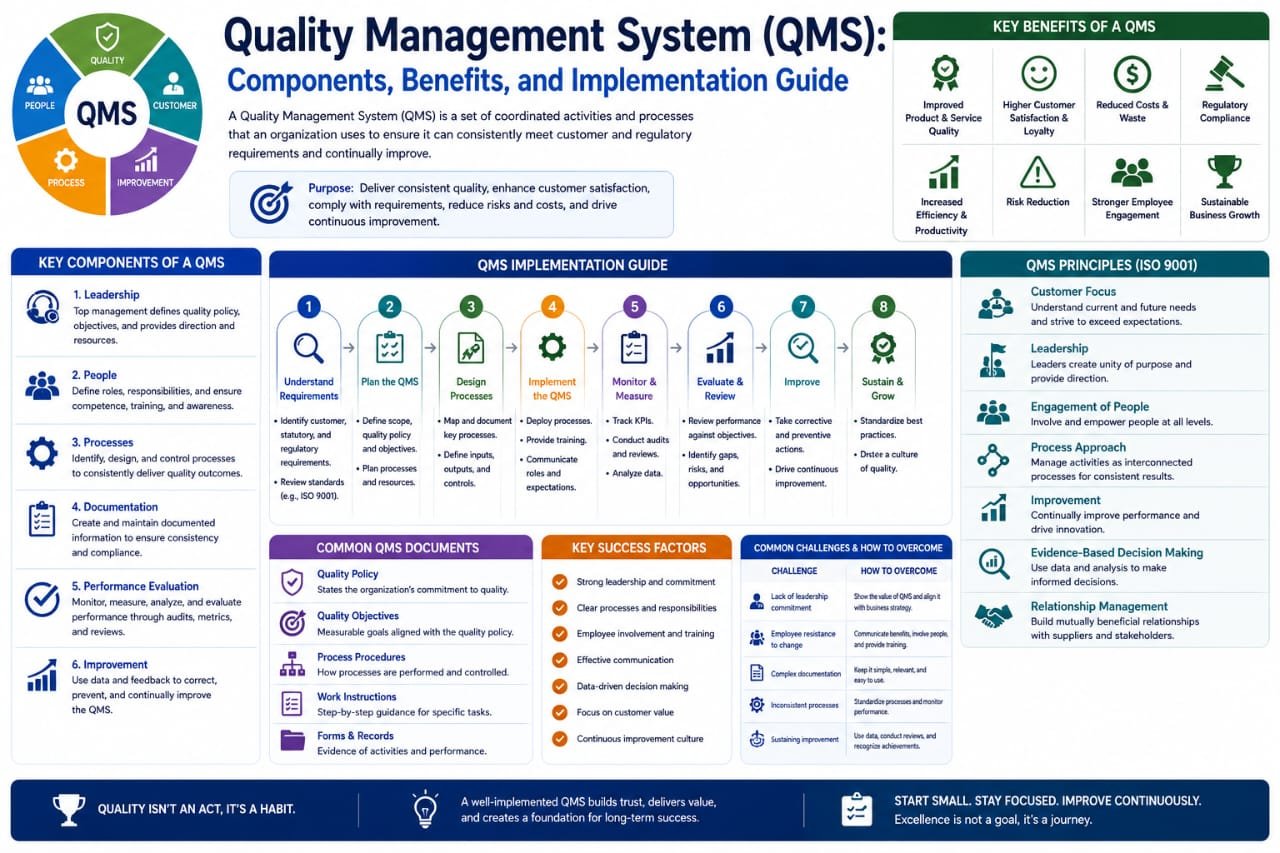
In today's competitive landscape, businesses in India are increasingly recognizing the importance of a robust Quality Management System (QMS). This system not only enhances operational efficiency but also ensures customer satisfaction and compliance with regulatory standards. In this blog, we will explore the essential components of a QMS, the benefits it offers, and a practical guide on how to implement it effectively in your organization.
What is a Quality Management System (QMS)?
A Quality Management System is a structured framework that outlines how an organization can manage its processes, policies, and resources to meet customer requirements and enhance satisfaction. It integrates various quality assurance practices to ensure that products and services consistently meet the desired standards.
Components of a Quality Management System
Implementing a successful QMS involves several key components that work together to create an effective quality management strategy. Here are the primary elements you should focus on:
1. Quality Policy
Your quality policy should reflect your organization’s commitment to quality and outline the objectives you aim to achieve. It serves as a guiding principle for all employees and stakeholders.
2. Quality Objectives
Setting measurable quality objectives is crucial. These objectives should align with your quality policy and be specific, measurable, achievable, relevant, and time-bound (SMART).
3. Quality Manual
A quality manual is a comprehensive document that details your QMS structure, processes, and procedures. It acts as a reference for employees and helps maintain consistency across operations.
4. Document Control
Effective document control ensures that all quality management documents are up-to-date, accessible, and properly managed. This includes policies, procedures, work instructions, and records.
5. Process Management
Identifying and managing key processes within your organization is vital. This involves defining process inputs, outputs, responsibilities, and performance metrics to ensure continuous improvement.
6. Training and Competence
Ensuring that employees are adequately trained and possess the necessary skills is essential for maintaining quality standards. Regular training programs should be part of your QMS strategy.
7. Performance Measurement
Regular monitoring and measuring of quality performance through audits, customer feedback, and key performance indicators (KPIs) help identify areas for improvement and gauge overall effectiveness.
8. Continuous Improvement
Adopting a culture of continuous improvement is fundamental to a successful QMS. Use methodologies like Plan-Do-Check-Act (PDCA) to drive quality enhancements systematically.
Benefits of Implementing a Quality Management System
Investing in a QMS offers numerous advantages for businesses in India. Here are the key benefits:
1. Enhanced Customer Satisfaction
A well-implemented QMS ensures that products and services meet customer expectations consistently, leading to higher customer satisfaction and loyalty.
2. Improved Operational Efficiency
By streamlining processes and reducing waste, a QMS helps organizations optimize their operations, which in turn can lead to cost savings and increased productivity.
3. Compliance with Regulations
Many industries in India are governed by strict regulations. A QMS helps organizations comply with these requirements, reducing the risk of non-compliance penalties.
4. Better Employee Engagement
Involving employees in quality management initiatives fosters a sense of ownership and accountability, leading to higher morale and productivity.
5. Competitive Advantage
Organizations with a robust QMS can differentiate themselves in the marketplace, attracting more customers and retaining existing ones through demonstrated quality assurance.
QMS Implementation Guide
Implementing a Quality Management System may seem daunting, but with the right approach, it can be a smooth process. Here’s a step-by-step guide to help you get started:
Step 1: Define Your Goals
Begin by clearly defining what you want to achieve with your QMS. Align these goals with your organization’s overall strategic objectives.
Step 2: Assemble a Quality Team
Form a dedicated team responsible for the QMS implementation. This team should represent various departments within the organization to ensure a comprehensive approach.
Step 3: Conduct a Gap Analysis
Assess your current quality management practices to identify gaps and areas for improvement. This analysis will help you understand what needs to be addressed in your QMS.
Step 4: Develop Your QMS Framework
Create a framework for your QMS, including your quality policy, objectives, manual, and other necessary documentation. Ensure that it aligns with international standards like ISO 9001, if applicable.
Step 5: Train Your Employees
Provide training on the new QMS processes and systems to all employees. Effective training is crucial for fostering a quality-centric culture within the organization.
Step 6: Implement the QMS
Roll out your QMS across the organization. Monitor the implementation closely to address any issues that may arise.
Step 7: Monitor and Measure
Establish metrics to measure the effectiveness of your QMS. Regular audits and reviews will help you identify areas for improvement and ensure compliance with quality standards.
Step 8: Continuous Improvement
Encourage a culture of continuous improvement by regularly seeking feedback from employees and customers. Use this feedback to make necessary adjustments to your QMS.
FAQs about Quality Management Systems
What is the primary purpose of a Quality Management System?
The primary purpose of a QMS is to enhance customer satisfaction by ensuring that products and services meet or exceed quality standards consistently.
How long does it take to implement a QMS?
The time required for QMS implementation varies based on the organization’s size and complexity. Generally, it can take anywhere from a few months to a year.
Is certification for QMS necessary?
Certification, such as ISO 9001, is not mandatory but can provide organizations with a competitive edge and demonstrate commitment to quality management.
Can small businesses benefit from a QMS?
Absolutely! Small businesses can gain significant advantages from a QMS, including improved efficiency, customer satisfaction, and compliance.
Conclusion
In conclusion, a well-implemented Quality Management System is essential for organizations in India looking to enhance their quality management practices. By understanding the components, benefits, and implementation strategies of a QMS, businesses can position themselves for long-term success. If you’re ready to take the next step towards quality assurance and operational excellence, consider consulting with a QMS expert today!
Call to Action: Ready to elevate your organization’s quality management practices? Contact us today for expert guidance on QMS implementation tailored to your business needs!





Leave a Comment