
 Quality Management



















 IT Service Management



 Project Management



 Agile Management




 Web Development



 Cloud Computing


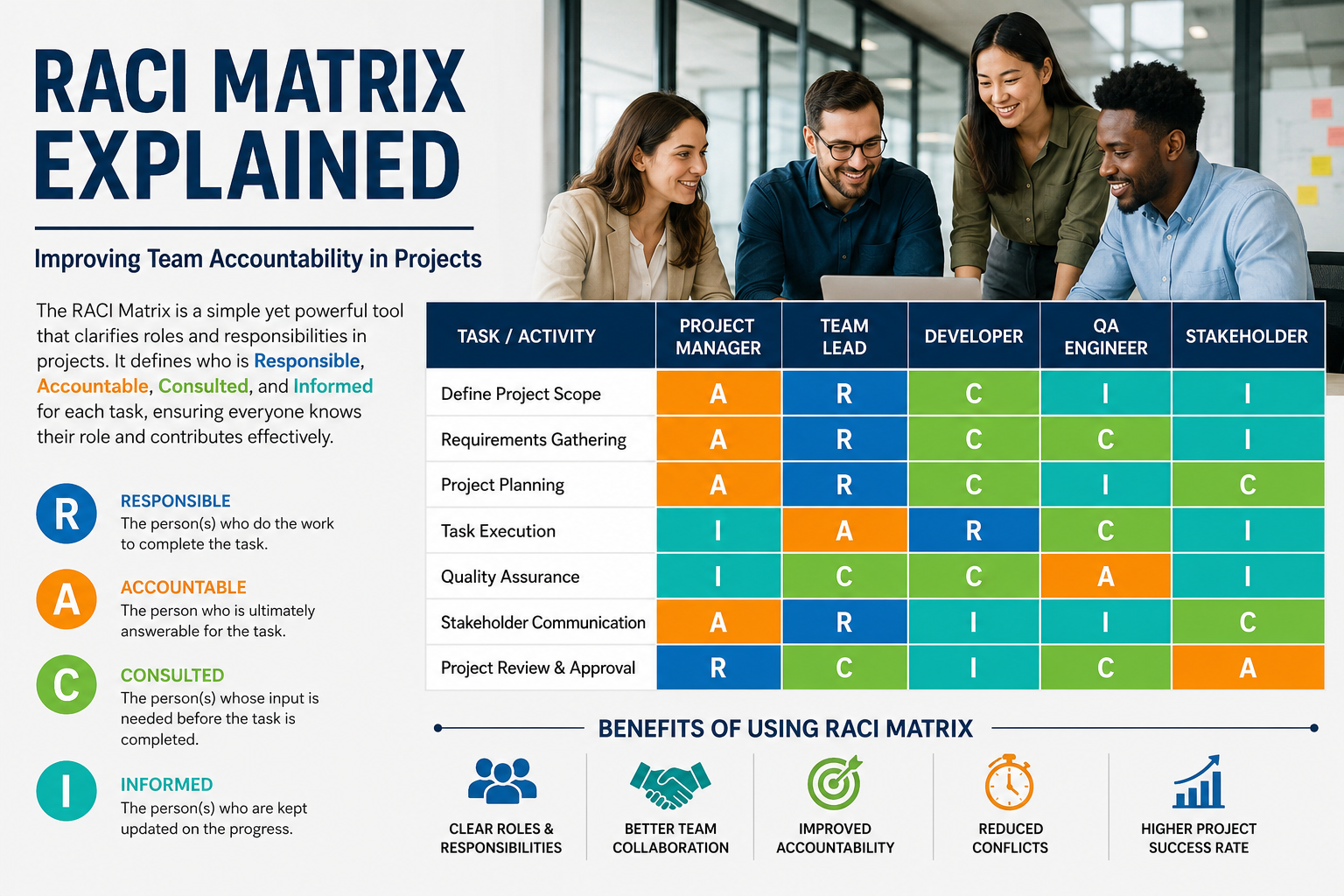
In the fast-paced world of project management, ensuring clarity in roles and responsibilities is paramount. One effective tool that has gained traction among Indian businesses for enhancing team accountability is the RACI matrix. This framework not only clarifies project roles but also strengthens project governance, ultimately leading to successful project outcomes. In this blog, we will delve deep into the RACI matrix, its components, benefits, and how it can transform team dynamics.
What is a RACI Matrix?
The RACI matrix, also known as the responsibility assignment matrix, is a visual tool used to define and clarify the roles and responsibilities of team members in a project. The acronym RACI stands for four key roles:
- Responsible: The person or people who actually perform the work to complete the task.
- Accountable: The individual who is ultimately accountable for the correct and thorough completion of the deliverable or task. This role is often filled by a project manager or team leader.
- Consulted: Those whose opinions are sought; typically subject matter experts or stakeholders who provide input to the task.
- Informed: Individuals who need to be kept up-to-date on progress or decisions but do not have a direct role in the task.
Why Use a RACI Matrix?
Implementing a RACI matrix can significantly enhance team accountability and improve overall project governance. Here are some compelling reasons to consider this tool:
1. Clarity in Roles and Responsibilities
One of the primary benefits of a RACI matrix is that it eliminates ambiguity. By clearly defining who is responsible, accountable, consulted, and informed, team members know their specific roles within the project. This clarity reduces confusion and helps to streamline communication.
2. Enhanced Team Collaboration
When everyone understands their role, collaboration naturally improves. Team members can effectively work together towards common goals, with each person contributing their skills and expertise where it is needed most.
3. Better Decision-Making
The RACI matrix supports informed decision-making by ensuring that the right people are consulted and informed throughout the project. This is particularly important in Indian businesses, where stakeholder engagement can be crucial for project success.
4. Improved Accountability
With clearly defined roles, accountability becomes more straightforward. Team members are less likely to shift blame or avoid responsibility when they know what is expected of them. This fosters a culture of ownership and commitment within the team.
5. Streamlined Project Management
For project managers, the RACI matrix simplifies the task of overseeing projects. It provides a clear overview of who is doing what, making it easier to manage timelines and resources effectively.
How to Create a RACI Matrix
Creating a RACI matrix involves several steps, which can be adapted to fit the specific needs of your project and team. Here’s a simple guide:
Step 1: Identify Project Tasks
Begin by listing all the tasks required to complete the project. This could be done in a brainstorming session with your team to ensure all aspects are covered.
Step 2: Define Roles
For each task, determine who will be responsible, accountable, consulted, and informed. It’s crucial to involve your team in this process to gain their insights and buy-in.
Step 3: Create the Matrix
Once you have your tasks and roles defined, create a matrix. Typically, tasks are listed in rows and roles in columns. Fill in the matrix with the appropriate R, A, C, or I for each task.
Step 4: Review and Finalize
Share the matrix with your team and stakeholders for feedback. Make adjustments as necessary to ensure that everyone agrees on the roles and responsibilities.
Step 5: Communicate and Implement
Once finalized, distribute the RACI matrix to all team members and stakeholders. This document should be referenced throughout the project to ensure everyone stays aligned.
Best Practices for Using a RACI Matrix
To maximize the effectiveness of your RACI matrix, consider these best practices:
- Keep it Simple: Avoid over-complicating the matrix. Focus on key tasks and roles to maintain clarity.
- Regular Updates: Update the matrix as needed, especially if project scopes or team compositions change.
- Encourage Communication: Use the matrix as a communication tool. Encourage team members to refer to it and ask questions when unclear.
- Involve Stakeholders: Engaging stakeholders in the creation of the matrix fosters buy-in and ensures that their needs are considered.
- Use Visuals: A visually appealing matrix can make it easier for team members to understand their roles at a glance.
FAQs About the RACI Matrix
1. What is the difference between RACI and other responsibility assignment matrices?
The RACI matrix specifically categorizes roles into four distinct areas—Responsible, Accountable, Consulted, and Informed. Other matrices may include additional roles or different categorizations, such as DACI (Decider, Accountable, Consulted, Informed) or RAPID (Recommend, Agree, Perform, Input, Decide).
2. Can a RACI matrix be used for personal projects?
Absolutely! While often used in team settings, a RACI matrix can also help individuals clarify their personal project responsibilities and improve accountability.
3. How often should a RACI matrix be reviewed?
It’s advisable to review the RACI matrix regularly, especially during project milestones or when significant changes occur. This ensures that it remains relevant and effective throughout the project lifecycle.
4. Are there any software tools that can help create a RACI matrix?
Yes, many project management tools like Microsoft Excel, Asana, or Trello can be used to create and manage RACI matrices effectively. There are also dedicated RACI matrix templates available online.
Conclusion
Incorporating a RACI matrix into your project management practices can dramatically improve team accountability and enhance overall project governance. By clearly defining roles and responsibilities, you can foster a collaborative environment that empowers team members to take ownership of their tasks. As you embark on your next project, consider leveraging this powerful tool to streamline processes and ensure successful outcomes.
If you’re interested in learning more about project management tools and techniques, or if you need assistance in implementing a RACI matrix for your team, contact us today for expert guidance!





Leave a Comment