
 Quality Management



















 IT Service Management



 Project Management



 Agile Management




 Web Development



 Cloud Computing


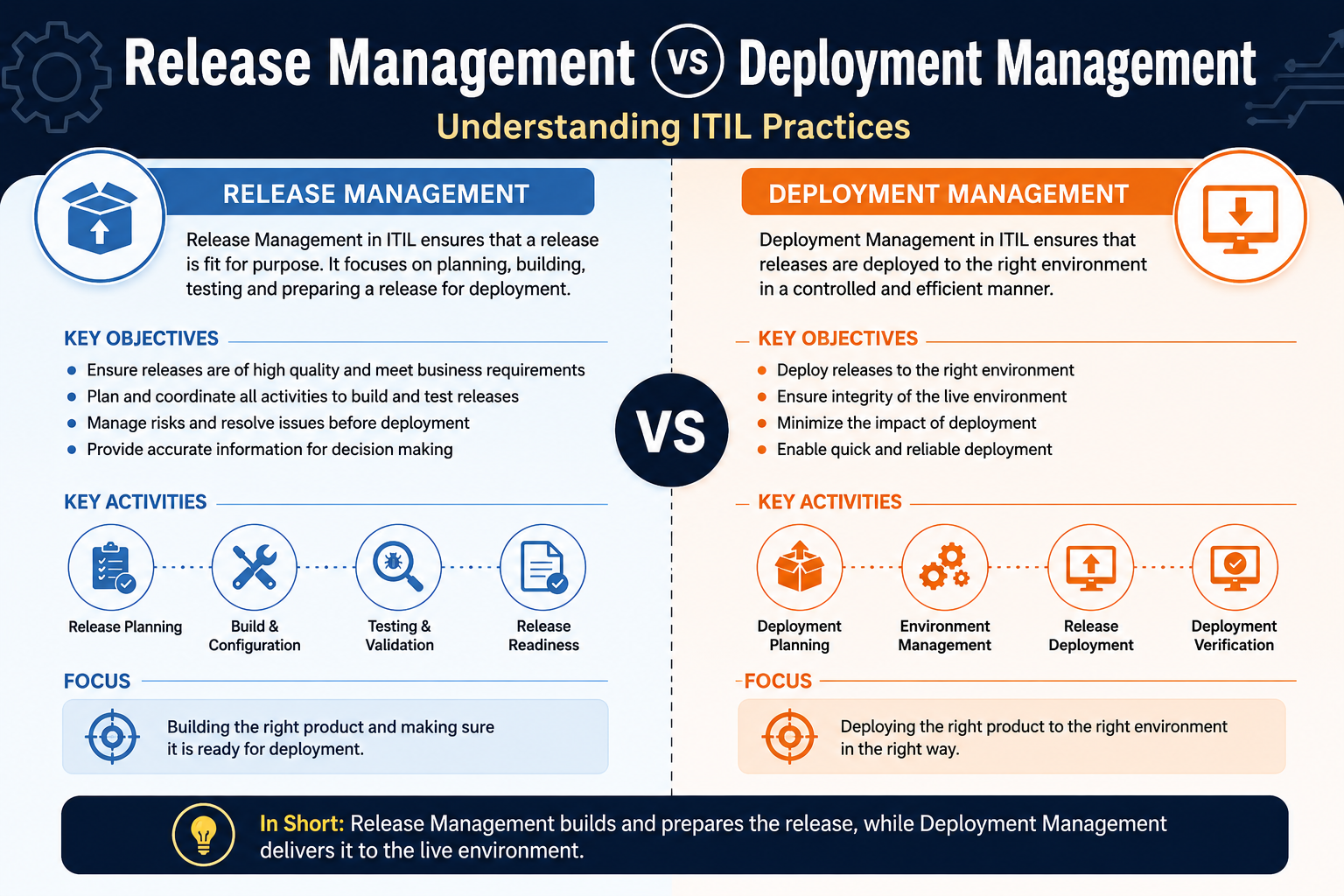
In the ever-evolving landscape of IT service management (ITSM), understanding the nuances between release management and deployment management is crucial for organizations aiming to optimize their software delivery processes. The ITIL 4 practices provide a framework that helps businesses streamline their operations and enhance their service delivery. In this blog, we will delve deep into the concepts of release management ITIL and deployment management ITIL, their differences, and their significance in effective software release management.
What is Release Management in ITIL?
Release management ITIL refers to the process of planning, scheduling, and controlling the build, testing, and deployment of releases. This practice ensures that the integrity of the live environment is protected and that the correct components are released. The primary goal of release management is to ensure that new features, bug fixes, and enhancements are delivered to users in a controlled manner, minimizing the risk of service disruption.
Key Objectives of Release Management
- Planning: Establishing timelines, resources, and strategies for release.
- Coordination: Collaborating with various teams to ensure a smooth release process.
- Quality Assurance: Ensuring that all components of the release are tested and validated before deployment.
- Documentation: Keeping detailed records of release versions, changes, and plans.
Understanding Deployment Management in ITIL
While release management focuses on the overall process of preparing for a release, deployment management ITIL zeroes in on the actual implementation of that release into the live environment. This practice involves the installation, configuration, and activation of the release in a manner that ensures minimal disruption to ongoing services.
Key Objectives of Deployment Management
- Installation: Deploying the release components into the live environment.
- Configuration: Setting up the release to function correctly within the existing infrastructure.
- Activation: Making the release available to users and stakeholders without issues.
- Monitoring: Observing the deployment process to quickly address any issues that arise.
Release Management vs. Deployment Management: Key Differences
Though release management and deployment management are closely related and often work hand-in-hand, they serve distinct purposes within the ITIL framework. Understanding these differences can help organizations optimize their processes and improve overall service delivery.
1. Focus of the Process
Release management is primarily concerned with the planning and coordination of software releases. It encompasses everything leading up to the deployment and ensures that the release is ready for the live environment. In contrast, deployment management is focused on the actual process of deploying the release. This difference in focus is essential for organizations to grasp as it influences how teams allocate resources and manage timelines.
2. Scope of Activities
The activities involved in release management typically include planning, testing, and documentation related to the release. On the other hand, deployment management activities include installation, configuration, and activation of the release into the production environment. Recognizing this scope can help teams better align their efforts and responsibilities.
3. Risk Management
Release management emphasizes risk assessment and mitigation strategies. It aims to ensure that potential issues are identified and addressed before the release is deployed. Deployment management, while it does consider risks, is more focused on real-time problem resolution during the deployment process.
The Importance of Release and Deployment Management in ITIL
Both release management and deployment management are critical components of effective IT service management. They allow organizations to deliver high-quality software releases while minimizing risks and ensuring user satisfaction. By implementing these ITIL 4 practices, businesses can:
- Enhance Efficiency: Streamlined processes lead to faster release cycles and quicker time to market.
- Improve Quality: Rigorous testing and validation help deliver reliable software to users.
- Minimize Disruptions: Controlled deployment processes reduce the likelihood of service outages.
- Foster Collaboration: Clear roles and responsibilities facilitate teamwork across departments.
Best Practices for Effective Release and Deployment Management
To successfully implement release management ITIL and deployment management ITIL, organizations should consider the following best practices:
1. Define Clear Roles and Responsibilities
Establishing clear roles and responsibilities helps to avoid confusion and ensures that all team members understand their contributions to the release and deployment process.
2. Implement Automation Tools
Utilizing automation tools can greatly enhance the efficiency of both release and deployment processes. Automation reduces the potential for human error and speeds up repetitive tasks, allowing teams to focus on more complex issues.
3. Conduct Thorough Testing
Before any release is deployed, comprehensive testing should be conducted to identify and resolve potential issues. This step is vital in maintaining the quality of the software and ensuring a smooth user experience.
4. Monitor and Review
Post-deployment monitoring is essential for identifying any issues that may arise after the release is live. Regular reviews can help organizations learn from their experiences and continuously improve their release and deployment strategies.
FAQs
What is the main difference between release management and deployment management?
Release management focuses on planning and coordinating software releases, while deployment management is concerned with the actual implementation of those releases into the live environment.
Why are release and deployment management important in ITIL?
They are essential for ensuring the quality and reliability of software releases, minimizing risks, and enhancing overall IT service management processes.
How can organizations improve their release and deployment processes?
Organizations can improve these processes by defining clear roles, implementing automation tools, conducting thorough testing, and monitoring post-deployment outcomes.
Conclusion
In conclusion, understanding the distinctions and interconnections between release management and deployment management is vital for any organization aiming to optimize its IT service management practices. By adopting the ITIL 4 practices related to these areas, businesses can enhance their software release management processes, reduce risks, and ultimately deliver a better experience to their users.
If you're looking to improve your organization's release and deployment management processes, contact us today! Our team of experts is here to help you navigate the complexities of ITIL practices and enhance your IT service management strategy.





Leave a Comment