
 Quality Management



















 IT Service Management



 Project Management



 Agile Management




 Web Development



 Cloud Computing


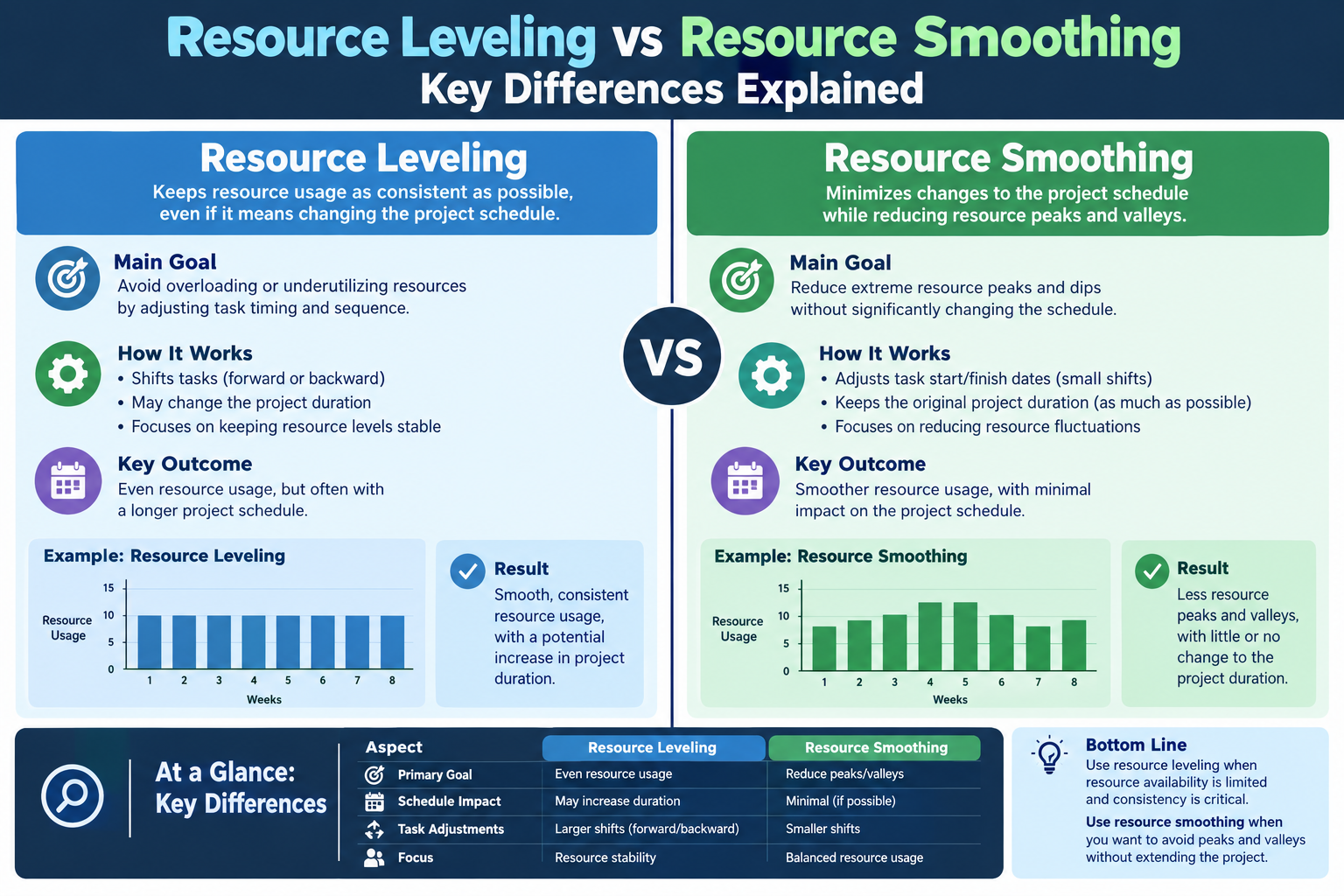
Effective project management is crucial for the success of any endeavor, especially in a rapidly evolving economy like India’s. Two essential techniques in project resource management are resource leveling and resource smoothing. Understanding the nuances of these methods can significantly enhance your project efficiency and resource allocation. In this blog, we will explore the key differences between resource leveling and resource smoothing, enabling you to make informed decisions for your projects.
Understanding Resource Leveling
Resource leveling is a technique used in project scheduling that aims to balance the demand for resources with the available supply. This method is particularly useful when resources are limited or when there are constraints on availability. The primary goal of resource leveling is to avoid over-allocation of resources, which can lead to burnout and decreased productivity.
How Resource Leveling Works
In resource leveling, the project manager adjusts the project schedule to ensure that no resource is over-allocated at any point in time. This often involves extending the project timeline, redistributing tasks among team members, or delaying certain activities. By ensuring that resources are allocated smoothly over time, project managers can maintain productivity without overwhelming their teams.
Benefits of Resource Leveling
- Prevents Over-Allocation: Ensures that no team member is overwhelmed with too many tasks.
- Improved Team Morale: Reduces stress and burnout, leading to higher job satisfaction.
- Better Resource Utilization: Makes optimal use of available resources, improving efficiency.
Understanding Resource Smoothing
Resource smoothing, on the other hand, is a technique aimed at optimizing the project schedule without altering the project’s timeline. It focuses on adjusting the allocation of resources within the constraints of the project’s end date. This method is particularly useful when resources are flexible and can be adjusted without affecting the overall project delivery.
How Resource Smoothing Works
In resource smoothing, project managers make minor adjustments to the project schedule to ensure that resources are utilized efficiently without exceeding the total project duration. This may involve shifting tasks from one period to another or extending the duration of non-critical tasks to better distribute workloads. The primary objective is to achieve a more balanced workload while meeting project deadlines.
Benefits of Resource Smoothing
- Maintains Project Timeline: Ensures that the project is completed on time without extending deadlines.
- Enhances Flexibility: Allows for adjustments in resource allocation without significant disruptions.
- Optimizes Resource Use: Improves efficiency by ensuring that resources are not under-utilized.
Key Differences Between Resource Leveling and Resource Smoothing
While both resource leveling and resource smoothing aim to optimize resource allocation and project scheduling, they differ significantly in their approach and objectives. Here are the key differences:
| Aspect | Resource Leveling | Resource Smoothing |
|---|---|---|
| Objective | Balance resource demand with supply | Optimize resource allocation within project constraints |
| Impact on Schedule | May extend project duration | Maintains original project timeline |
| Resource Availability | Focuses on limited resource scenarios | Works with flexible resource availability |
| Workload Distribution | Aims for an even distribution of tasks | Seeks to adjust within existing workload limits |
When to Use Resource Leveling and Resource Smoothing
Choosing between resource leveling and resource smoothing depends on your project requirements and constraints. Here’s a quick guide:
When to Use Resource Leveling
- When resources are limited and over-allocation is a concern.
- In projects with strict resource availability constraints.
- When managing high-stress environments where team burnout is a risk.
When to Use Resource Smoothing
- When the project timeline is fixed and must be adhered to.
- In cases where resource flexibility allows for adjustments without major disruptions.
- When focusing on efficient resource utilization without extending deadlines.
Conclusion
Both resource leveling and resource smoothing are vital tools in project resource management, each serving distinct purposes. By understanding the key differences and knowing when to apply each technique, you can significantly improve your project scheduling and resource allocation strategies. This knowledge is especially valuable in the Indian context, where project demands and resource availability can vary widely. Implementing these techniques effectively can lead to more successful project outcomes and a more satisfied team.
FAQs
1. What is resource leveling?
Resource leveling is a project management technique that aims to balance the demand for resources with their availability, often extending project timelines to avoid over-allocation.
2. How does resource smoothing differ from resource leveling?
Resource smoothing optimizes resource allocation without altering the project timeline, while resource leveling may extend the project duration to manage resources effectively.
3. When should I use resource leveling?
Use resource leveling when resources are limited, and there is a high risk of over-allocation, especially in high-stress project environments.
4. Can I use both techniques in a single project?
Yes, you can combine both techniques as needed, depending on the project’s requirements and constraints.
Call to Action
Are you ready to optimize your project resource management strategies? If you want to learn more about effective project scheduling techniques or need assistance with your upcoming projects, feel free to contact us! Let us help you achieve your project goals with efficiency and effectiveness.





Leave a Comment