
 Quality Management



















 IT Service Management



 Project Management



 Agile Management



 Web Development



 Cloud Computing


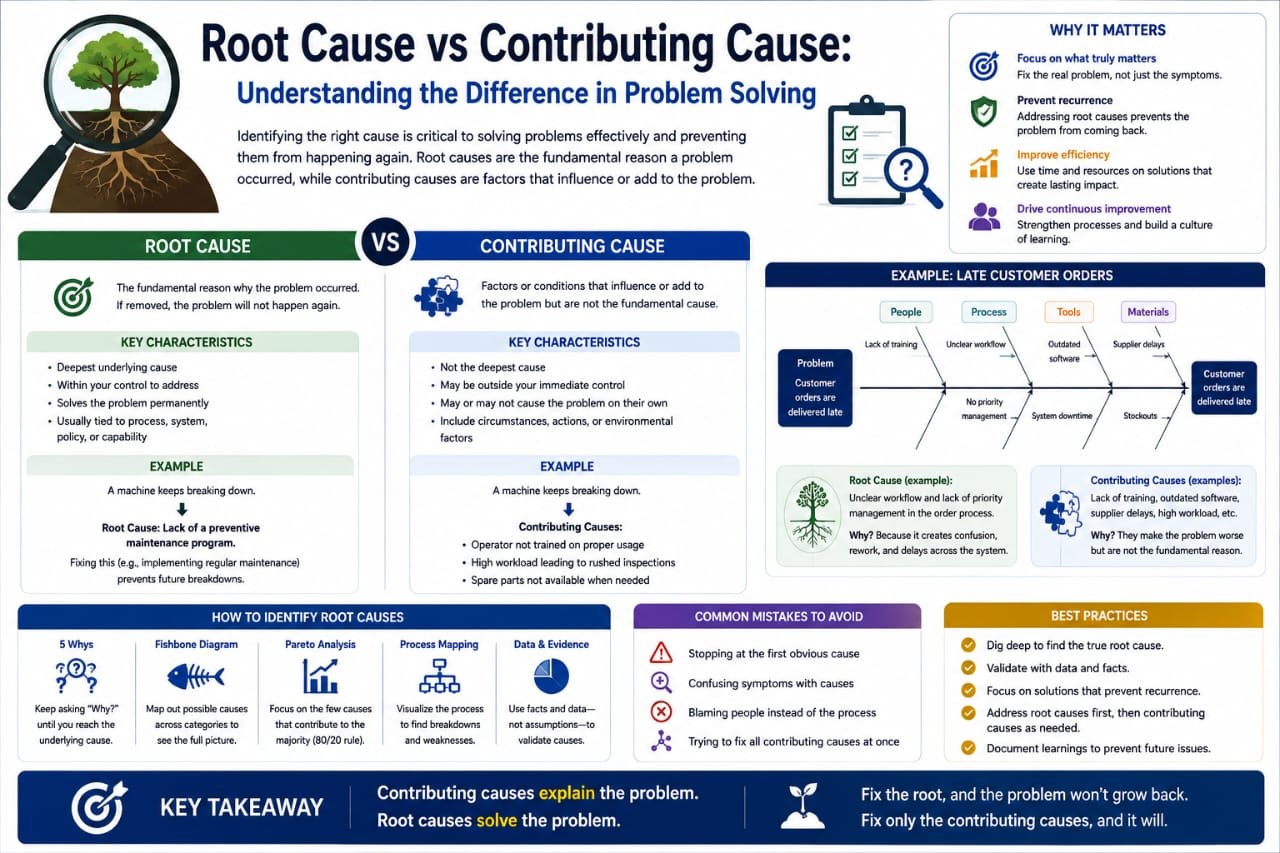
In the realm of quality problem solving, distinguishing between root causes and contributing causes is crucial for effective decision-making and ensuring sustainable solutions. Both terms often appear in discussions about problem-solving techniques, yet they serve different purposes. This comprehensive guide aims to clarify these concepts, helping you enhance your problem-solving skills and apply root cause analysis effectively. Whether you’re a business leader, an engineer, or a student in India, understanding these terms can significantly impact your approach to problem-solving.
What is Root Cause Analysis?
Root cause analysis (RCA) is a systematic approach used to identify the fundamental cause of a problem. Rather than merely addressing the symptoms, RCA seeks to uncover the underlying issues that lead to an undesirable outcome. This technique is critical in various fields, including manufacturing, healthcare, and IT, as it promotes long-term solutions rather than temporary fixes.
The Importance of Root Cause Analysis
In Indian industries, where competition is fierce, and quality standards are paramount, root cause analysis plays a vital role. Here are some reasons why:
- Prevention of Recurrence: By identifying the root cause, organizations can implement measures to prevent similar problems in the future.
- Cost-Effectiveness: RCA helps in reducing costs associated with repeated failures and inefficiencies.
- Improved Quality: A thorough understanding of root causes leads to better quality management practices.
Understanding Contributing Causes
Contributing causes, on the other hand, are factors that, while they may not be the primary reason for a problem, still play a significant role in its occurrence. These causes can exacerbate an issue or make it more likely to happen. Recognizing these causes is essential for a comprehensive view of the problem.
Examples of Contributing Causes
In many cases, multiple contributing causes can be identified for a single problem. For instance:
- In a manufacturing defect: The root cause might be a malfunctioning machine, while contributing causes could include a lack of operator training and poor maintenance schedules.
- In a software failure: The root cause could be a bug in the code, with contributing causes such as inadequate testing and rushed development timelines.
Root Cause vs. Contributing Cause: Key Differences
To effectively apply problem-solving techniques, it is essential to differentiate between root causes and contributing causes:
| Aspect | Root Cause | Contributing Cause |
|---|---|---|
| Definition | Fundamental reason for a problem | Factors that exacerbate or influence the problem |
| Impact | Directly leads to the issue | Indirectly influences the issue |
| Focus | Long-term solutions | Short-term improvements |
| Examples | Machine malfunction | Lack of training, poor maintenance |
Effective Problem Solving Techniques
Utilizing both root cause analysis and understanding contributing causes can significantly enhance your problem-solving techniques. Here are some steps to effectively implement these concepts:
1. Define the Problem Clearly
Before diving into cause analysis, ensure that you have a clear understanding of the problem. This clarity will guide your investigation and analysis.
2. Gather Data
Collect relevant data that pertains to the issue. This may include production reports, quality assurance checks, and other metrics that can provide insight into the problem.
3. Conduct Root Cause Analysis
Employ various techniques for root cause analysis, such as:
- 5 Whys: This technique involves asking "why" multiple times until the root cause is uncovered.
- Fishbone Diagram: Also known as Ishikawa diagram, this visual tool helps categorize potential causes and identify root causes systematically.
- Failure Mode and Effects Analysis (FMEA): This proactive approach evaluates potential failure modes and their effects.
4. Identify Contributing Causes
Once the root cause is identified, look for contributing causes as well. This comprehensive understanding will allow you to develop a more robust solution.
5. Implement Solutions
Based on your analysis, implement solutions that address both the root and contributing causes. This ensures a more sustainable resolution.
6. Monitor and Review
After implementation, continuously monitor the situation to ensure that the solutions are effective. Be prepared to make adjustments as necessary.
FAQs
What is the main goal of root cause analysis?
The main goal of root cause analysis is to identify the underlying reasons for a problem to develop effective solutions that prevent recurrence.
Can contributing causes be addressed alone?
While addressing contributing causes can provide temporary relief, it is crucial to also identify and solve the root cause for a long-term solution.
What industries benefit from root cause analysis?
Root cause analysis is beneficial across various industries, including manufacturing, healthcare, IT, and service industries, particularly in quality management.
What are some common tools for root cause analysis?
Common tools include the 5 Whys technique, Fishbone diagrams, Pareto analysis, and Failure Mode and Effects Analysis (FMEA).
Conclusion
Understanding the distinction between root causes and contributing causes is essential for effective problem-solving in any field. By mastering root cause analysis and recognizing contributing factors, you can enhance your problem-solving techniques, leading to improved quality and efficiency in your work. In an increasingly competitive environment, especially in India, these skills are not just beneficial—they are essential.
If you’re looking to dive deeper into problem-solving techniques or need assistance with root cause analysis in your organization, contact us today! Our experts are here to help you navigate these challenges and implement effective solutions.





Leave a Comment