
 Quality Management



















 IT Service Management



 Project Management



 Agile Management




 Web Development



 Cloud Computing


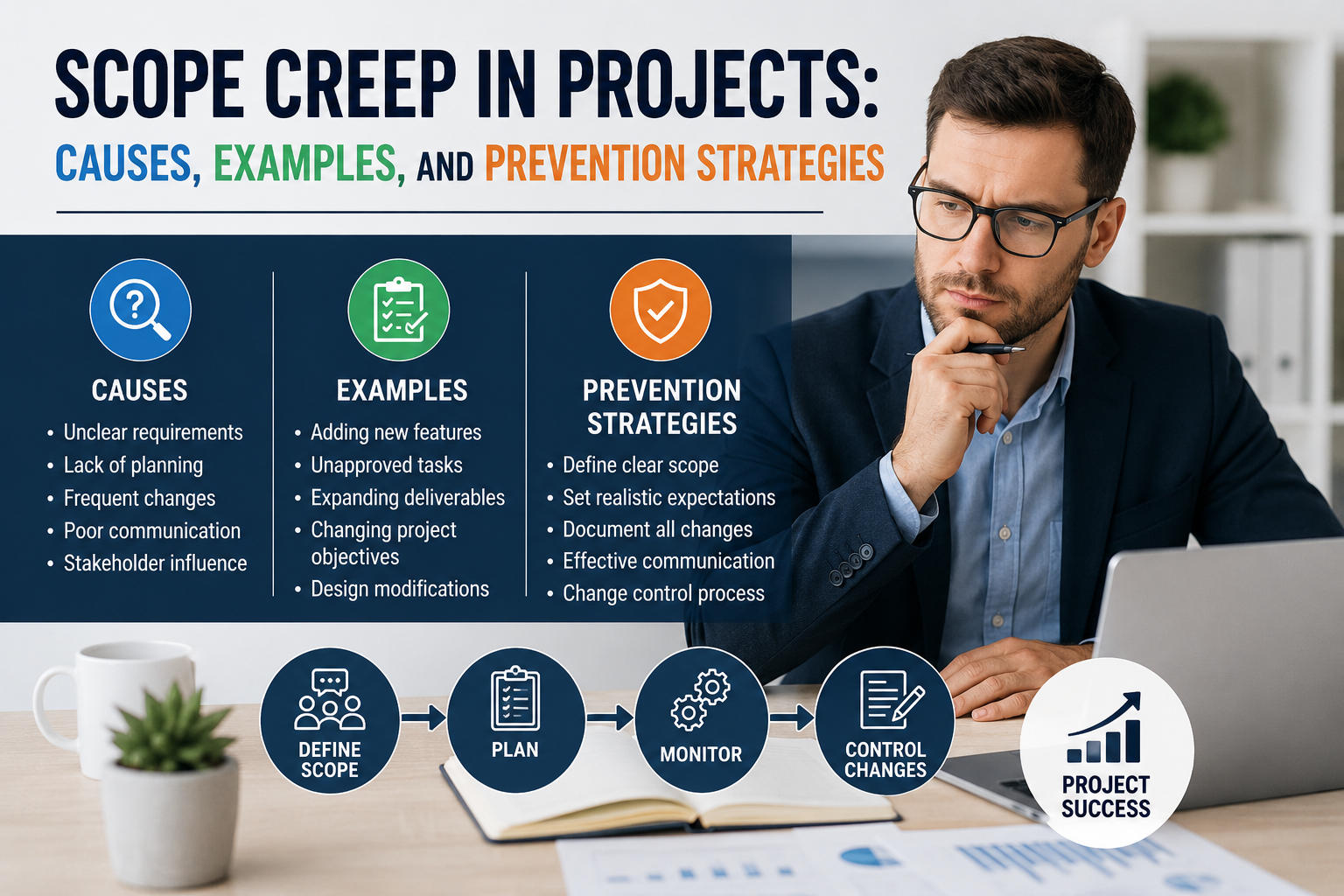
In the dynamic landscape of project management, one of the most common challenges faced by teams is scope creep. This phenomenon can lead to delays, increased costs, and, ultimately, project failure if not managed effectively. Understanding the causes of scope creep, its implications, and strategies to prevent it is essential for successful project planning and project scope management.
What is Scope Creep?
Scope creep refers to the gradual expansion of a project’s objectives beyond its original goals. This can happen when additional features, tasks, or requirements are added without corresponding adjustments in resources, time, or budget. For project managers in India, where the business environment is fast-paced and constantly evolving, recognizing and controlling scope creep is vital for maintaining project integrity.
Causes of Scope Creep
Understanding the root causes of scope creep is the first step in preventing it. Here are some common reasons why scope creep occurs:
1. Poorly Defined Project Requirements
One of the primary causes of scope creep is unclear or vague project requirements. When stakeholders are not aligned on what the project entails, it can lead to misunderstandings and expectations that deviate from the original plan.
2. Lack of Stakeholder Involvement
Stakeholders play a crucial role in defining and approving project scope. When they are not actively involved throughout the project, they may request changes later on, leading to scope creep. Engaging stakeholders from the beginning ensures that their needs and expectations are understood and documented.
3. Inadequate Change Management Processes
Without a structured change management process, it becomes easy for changes to be implemented without proper evaluation. This can lead to untracked alterations that contribute to scope creep. Implementing a robust change management strategy is essential for controlling project risks.
4. Team Dynamics and Communication Issues
Miscommunication among team members can result in different interpretations of project goals, leading to unnecessary changes. Establishing clear communication channels within the team can mitigate this risk.
5. Client or Stakeholder Indecision
Clients may often change their minds about project requirements as new ideas emerge or market conditions change. This indecision can lead to additions that were not part of the original scope. Managing client expectations is crucial in such scenarios.
Examples of Scope Creep
To better understand how scope creep manifests in real-world scenarios, consider the following examples:
Example 1: Software Development Project
In a software development project, a client initially requests a basic application with specific features. However, as the development progresses, the client keeps adding new features based on competitor analysis or changing market trends. This leads to delays and increased costs, as the development team has to rework existing functionalities.
Example 2: Event Planning
Imagine planning a corporate event where the initial scope includes organizing a simple seminar. As discussions progress, the stakeholders decide to add entertainment, catering, and promotional materials. Without adjusting the budget and timeline, the event planner finds it challenging to meet expectations, leading to stress and potential failures.
Prevention Strategies for Scope Creep
Now that we understand the causes and examples of scope creep, let’s explore some effective strategies for preventing it:
1. Clearly Define Project Scope
Start with a well-defined project scope document that includes all requirements, deliverables, and timelines. Make sure to involve all key stakeholders in this process to ensure alignment.
2. Implement a Change Management Process
Establish a clear change management process that outlines how changes to the project scope will be handled. This should include formal approval processes, impact assessments, and documentation of any changes made.
3. Maintain Regular Communication
Regular check-ins and updates with stakeholders can help manage expectations and keep everyone aligned on project goals. Use project management tools to facilitate communication and track progress.
4. Set Realistic Timelines and Budgets
When planning, ensure that timelines and budgets accommodate potential changes. This will help manage stakeholder expectations and reduce the temptation to make last-minute changes.
5. Train Your Team on Scope Management
Equip your project team with the necessary skills to manage scope effectively. Providing training on project scope management and change management can empower team members to identify and address potential scope creep proactively.
FAQs about Scope Creep
What is the difference between scope creep and scope change?
Scope creep refers to uncontrolled changes or continuous growth in a project’s scope without proper approval, while scope change involves formally documented and approved alterations made to the project scope.
How can I identify scope creep early in a project?
Regular monitoring of project deliverables against the defined scope, conducting frequent stakeholder meetings, and maintaining open lines of communication can help recognize scope creep early.
Can scope creep be avoided entirely?
While it may not be possible to eliminate scope creep entirely, implementing strict scope management and change control processes can significantly reduce its occurrence.
What are the consequences of not managing scope creep?
Failing to manage scope creep can lead to project delays, increased costs, diminished team morale, and ultimately, project failure.
Conclusion
In conclusion, understanding and managing scope creep is crucial for the success of any project. By establishing clear project requirements, engaging stakeholders, and implementing robust change management processes, project managers can mitigate the risks associated with scope creep. As the Indian business environment continues to evolve, mastering the art of project planning and project scope management will empower teams to deliver successful projects on time and within budget.
If you’re looking to enhance your project management skills or need assistance in navigating the complexities of project scope management, feel free to reach out to us. Our expert team is here to help you achieve your project goals effectively!
Call to Action: Contact us today to learn more about effective project management strategies and how we can assist you in avoiding scope creep in your projects!





Leave a Comment