
 Quality Management



















 IT Service Management



 Project Management


 Agile Management



 Web Development


 Cloud Computing

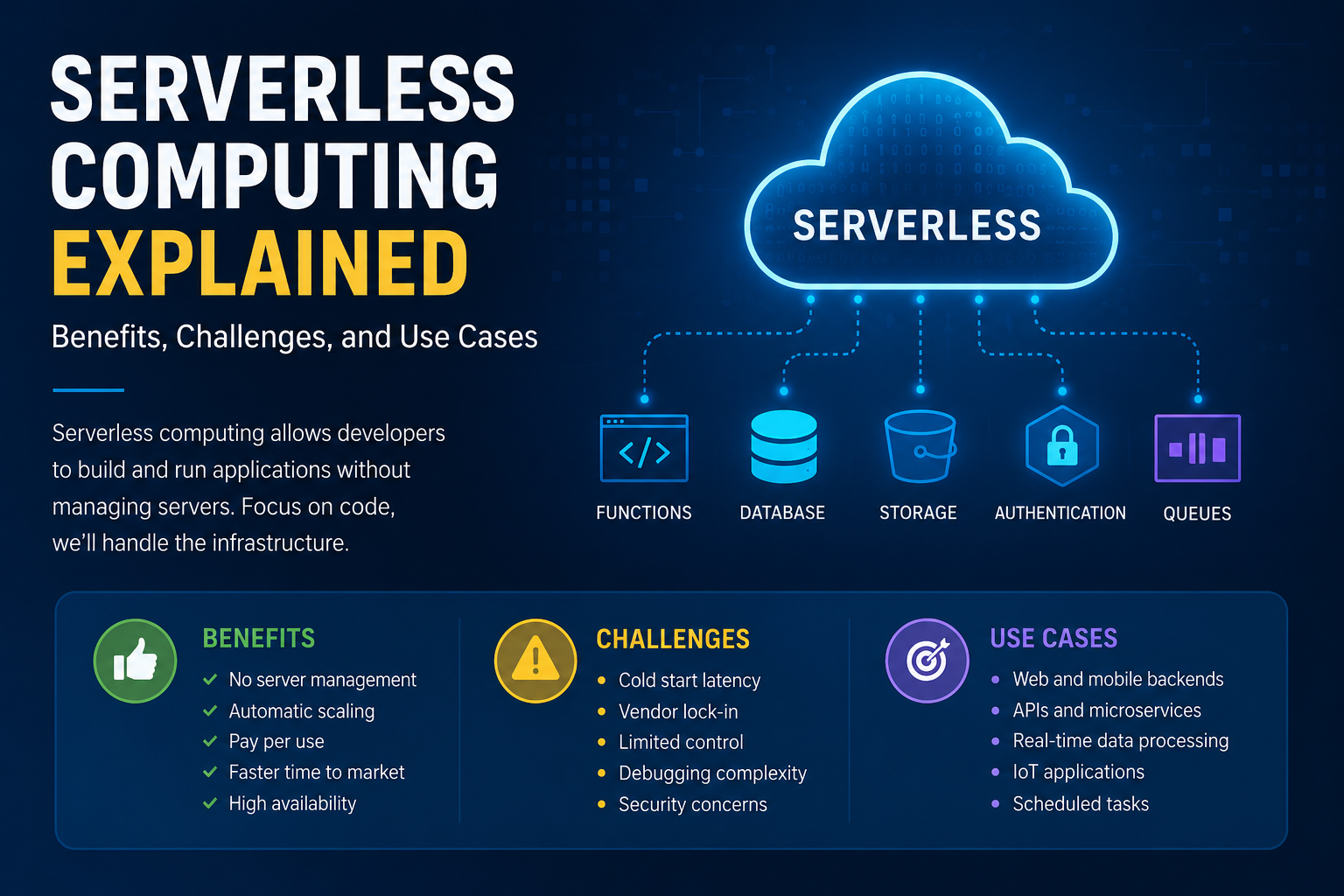
In today’s fast-paced digital landscape, businesses are constantly looking for ways to optimize their operations and reduce costs. One innovative solution that has gained traction is serverless computing. This revolutionary computing model allows developers to build and run applications without the complexities of managing servers. In this blog, we will delve deep into the world of serverless architecture, discuss its benefits, challenges, and explore various use cases, particularly in the context of the Indian market.
What is Serverless Computing?
At its core, serverless computing refers to a cloud computing execution model where the cloud provider dynamically manages the allocation and provisioning of servers. This means developers can focus solely on writing code, without worrying about the underlying infrastructure. Major cloud providers such as AWS, Microsoft Azure, and Google Cloud offer services that allow users to run cloud functions that scale automatically based on demand.
One of the most popular platforms for serverless applications is AWS Lambda. With AWS Lambda, developers can run code in response to events such as HTTP requests, file uploads, or database changes, and they are only charged for the compute time consumed. This not only simplifies deployment but also significantly reduces costs.
Benefits of Serverless Computing
1. Cost Efficiency
One of the standout advantages of serverless computing is its cost efficiency. Traditional server setups require businesses to pay for fixed resources, even during low-usage periods. In contrast, with serverless architecture, you are charged only for the actual compute time used. This pay-as-you-go model is particularly beneficial for startups and small businesses in India looking to minimize operational costs.
2. Scalability
Serverless applications inherently offer seamless scalability. The cloud provider automatically adjusts the resources based on the application’s demand. This is especially advantageous for businesses experiencing variable workloads, such as e-commerce platforms during festive seasons or promotional events.
3. Faster Time to Market
With serverless architecture, developers can significantly reduce deployment times. The elimination of server management and infrastructure setup allows teams to focus on writing code and developing features, enabling faster iterations and quicker launches. This agility is crucial for businesses aiming to stay competitive in the ever-evolving Indian market.
4. Enhanced Developer Productivity
By abstracting infrastructure management, serverless computing allows developers to concentrate on what they do best: coding. This leads to improved productivity as teams can spend more time on innovation and less on operational concerns. The availability of various tools and frameworks also streamlines the development process.
5. Built-in High Availability
Most serverless platforms, including AWS Lambda, come with built-in redundancy and availability. This means businesses do not have to worry about manual failover or backup processes, as the cloud provider takes care of these aspects, ensuring high uptime for applications.
Challenges of Serverless Computing
1. Cold Starts
One of the primary challenges associated with serverless computing is the phenomenon known as "cold starts." This occurs when a cloud function is invoked after a period of inactivity, leading to increased latency as the service initializes. While this may not affect all applications, it can be a concern for latency-sensitive applications.
2. Vendor Lock-in
Choosing a specific serverless platform can lead to vendor lock-in, making it challenging to migrate applications to another provider. Each cloud provider has its own set of tools, APIs, and features, and moving away from a chosen platform can require significant rewrites of application code.
3. Monitoring and Debugging
Debugging serverless applications can be more complex than traditional applications. Since the execution environment is abstracted away, developers may find it challenging to monitor performance and troubleshoot issues. However, many cloud providers offer monitoring tools to help mitigate this challenge.
4. Security Concerns
While cloud providers implement robust security measures, the shared responsibility model means that developers must also take steps to secure their applications. This includes managing API keys, ensuring secure data storage, and implementing proper authentication mechanisms.
Use Cases of Serverless Computing
1. Web Applications
Serverless architecture is an excellent fit for web applications, particularly those with unpredictable traffic patterns. For instance, an online learning platform can utilize AWS Lambda to handle fluctuating user requests during peak times without over-provisioning resources.
2. Data Processing
Serverless computing shines in data-intensive applications such as analytics and real-time data processing. Businesses can use cloud functions to process data streams, perform transformations, and store results without the overhead of managing servers. This is particularly relevant for Indian businesses looking to leverage big data analytics.
3. IoT Backend
With the rise of the Internet of Things (IoT) in India, serverless computing provides a scalable backend for IoT applications. For example, a smart agriculture system can utilize serverless functions to process data from sensors and trigger actions based on real-time data.
4. Chatbots and Messaging Applications
Developers can build chatbots and messaging applications using serverless architecture, allowing for easy scaling during peak usage periods. For instance, a customer service chatbot can handle thousands of inquiries simultaneously without requiring a dedicated server infrastructure.
5. Event-Driven Applications
Serverless computing is particularly suited for event-driven applications. Businesses can create applications that respond to various events, such as file uploads or database changes. For example, an e-commerce platform can trigger email notifications whenever a new order is placed, all without manual intervention.
Conclusion
Serverless computing represents a paradigm shift in how applications are designed and deployed. With its numerous benefits, including cost efficiency, scalability, and improved developer productivity, it’s no wonder that Indian businesses are increasingly adopting serverless architecture. However, it’s essential to remain aware of its challenges, such as cold starts and vendor lock-in.
As the technology continues to evolve, embracing serverless applications can help organizations stay competitive and agile in today’s fast-paced market. Whether you’re a startup or an established enterprise, exploring the potential of serverless computing could be the key to unlocking new levels of efficiency and innovation.
FAQs
1. What is the difference between serverless computing and traditional cloud computing?
In traditional cloud computing, users manage virtual servers and resources, while in serverless computing, the cloud provider handles the server management, allowing developers to focus solely on code and application logic.
2. Can serverless computing handle high traffic loads?
Yes, serverless architecture is designed to automatically scale based on demand, making it capable of handling high traffic loads effectively.
3. Is serverless computing suitable for all types of applications?
While serverless computing is beneficial for many applications, it may not be the best fit for applications requiring low latency or those with consistent high workloads.
4. How can I get started with serverless computing?
To get started, you can explore platforms like AWS Lambda, Microsoft Azure Functions, or Google Cloud Functions. Each platform provides comprehensive documentation to help you build your first serverless application.
5. What are some common use cases for serverless computing in India?
Common use cases include web applications, data processing, IoT backends, chatbots, and event-driven applications, all of which can benefit from the scalability and cost efficiency of serverless architecture.
Call to Action (CTA)
If you're ready to embrace the future of computing, consider exploring serverless computing for your next project. Whether you're building a startup or enhancing an existing application, the benefits of serverless architecture can help you achieve your goals faster and more efficiently. Contact us today to learn how we can help you navigate the world of serverless applications!


Leave a Comment