
 Quality Management



















 IT Service Management



 Project Management



 Agile Management




 Web Development



 Cloud Computing


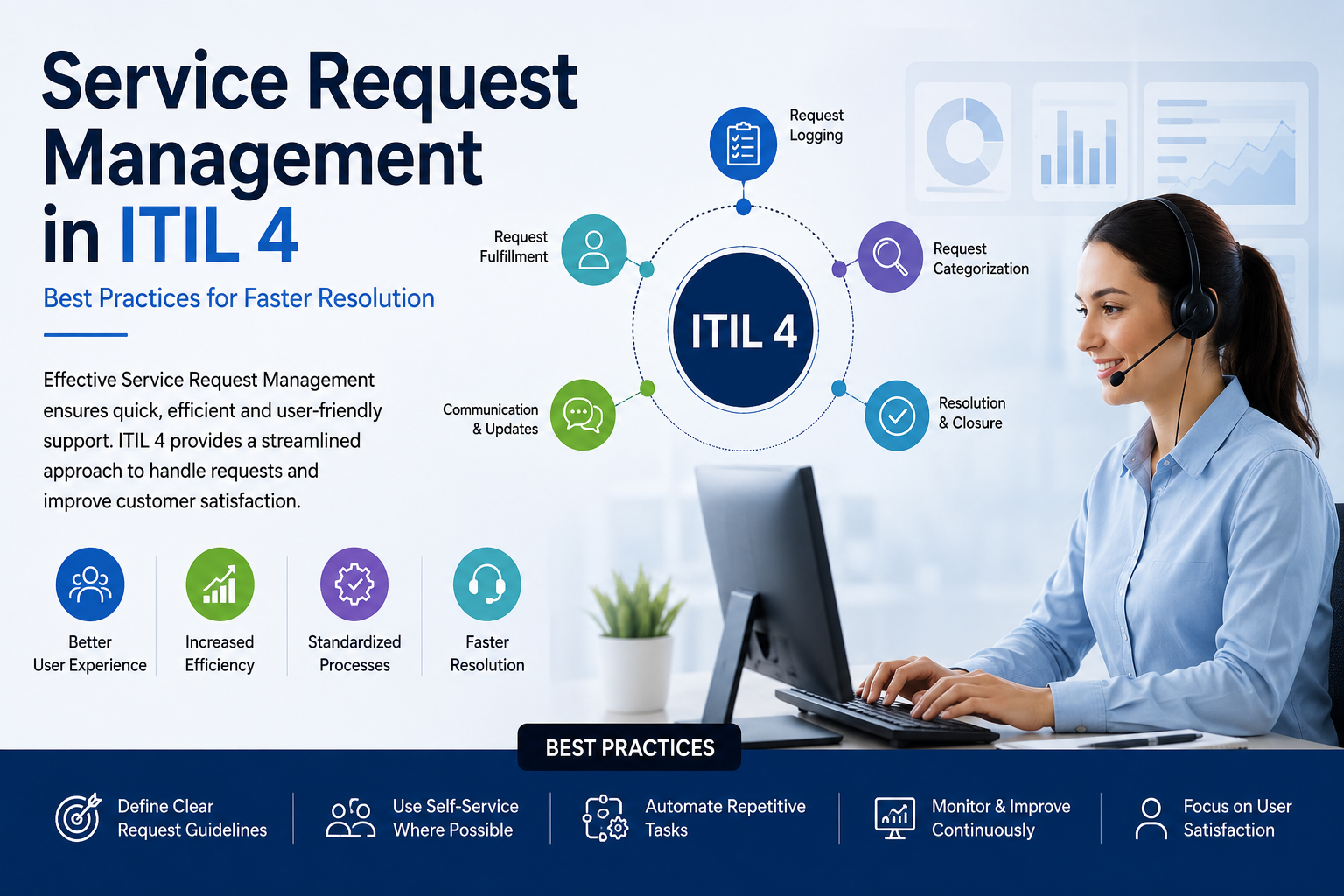
In today's fast-paced digital landscape, organizations are increasingly reliant on IT services to drive their operations. Service request management, particularly under the framework of ITIL 4, plays a pivotal role in ensuring that IT support processes are efficient and effective. This blog delves into the significance of service request management, outlines ITIL 4 practices, and provides best practices to achieve quicker resolution times.
Understanding Service Request Management
Service request management refers to the process of handling user requests for information, advice, standard changes, or access to IT services. These requests can range from simple password resets to more complex software installations. A robust service request management system is critical for maintaining user satisfaction and operational efficiency.
The Role of ITIL 4 in Service Management
ITIL 4 (Information Technology Infrastructure Library) is the latest iteration of the ITIL framework, which provides a comprehensive set of best practices for IT service management. By adopting ITIL 4 practices, organizations can streamline their service request management processes, leading to faster resolution times and enhanced user experiences.
Best Practices for Effective Service Request Management
Implementing best practices in service request management can significantly enhance the efficiency and effectiveness of IT support processes. Here are some proven strategies that can help organizations improve their request fulfillment capabilities:
1. Define Clear Service Request Categories
One of the first steps in optimizing service request management is to categorize requests clearly. This helps in routing requests to the appropriate teams and ensures that they are addressed in a timely manner. Common categories include:
- Access Requests
- Incident Requests
- Change Requests
- Information Requests
2. Implement a User-Friendly Self-Service Portal
A self-service portal empowers users to submit their requests easily and check the status of their requests. This reduces the load on IT support teams and allows users to find solutions to common issues independently. Make sure the portal is intuitive and provides comprehensive FAQs and guides.
3. Automate Routine Tasks
Automation is a game-changer in service request management. By automating repetitive tasks such as password resets or standard software installations, organizations can free up IT staff to focus on more complex issues. Automation not only speeds up request fulfillment but also reduces the likelihood of human error.
4. Establish Clear SLAs (Service Level Agreements)
Setting clear SLAs helps manage user expectations and ensures accountability within the IT support team. SLAs should specify the expected response and resolution times for different types of requests. Regularly review and adjust SLAs based on historical data and user feedback to keep them relevant and achievable.
5. Train Your IT Support Team
Investing in training for your IT support staff is essential for effective service request management. Equip them with the necessary skills and knowledge to handle requests efficiently. Regular training sessions can keep them updated on new technologies and best practices, fostering a culture of continuous improvement.
6. Monitor and Analyze Performance Metrics
Utilizing key performance indicators (KPIs) to monitor the effectiveness of your service request management process is essential. Metrics such as average response time, average resolution time, and user satisfaction scores can provide insights into areas for improvement. Regular analysis allows organizations to adapt their strategies for better outcomes.
Challenges in Service Request Management
While implementing effective service request management strategies can yield significant benefits, organizations often face challenges. Here are some common hurdles and ways to overcome them:
1. High Volume of Requests
Organizations may experience a surge in service requests, especially during peak times. To manage this, consider increasing your support staff or implementing a tiered support system where complex requests are escalated to specialized teams.
2. Lack of User Awareness
Users may not be aware of the available services or how to submit requests. Regular communication and training can help bridge this gap. Use newsletters, workshops, or webinars to educate users on the support process.
3. Insufficient Tools and Technologies
Outdated tools can hinder effective service request management. Invest in modern IT service management (ITSM) software that aligns with ITIL 4 practices. Ensure the tools you choose enable automation, reporting, and integration with other systems.
Conclusion
Service request management is an integral part of ITIL 4 practices that can significantly impact the efficiency of IT support processes. By implementing best practices such as defining clear categories, utilizing automation, and training staff, organizations can enhance their service management capabilities and achieve faster request fulfillment. The key to success lies in continual assessment and adaptation to meet the evolving needs of users.
FAQs
Q1: What is the difference between service requests and incidents?
A1: Service requests are user-initiated requests for information, advice, access, or standard changes, while incidents are unplanned interruptions to an IT service or reduction in the quality of an IT service.
Q2: How can automation improve service request management?
A2: Automation can handle repetitive tasks, reduce response times, minimize human error, and allow IT staff to focus on more complex issues, ultimately improving service request management efficiency.
Q3: What tools can help in effective service request management?
A3: Modern ITSM tools such as ServiceNow, Jira Service Management, and Freshservice provide features for automation, reporting, and integration crucial for effective service request management.
Q4: How important are SLAs in service request management?
A4: SLAs are critical as they set clear expectations for response and resolution times, ensuring accountability and improving user satisfaction.
Ready to enhance your service request management process? Contact us today for a consultation on how to implement ITIL 4 practices in your organization for better service management and faster resolutions!





Leave a Comment