
 Quality Management



















 IT Service Management



 Project Management



 Agile Management




 Web Development



 Cloud Computing


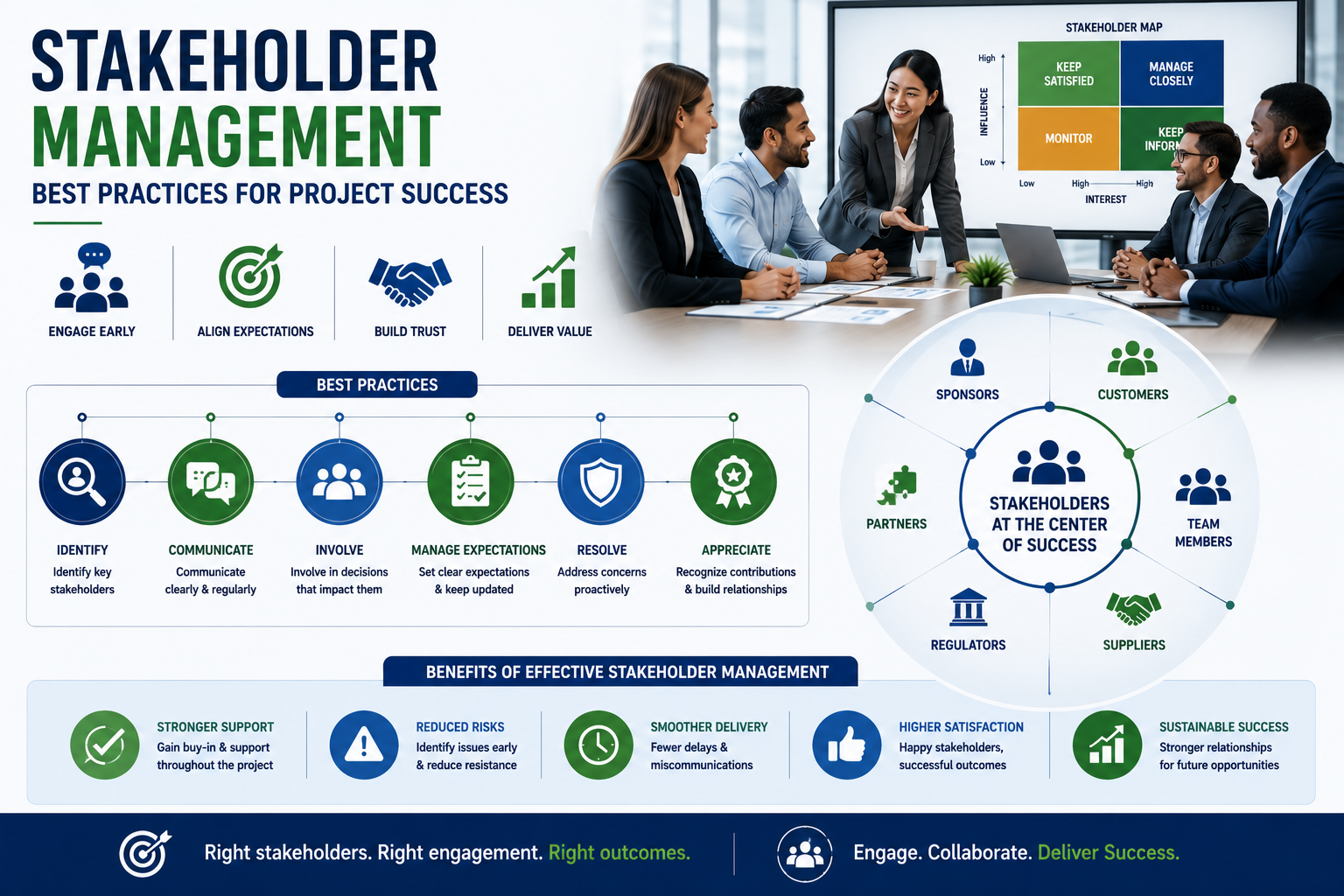
In the dynamic landscape of project management, the importance of stakeholder management cannot be overstated. In India, where projects often involve diverse groups of people and interests, mastering stakeholder engagement strategies can make or break a project's success. This blog will delve into best practices for effectively managing stakeholders, ensuring that your project not only meets its objectives but also fosters positive relationships.
Understanding Stakeholder Management
Stakeholder management is the systematic identification, analysis, planning, and implementation of actions designed to engage with stakeholders. Effective management of stakeholders means understanding their expectations and the impact your project has on them. This is particularly crucial in India, where cultural nuances can significantly influence stakeholder expectations and engagement.
Why Stakeholder Management is Vital
Successful projects are built on strong relationships. When stakeholders feel valued and engaged, they are more likely to support the project, leading to smoother execution and better outcomes. Here are a few reasons why stakeholder management is crucial:
- Improved Communication: Effective project communication management ensures that stakeholders are kept in the loop, reducing misunderstandings.
- Increased Support: Engaged stakeholders are more likely to champion the project, providing resources and assistance when needed.
- Risk Mitigation: Understanding stakeholder concerns allows teams to address potential issues before they escalate.
Best Practices for Stakeholder Management
1. Conduct a Stakeholder Analysis
The first step in successful stakeholder management is conducting a thorough stakeholder analysis. Identify all potential stakeholders, categorize them based on their influence and interest, and understand their needs and expectations. This will help you prioritize engagement efforts and tailor your communication strategies accordingly.
2. Develop Clear Engagement Strategies
Once you have identified your stakeholders, create tailored stakeholder engagement strategies. Consider their preferred communication methods—some may prefer face-to-face meetings while others might opt for emails or online dashboards. Your strategies should also include how often you will engage with them and the type of information you will share.
3. Foster Open Communication
Open communication is at the heart of effective stakeholder management. Utilize various channels to communicate project updates, gather feedback, and address concerns. Regular communication fosters transparency and builds trust, which is especially important in the Indian context where relationships play a crucial role in business.
4. Build Strong Relationships
Invest time in building relationships with stakeholders. Understand their motivations, concerns, and how your project aligns with their goals. Attend industry events, host workshops, or even schedule informal catch-ups to strengthen these relationships. Remember, strong relationships can lead to better collaboration and support.
5. Monitor and Adapt
Stakeholder management is not a one-time task; it requires ongoing monitoring and adaptation. Regularly review your stakeholder engagement strategies and be open to making adjustments based on feedback and changing circumstances. This will help maintain stakeholder interest and support throughout the project lifecycle.
Project Leadership in Stakeholder Management
Effective project leadership plays a crucial role in stakeholder management. Leaders must champion stakeholder engagement, ensuring that it is prioritized within the project team. They should also model effective communication and relationship-building behaviors, encouraging team members to engage proactively with stakeholders.
1. Lead by Example
As a project leader, your approach to stakeholder management sets the tone for the rest of the team. Be proactive in engaging with stakeholders, and demonstrate the importance of their input. Your enthusiasm and commitment will inspire your team to follow suit.
2. Encourage Team Involvement
Involve your team in stakeholder management efforts. Assign team members to specific stakeholders based on their strengths and relationships. This not only builds team capacity but also fosters a collective sense of responsibility towards stakeholder engagement.
3. Provide Training and Resources
Equip your team with the necessary skills and tools for effective stakeholder management. Offer training sessions on communication strategies, conflict resolution, and relationship-building. Providing resources such as templates for stakeholder analysis can also aid in their efforts.
Challenges in Stakeholder Management
While stakeholder management is vital for project success, it is not without its challenges. Here are a few common hurdles faced in the Indian context:
- Diverse Stakeholder Interests: Balancing the needs and expectations of various stakeholders can be complex, especially in projects involving multiple communities or sectors.
- Cultural Differences: India’s diverse cultural landscape means that communication styles and expectations can vary widely, requiring a nuanced approach.
- Resistance to Change: Stakeholders may resist project initiatives if they perceive a threat to their interests. Understanding and addressing these concerns is crucial.
FAQs about Stakeholder Management
What is the role of stakeholder management in project success?
Stakeholder management is crucial for project success as it ensures that all parties involved are informed, engaged, and supportive. Effective management leads to better communication, risk mitigation, and increased project support.
How can I conduct a stakeholder analysis?
To conduct a stakeholder analysis, identify potential stakeholders, categorize them based on their influence and interest, and understand their needs and expectations. Tools such as stakeholder matrices can help visualize this information.
What are effective communication strategies for stakeholders?
Effective communication strategies include regular updates through various channels such as emails, meetings, or social media, and soliciting feedback from stakeholders to ensure their concerns are addressed.
How can project leaders enhance stakeholder engagement?
Project leaders can enhance stakeholder engagement by leading by example, fostering team involvement in stakeholder management, and providing training and resources for effective communication and relationship-building.
Conclusion
In conclusion, effective stakeholder management is a cornerstone of successful project execution. By implementing best practices such as conducting stakeholder analyses, developing clear engagement strategies, and fostering open communication, project teams in India can navigate the complexities of diverse stakeholder landscapes. Remember, strong relationships and proactive engagement are key to achieving project success.
Are you ready to elevate your stakeholder management strategies? Connect with us today to learn how we can assist you in ensuring project success through effective stakeholder engagement!



Leave a Comment