
 Quality Management



















 IT Service Management



 Project Management



 Agile Management



 Web Development



 Cloud Computing


In the dynamic world of IT service management, the four dimensions of ITIL provide a holistic approach to delivering quality services. The ITIL framework has evolved significantly since its inception, and the latest version, ITIL 4, introduced these dimensions to ensure that organizations can meet the ever-changing demands of their customers. In this blog, we'll delve deep into the ITIL 4 dimensions, exploring how they contribute to effective service management and aligning with ITSM best practices.
Understanding the ITIL Framework
The ITIL framework is a set of practices for IT service management (ITSM) that focuses on aligning IT services with the needs of the business. ITIL 4, the latest iteration, emphasizes a more flexible, collaborative approach to service delivery, incorporating modern practices like Agile, DevOps, and Lean.
The Four Dimensions of Service Management
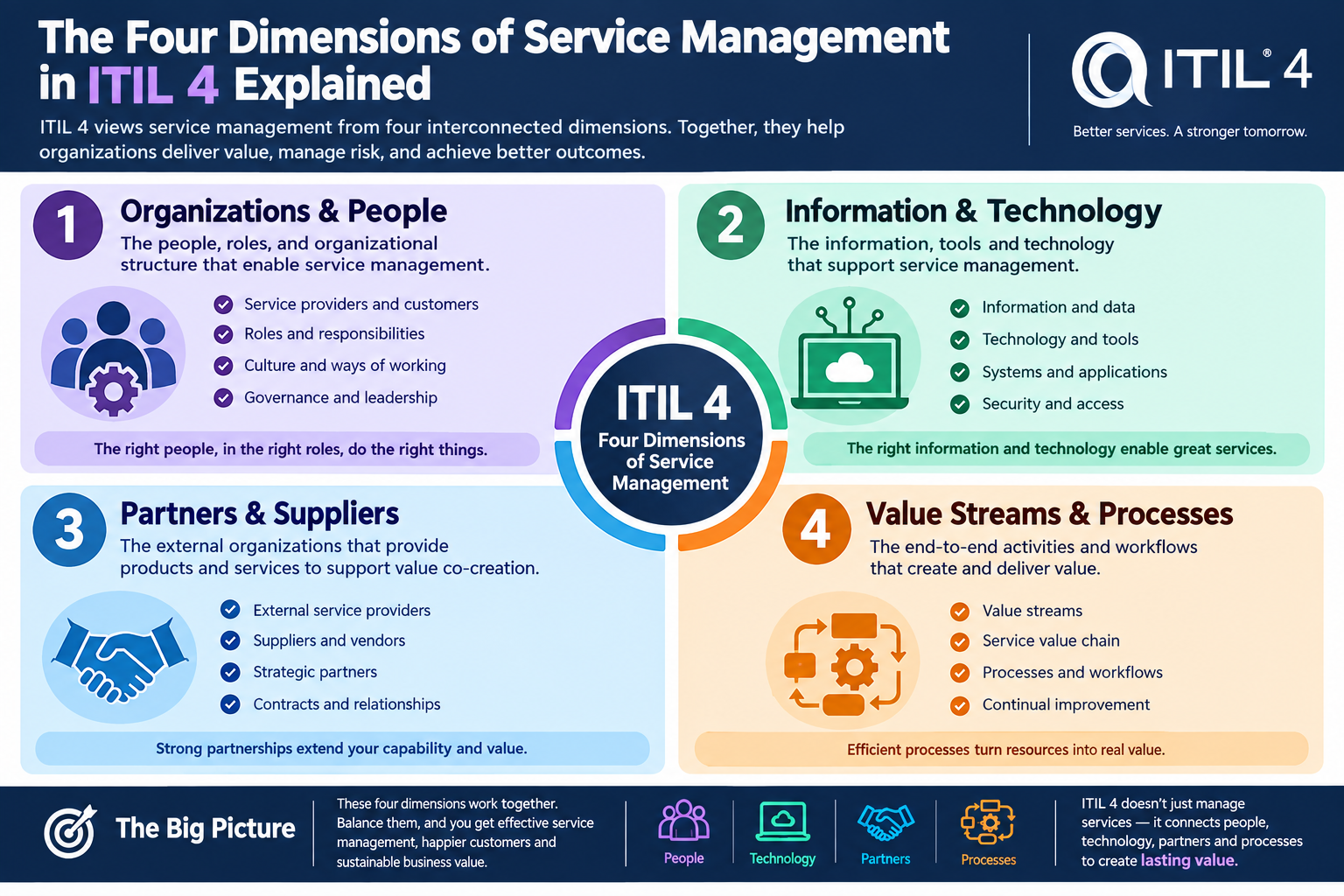
The four dimensions of service management in ITIL 4 are:
- Organizations and People
- Information and Technology
- Partners and Suppliers
- Value Streams and Processes
Let’s explore each dimension in detail.
1. Organizations and People
The first dimension, Organizations and People, highlights the importance of human resources and organizational structure in delivering effective services. This dimension emphasizes that to implement ITSM best practices, organizations must cultivate a culture of collaboration and continuous improvement.
Key aspects include:
- Roles and Responsibilities: Clearly defining roles and responsibilities ensures that everyone knows their contribution to the service delivery process.
- Culture: A positive organizational culture fosters teamwork, innovation, and responsiveness to change.
- Training and Development: Investing in skills development enhances employee capability and prepares them to handle new technologies and methodologies.
2. Information and Technology
The second dimension focuses on the systems and technologies that support service delivery. With the rapid advancements in technology, it’s crucial for organizations to leverage the right tools and information to optimize their services.
Key considerations in this dimension include:
- Data Management: Effective data management practices ensure that accurate and timely information is available for decision-making.
- Technology Integration: Seamless integration of different technologies enhances service efficiency and reduces operational silos.
- Security and Compliance: Ensuring that data and applications are secure and compliant with regulations is vital for maintaining customer trust.
3. Partners and Suppliers
The third dimension, Partners and Suppliers, reflects the growing trend of outsourcing and collaboration in service delivery. Organizations rely on various external partners and suppliers to provide essential services and capabilities.
Important factors in this dimension include:
- Relationship Management: Building strong relationships with suppliers and partners fosters collaboration and enhances service quality.
- Service Level Agreements (SLAs): Well-defined SLAs ensure that service expectations and responsibilities are clear, leading to better performance.
- Risk Management: Understanding and managing risks associated with third-party services is crucial for uninterrupted service delivery.
4. Value Streams and Processes
The final dimension focuses on the workflows and processes that create value for customers. It’s essential to design, manage, and improve these processes to align with business objectives and customer needs.
Key elements include:
- Value Stream Mapping: Visualizing value streams helps identify inefficiencies and opportunities for improvement.
- Process Optimization: Continually refining processes ensures they remain efficient and aligned with changing business goals.
- Customer-Centric Approach: Understanding customer needs and feedback is vital for developing processes that deliver real value.
Integrating the Four Dimensions
While each dimension has its unique focus, they are interdependent and must work together to create a cohesive service management strategy. Organizations should strive to integrate these dimensions to enhance their overall service delivery and improve customer satisfaction.
For instance, a well-defined process (Value Streams and Processes) should leverage appropriate technology (Information and Technology) and involve the right people (Organizations and People), while also considering the role of partners (Partners and Suppliers). This holistic approach not only improves service quality but also drives continuous improvement.
Conclusion
The four dimensions of ITIL represent a comprehensive framework for organizations looking to enhance their IT service management practices. By focusing on Organizations and People, Information and Technology, Partners and Suppliers, and Value Streams and Processes, companies can align their service delivery with business objectives and customer expectations.
As you look to implement or refine your ITSM strategy, consider how these dimensions can be integrated into your existing processes. Embracing the ITIL 4 dimensions will not only streamline your operations but also position your organization for sustained success in a competitive landscape.
FAQs
What is the importance of the four dimensions of ITIL?
The four dimensions of ITIL provide a holistic approach to service management, ensuring that organizations align their services with business needs while fostering collaboration, efficiency, and continuous improvement.
How can I implement the four dimensions in my organization?
Start by assessing your current practices in each dimension, identify gaps, and develop a strategy that integrates these dimensions into your service management processes.
Are the four dimensions applicable to all industries?
Yes, while the ITIL framework is primarily designed for IT services, the principles of the four dimensions can be applied across various industries to enhance service delivery.
Call to Action
Ready to transform your IT service management strategy? Embrace the four dimensions of ITIL and watch your organization thrive. Contact us today to learn how we can help you implement ITIL 4 and align your services with best practices!



Leave a Comment