
 Quality Management



















 IT Service Management



 Project Management



 Agile Management




 Web Development



 Cloud Computing


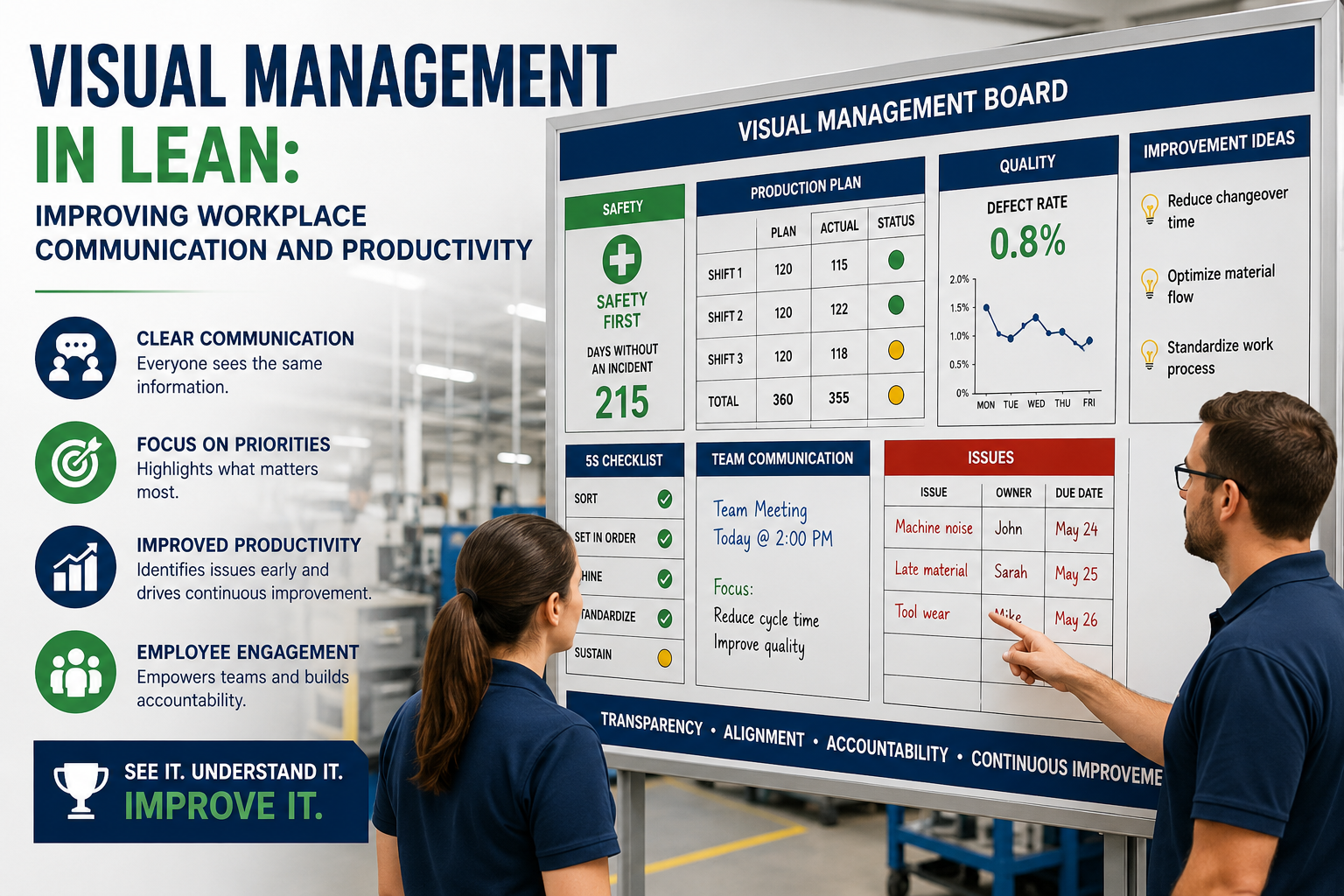
In the fast-paced environment of Indian industries today, effective communication and heightened productivity are essential for success. One powerful approach that has gained traction is visual management, a cornerstone of lean manufacturing tools. This technique not only simplifies complex information but also enhances workplace communication, thereby fostering a culture of continuous improvement. In this blog, we will explore the principles of lean visual management and how it can significantly boost workplace productivity.
Understanding Visual Management
Visual management refers to the use of visual signals to convey information in the workplace. It can include charts, graphs, color-coded systems, and other visual aids that help teams understand processes and performance at a glance. The primary goal is to make the status of operations visible and easily understandable. By implementing a visual workplace, organizations can streamline operations and enhance employee engagement.
The Importance of Visual Management in Lean
Lean methodology focuses on eliminating waste and maximizing efficiency. Visual management plays a crucial role in achieving these objectives by:
- Enhancing Communication: Visual tools break down language barriers and reduce misunderstandings. A clear visual representation of processes allows all employees to stay aligned and informed.
- Facilitating Quick Decision-Making: With real-time visual data, teams can quickly identify issues and make informed decisions, minimizing delays and enhancing responsiveness.
- Promoting Accountability: Visual boards and metrics foster a sense of ownership among employees. They can see their contributions and understand how their efforts impact overall productivity.
Key Components of Lean Visual Management
To effectively implement lean visual management, several key components should be considered:
1. Visual Displays
Visual displays come in various forms, including:
- Kanban Boards: These boards help visualize workflow and inventory, making it easier to monitor progress and manage tasks.
- Performance Metrics: Dashboards displaying KPIs (Key Performance Indicators) provide real-time insights into productivity levels.
- Process Maps: Visual documentation of processes helps identify bottlenecks and streamline operations.
2. Color Coding
Color coding is a simple yet effective way to convey information. For instance, using red to indicate issues or delays and green for on-track processes helps everyone quickly assess the status of operations.
3. Standardized Work Instructions
Creating visual work instructions ensures consistency and clarity in tasks. Simple diagrams or flowcharts can guide employees through complex procedures, reducing errors and improving efficiency.
Implementing Visual Management in Your Workplace
Implementing a visual workplace requires careful planning and execution. Here are steps to guide you:
1. Assess Your Current Processes
Begin by identifying areas of improvement within your current processes. Involve employees in this assessment to gather insights and foster buy-in.
2. Choose the Right Visual Tools
Based on your assessment, select visual tools that best fit your organization’s needs. Consider employee input to ensure that the chosen tools resonate with their work environment.
3. Train Your Team
Training is key to successful implementation. Ensure that all employees understand the purpose of visual management and how to utilize the tools effectively.
4. Monitor and Adjust
Regularly review the effectiveness of your visual management system. Gather feedback from employees and make necessary adjustments to enhance usability and impact.
Benefits of Visual Management for Workplace Productivity
Adopting visual management practices can yield numerous benefits for workplace productivity:
1. Increased Engagement
When employees can see their performance metrics and progress, they feel more engaged and motivated to contribute. This engagement leads to higher morale and productivity.
2. Reduced Errors
Visual work instructions and displays help minimize misunderstandings and errors. When processes are clear, employees can perform tasks more efficiently, leading to time savings and improved output.
3. Enhanced Problem-Solving
Visual management tools allow teams to identify problems quickly. By visualizing workflow, employees can collaboratively address issues, leading to faster resolutions and continuous improvement.
FAQs about Visual Management in Lean
What is the main goal of visual management?
The main goal of visual management is to enhance communication and understanding within the workplace, making processes clear and accessible to all employees.
How does visual management improve productivity?
By providing real-time insights and reducing misunderstandings, visual management allows teams to make faster decisions, minimize errors, and enhance overall efficiency.
Can visual management tools be used in any industry?
Yes, visual management tools can be adapted to various industries, including manufacturing, healthcare, and service sectors, to improve processes and communication.
What are some examples of visual management tools?
Examples include Kanban boards, performance dashboards, color-coded systems, and process maps.
How can I get started with visual management?
Begin by assessing your current processes, selecting appropriate visual tools, training your team, and continuously monitoring the effectiveness of your visual management system.
Conclusion
In conclusion, adopting visual management techniques within the framework of lean manufacturing tools can significantly enhance workplace productivity and communication. By fostering a visual workplace, organizations can empower their employees, streamline processes, and achieve higher efficiency. If you’re looking to implement visual management in your organization, start small, gather feedback, and continuously improve your approach. The journey towards a more productive workplace begins with clear and effective communication.
Call to Action: Ready to take your workplace productivity to the next level? Explore our range of lean manufacturing tools and resources to implement visual management today. Contact us for a consultation!




Leave a Comment