 Quality Management


















 IT Service Management



 Project Management


 Agile Management



 Web Development


 Cloud Computing

In the fast-paced business environment of India, effective project management is crucial for the success of any organization. A well-defined project management methodology serves as the backbone of any project, guiding teams to achieve their goals efficiently. But what exactly is a project management methodology, and how can you choose the right one for your organization? In this guide, we will explore the various project management frameworks, project management methods, and approaches available, helping you make an informed decision.
Understanding Project Management Methodology
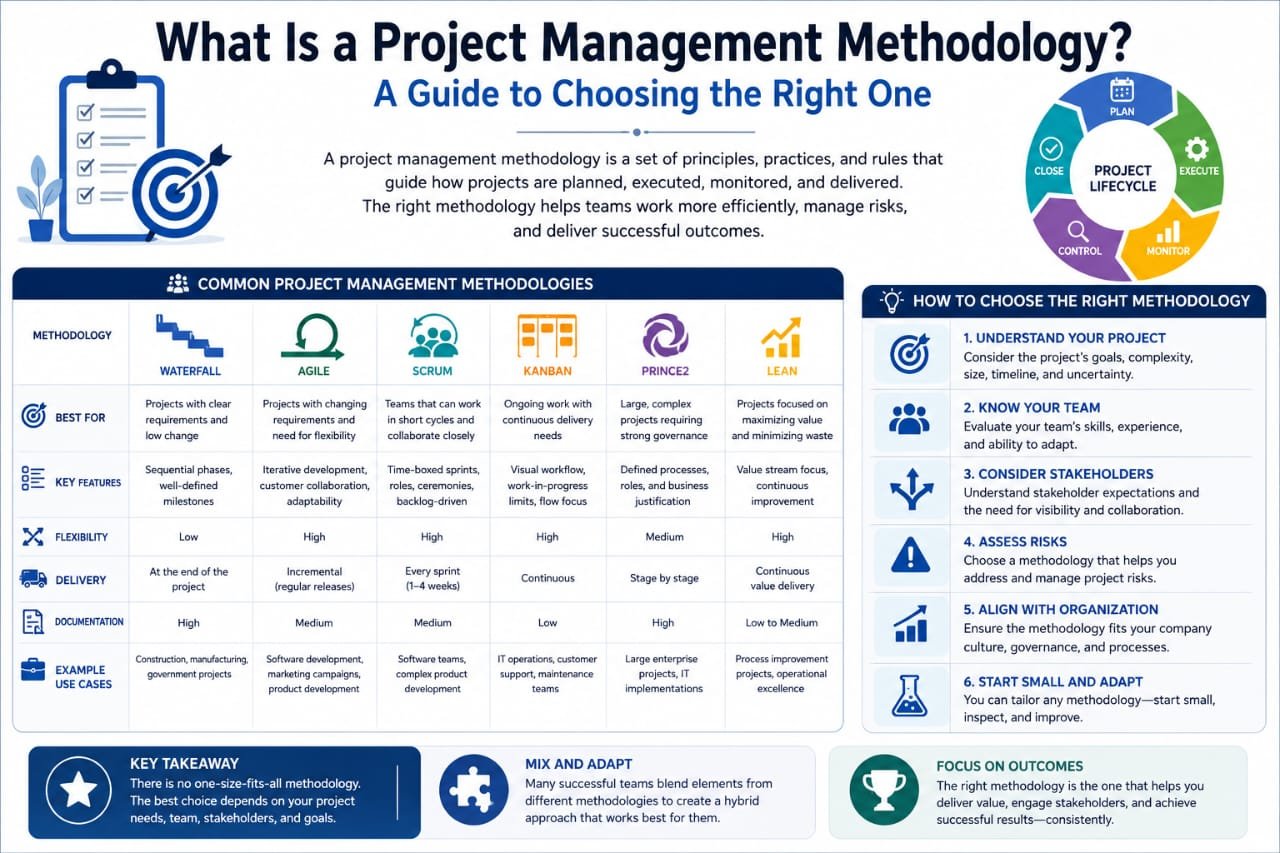
A project management methodology is a structured approach that outlines how a project is to be executed, monitored, and completed. It provides a framework for planning, executing, and controlling project activities, ensuring that objectives are met on time and within budget. This methodology encompasses various tools, techniques, and best practices that can be tailored to suit the specific needs of a project.
Why Is Project Management Methodology Important?
Choosing the right project management approach can significantly impact the success of your projects. Here are a few reasons why a well-defined methodology is essential:
- Improved Efficiency: A clear methodology streamlines project processes, reducing time spent on planning and execution.
- Enhanced Communication: With a structured approach, team members have a clear understanding of their roles and responsibilities, fostering better collaboration.
- Risk Management: A well-defined methodology helps identify potential risks early in the project life cycle, allowing for proactive mitigation strategies.
- Quality Control: By adhering to standardized processes, organizations can maintain a consistent level of quality in project deliverables.
Types of Project Management Methodologies
There are several project management frameworks available, each with its unique features and applications. Here are some of the most popular methodologies used in India:
1. Waterfall Methodology
The Waterfall model is one of the most traditional project management methods. It follows a linear and sequential approach, where each phase must be completed before the next one begins. This methodology is best suited for projects with well-defined requirements and low levels of uncertainty.
2. Agile Methodology
Agile is a flexible and iterative approach to project management that emphasizes collaboration and customer feedback. This methodology is particularly effective for projects with evolving requirements, such as software development. Agile promotes frequent reassessment and adaptation, allowing teams to respond to changes quickly.
3. Scrum Framework
Scrum is a subset of Agile and is used primarily for software development projects. It divides projects into smaller, manageable units known as sprints, typically lasting two to four weeks. This framework encourages regular communication, with daily stand-up meetings to track progress and address challenges.
4. Kanban Method
Kanban is another Agile framework that focuses on visualizing work in progress. By using a Kanban board, teams can see tasks at different stages of completion, helping to identify bottlenecks and optimize workflow. This method is ideal for projects requiring continuous delivery.
5. PRINCE2
PRINCE2 (Projects IN Controlled Environments) is a highly structured project management methodology that emphasizes organization, control, and quality. It is particularly popular in the UK and is gaining traction in India. PRINCE2 is suitable for large-scale projects and offers a clear framework for all project stages.
6. Lean Project Management
Lean focuses on maximizing value while minimizing waste. This methodology is rooted in manufacturing but has been successfully adapted for various industries. Lean encourages teams to continuously improve processes and eliminate inefficiencies, making it a valuable approach for organizations looking to enhance productivity.
Choosing the Right Project Management Methodology
Selecting the appropriate project management methodology for your organization involves several key considerations:
1. Project Scope and Complexity
Evaluate the size and complexity of your project. For straightforward projects with clear requirements, a traditional methodology like Waterfall may be suitable. Conversely, for complex projects with changing requirements, Agile or Scrum might be more effective.
2. Team Dynamics
Consider the skills and preferences of your team. Some teams thrive in structured environments, while others may prefer a more flexible approach. Understanding your team's strengths can help you select the right methodology.
3. Industry Standards
Different industries may have preferred project management frameworks. Researching industry best practices can provide insights into which methodologies are most effective for your specific field.
4. Stakeholder Involvement
Assess the level of stakeholder involvement required in your project. Agile methodologies often require frequent feedback from stakeholders, while traditional approaches may involve less direct interaction.
5. Risk Tolerance
Understand your organization's risk tolerance. If your organization is risk-averse, a more structured methodology like PRINCE2 may be appropriate. If you're open to experimentation and change, Agile could be a better fit.
Implementing Your Chosen Methodology
Once you've selected the right project management approach, it's essential to implement it effectively:
- Training: Provide training to your team on the selected methodology to ensure everyone understands the processes and tools involved.
- Tools and Software: Invest in project management software that aligns with your chosen methodology to streamline processes and enhance collaboration.
- Continuous Improvement: Encourage a culture of continuous improvement, allowing your team to adapt and refine processes as needed.
FAQs
What is the difference between project management methodology and project management framework?
A project management methodology is a set of practices and principles that guide how projects are managed, while a project management framework provides a structure for implementing those methodologies. Frameworks can include various methodologies but are more focused on the overall process rather than specific practices.
Can a project use multiple methodologies?
Yes, it is possible to combine elements from different methodologies to create a hybrid approach that best suits your project's needs. This flexibility allows organizations to tailor their project management practices to their specific requirements.
How can I determine the best methodology for my team?
To determine the best methodology for your team, consider factors such as project complexity, team dynamics, stakeholder involvement, and industry standards. Engaging your team in discussions about their preferences and experiences can also provide valuable insights.
Is training necessary when implementing a new project management methodology?
Yes, training is crucial when implementing a new methodology. It ensures that all team members are familiar with the processes, tools, and best practices associated with the chosen methodology, leading to better project outcomes.
Conclusion
Choosing the right project management methodology is essential for the success of your projects. By understanding the various project management frameworks and methods available, you can make informed decisions that align with your organization's goals and needs. Remember, the key to successful project management lies in adapting your approach to suit the unique challenges of each project.
If you're looking to enhance your project management skills and implement effective methodologies in your organization, consider reaching out to a project management consultant or enrolling in a training program. Don't leave your project success to chance—take the first step towards effective project planning today!
Call to Action: Ready to elevate your project management game? Contact us today for expert guidance and training tailored to your organization's needs!



Leave a Comment