
 Quality Management



















 IT Service Management



 Project Management


 Agile Management



 Web Development


 Cloud Computing
In today’s fast-paced business environment, optimizing processes is crucial for enhancing productivity and efficiency. One of the key methodologies in achieving this is bottleneck analysis. This article delves into what bottleneck analysis is, how to identify process bottlenecks, and the role of bottleneck management in driving process flow improvement.
Understanding Bottleneck Analysis
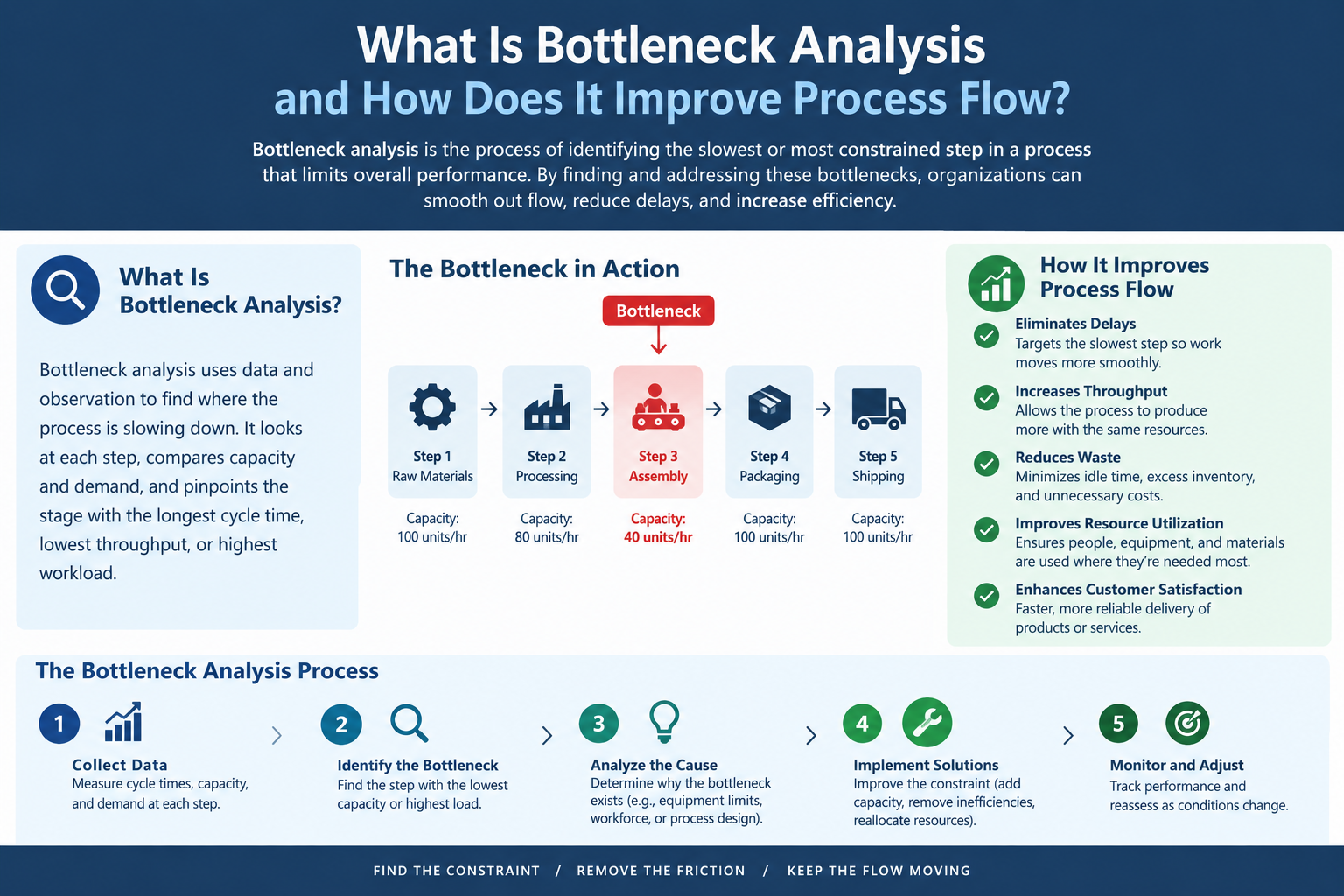
Bottleneck analysis is a systematic approach used to identify the most critical limiting factor in a process that hinders overall performance. A bottleneck can occur at any stage of a process, causing delays and inefficiencies. By focusing on these bottlenecks, businesses can streamline operations and enhance their output.
The Importance of Identifying Process Bottlenecks
Identifying process bottlenecks is essential for several reasons:
- Enhanced Efficiency: By knowing where the bottlenecks are, organizations can target improvements in those areas, leading to better resource allocation.
- Cost Reduction: Eliminating bottlenecks often reduces operational costs, as processes become more efficient and require less time and fewer resources.
- Improved Customer Satisfaction: Streamlined processes lead to faster service delivery, enhancing customer experience and satisfaction.
How to Conduct a Bottleneck Analysis
Conducting a bottleneck analysis involves several steps. Here’s a guide to help you get started:
1. Map the Process
The first step in bottleneck analysis is to create a detailed map of the current process. This could be in the form of a flowchart that outlines each step involved. Mapping helps visualize the entire workflow, making it easier to identify where delays occur.
2. Collect Data
Gather data on each step of the process, including time taken, resources used, and output generated. This data will be crucial in identifying which step is causing the most delays.
3. Identify the Bottleneck
Analyze the data collected to pinpoint the step that has the highest wait times, longest processing times, or highest resource consumption. This step is often referred to as the process bottleneck.
4. Analyze the Causes
Once the bottleneck has been identified, it’s essential to analyze the underlying causes. Is it due to a lack of resources, inefficient processes, or perhaps equipment failure? Understanding the root cause is vital for effective bottleneck management.
5. Implement Solutions
After identifying and analyzing the bottleneck, develop and implement solutions to address the issue. This could involve reallocating resources, optimizing workflows, or investing in new technology. The aim is to eliminate or reduce the bottleneck, leading to enhanced process flow improvement.
Techniques for Bottleneck Management
Effective bottleneck management is critical for continuous improvement in processes. Here are some techniques to consider:
1. Lean Process Improvement
Lean methodology focuses on minimizing waste and maximizing productivity. Applying lean principles can help identify non-value-added activities contributing to bottlenecks, allowing organizations to streamline processes effectively.
2. Continuous Monitoring
Bottleneck analysis should not be a one-time exercise. Continuous monitoring of processes is essential to ensure that new bottlenecks don’t emerge. Regularly review and adjust your processes as necessary to maintain optimal flow.
3. Invest in Technology
Utilizing technology such as process automation tools and workflow management systems can significantly improve process flow. These tools help in tracking performance, identifying bottlenecks in real time, and facilitating faster decision-making.
4. Employee Training
Investing in employee training can also help in bottleneck management. Educating employees about efficient practices and the importance of their roles can lead to a more proactive approach to identifying and resolving bottlenecks.
Case Studies: Success Stories in Bottleneck Analysis
To illustrate the effectiveness of bottleneck analysis, let’s look at a couple of success stories from Indian enterprises:
Case Study 1: Manufacturing Sector
A leading manufacturing company in India faced significant delays in its production line due to a bottleneck in the assembly stage. After conducting a thorough bottleneck analysis, they identified that the assembly team lacked adequate tools and resources. By investing in additional equipment and training employees in lean practices, the company was able to reduce assembly time by 30%, leading to a considerable increase in overall productivity.
Case Study 2: Service Industry
A prominent service provider in India utilized bottleneck analysis to improve its customer service processes. The company discovered that customer inquiries were delayed due to an inefficient ticketing system. By implementing a new, streamlined customer relationship management (CRM) tool, they reduced response times by 50%, significantly enhancing customer satisfaction.
FAQs About Bottleneck Analysis
What is a bottleneck in a process?
A bottleneck in a process is a stage where the flow of operations slows down due to limitations in capacity, leading to delays and reduced efficiency.
How can I identify a bottleneck in my processes?
You can identify a bottleneck by mapping your process, collecting data on each step, and analyzing the time and resources consumed to pinpoint where delays occur.
What are some common causes of bottlenecks?
Common causes of bottlenecks include insufficient resources, inefficient workflows, outdated technology, and poor communication among team members.
Why is bottleneck management important?
Bottleneck management is crucial for improving process efficiency, reducing costs, and enhancing customer satisfaction by ensuring smoother and faster workflows.
Conclusion
Bottleneck analysis is an invaluable tool for businesses seeking to improve their operational efficiency. By identifying and managing process bottlenecks, organizations can enhance their productivity, reduce costs, and improve customer satisfaction. Whether you are in the manufacturing sector or the service industry, implementing bottleneck analysis can lead to significant process flow improvement. Start your journey towards a leaner, more efficient operation today!
Call to Action
Are you ready to optimize your processes and eliminate bottlenecks? Contact us today for expert advice on bottleneck analysis and process flow improvement. Let’s work together to enhance your operational efficiency!



Leave a Comment