
 Quality Management



















 IT Service Management



 Project Management



 Agile Management




 Web Development



 Cloud Computing


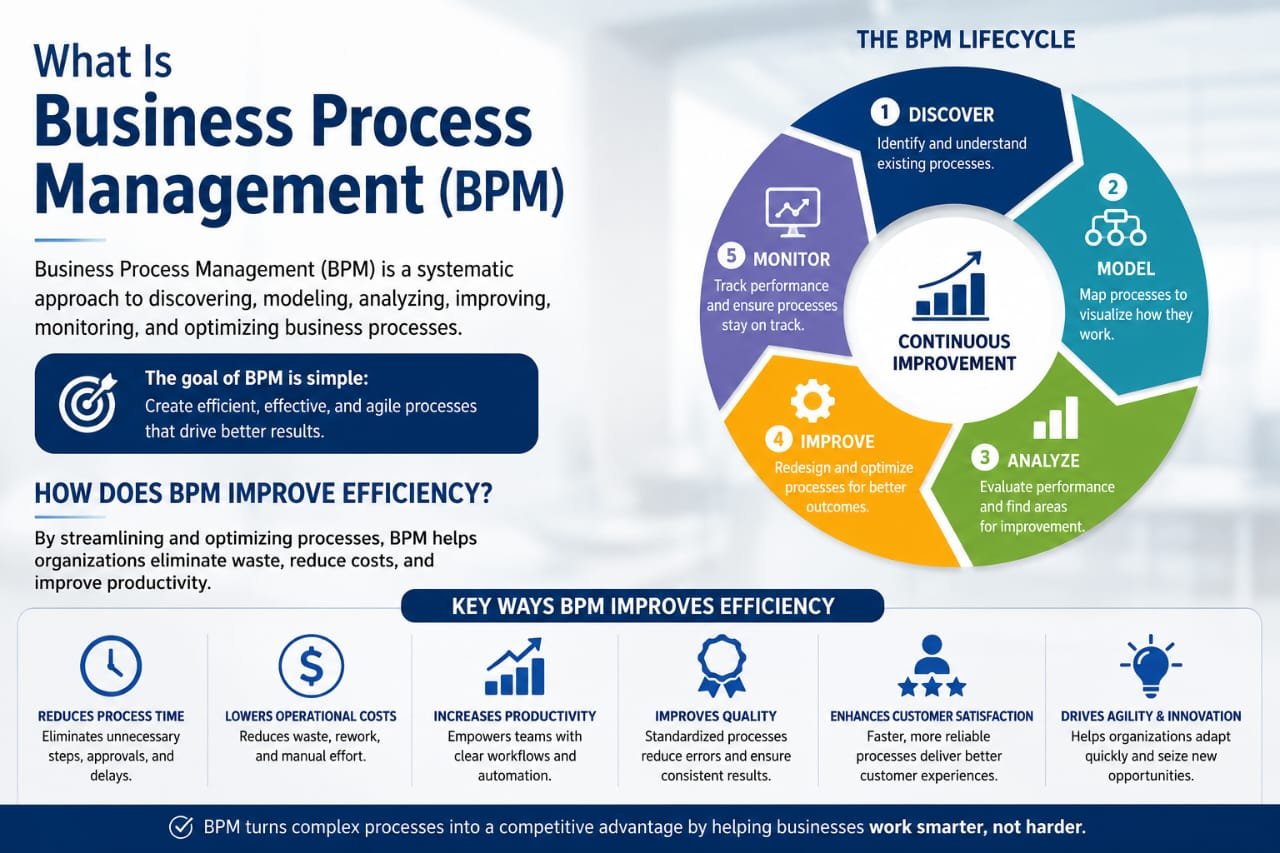
In today’s competitive landscape, businesses are continually seeking ways to enhance their operations and maximize efficiency. One approach that has gained significant traction is Business Process Management (BPM). This methodology not only streamlines operations but also aligns them with organizational goals, ensuring that every process contributes to the overall success. In this blog, we’ll delve deeper into BPM, its methodologies, its impact on business process improvement, and how it can boost operational efficiency.
Understanding Business Process Management (BPM)
Business Process Management is a systematic approach to making an organization's workflow more effective, efficient, and adaptable to an ever-changing environment. It involves the analysis, design, implementation, monitoring, and optimization of business processes. BPM aims to improve the overall performance and agility of an organization by enhancing its processes.
The Core Components of BPM
BPM encompasses several essential components:
- Process Modeling: This involves creating a visual representation of business processes to identify areas for improvement.
- Process Automation: Utilizing technology to automate repetitive tasks, reducing the likelihood of human error and increasing speed.
- Process Monitoring: Continuously tracking process performance using key performance indicators (KPIs) to identify inefficiencies.
- Process Optimization: Analyzing the data gathered during monitoring to refine and improve processes.
BPM Methodology: A Step-by-Step Approach
Implementing BPM is not a one-size-fits-all solution; it requires a tailored approach. Here’s a step-by-step breakdown of the BPM methodology:
1. Identify and Define Processes
The first step in BPM is to identify the key processes within your organization. This involves understanding how tasks are performed, who is responsible for them, and what the desired outcomes are. Clearly defining these processes is crucial for effective management.
2. Analyze Current Processes
Once processes are identified, the next step is to analyze them. This involves evaluating the efficiency and effectiveness of each process. Look for bottlenecks, redundancies, and areas where performance may be lacking.
3. Design Improved Processes
Based on your analysis, design improved processes that address the identified issues. This may involve reengineering processes or implementing new technologies to enhance performance.
4. Implement Changes
After designing the improved processes, it’s time to implement the changes. This may require training staff, updating systems, and ensuring that everyone is on board with the new procedures.
5. Monitor and Optimize
The final step in the BPM methodology is continuous monitoring and optimization. Regularly review process performance against the defined KPIs, and make adjustments as necessary to ensure ongoing improvement.
How BPM Improves Operational Efficiency
Implementing BPM offers several benefits that contribute to enhanced operational efficiency:
1. Streamlined Processes
BPM eliminates redundancies and enhances the flow of work, enabling employees to focus on value-added tasks rather than administrative burdens. This leads to faster turnaround times and better service delivery.
2. Increased Visibility
One of the key advantages of BPM is that it provides greater visibility into processes. With real-time monitoring, organizations can quickly identify issues and address them before they escalate, minimizing disruptions.
3. Enhanced Compliance
With well-defined processes, businesses can ensure compliance with industry regulations and standards. BPM helps organizations maintain documentation and track changes, which is essential for audits and regulatory reviews.
4. Improved Decision-Making
BPM provides data-driven insights that enable better decision-making. By analyzing process performance, organizations can make informed choices about resource allocation, process design, and strategic initiatives.
5. Greater Agility
In the fast-paced business world, adaptability is crucial. BPM allows organizations to respond quickly to market changes, customer needs, or operational challenges, ensuring they remain competitive.
Real-World Applications of BPM in India
In India, many organizations across various sectors have successfully implemented BPM to enhance their operations:
1. Manufacturing
Manufacturing companies in India have adopted BPM to streamline their production processes. By optimizing supply chain management and reducing lead times, they have improved their overall productivity and reduced costs.
2. Banking and Finance
The banking sector has embraced BPM to enhance customer service. By automating loan processing and transaction management, banks can provide quicker services, leading to higher customer satisfaction.
3. Healthcare
In healthcare, BPM helps manage patient flows and optimize resource allocation. This ensures that patients receive timely care while hospitals operate efficiently.
4. IT and Software Development
Software companies leverage BPM for agile project management. By streamlining development processes, they can deliver products faster and with higher quality.
FAQs about Business Process Management
What is the primary goal of Business Process Management?
The primary goal of BPM is to improve organizational efficiency by optimizing business processes, reducing costs, and enhancing service delivery.
How long does it take to implement BPM?
The timeline for BPM implementation can vary based on the complexity of processes and the size of the organization. Typically, it can take several weeks to months to fully implement and see results.
Is BPM suitable for small businesses?
Yes, BPM is suitable for businesses of all sizes. Small businesses can benefit from streamlined processes and improved efficiency just as much as larger organizations.
What tools are available for BPM?
There are various BPM tools available, such as Bizagi, Appian, and Pega, which provide functionalities for process modeling, automation, and monitoring.
Conclusion
As businesses in India strive for growth and sustainability, Business Process Management emerges as a critical strategy for improving operational efficiency. By adopting BPM methodologies, organizations can streamline their processes, enhance decision-making, and maintain a competitive edge. Whether you are a small startup or a large enterprise, investing in BPM can lead to significant improvements in your business operations.
Ready to enhance your business processes? Contact us today to learn how our BPM solutions can help your organization achieve operational excellence!




Leave a Comment