
 Quality Management


















 IT Service Management



 Project Management



 Agile Management




 Web Development



 Cloud Computing


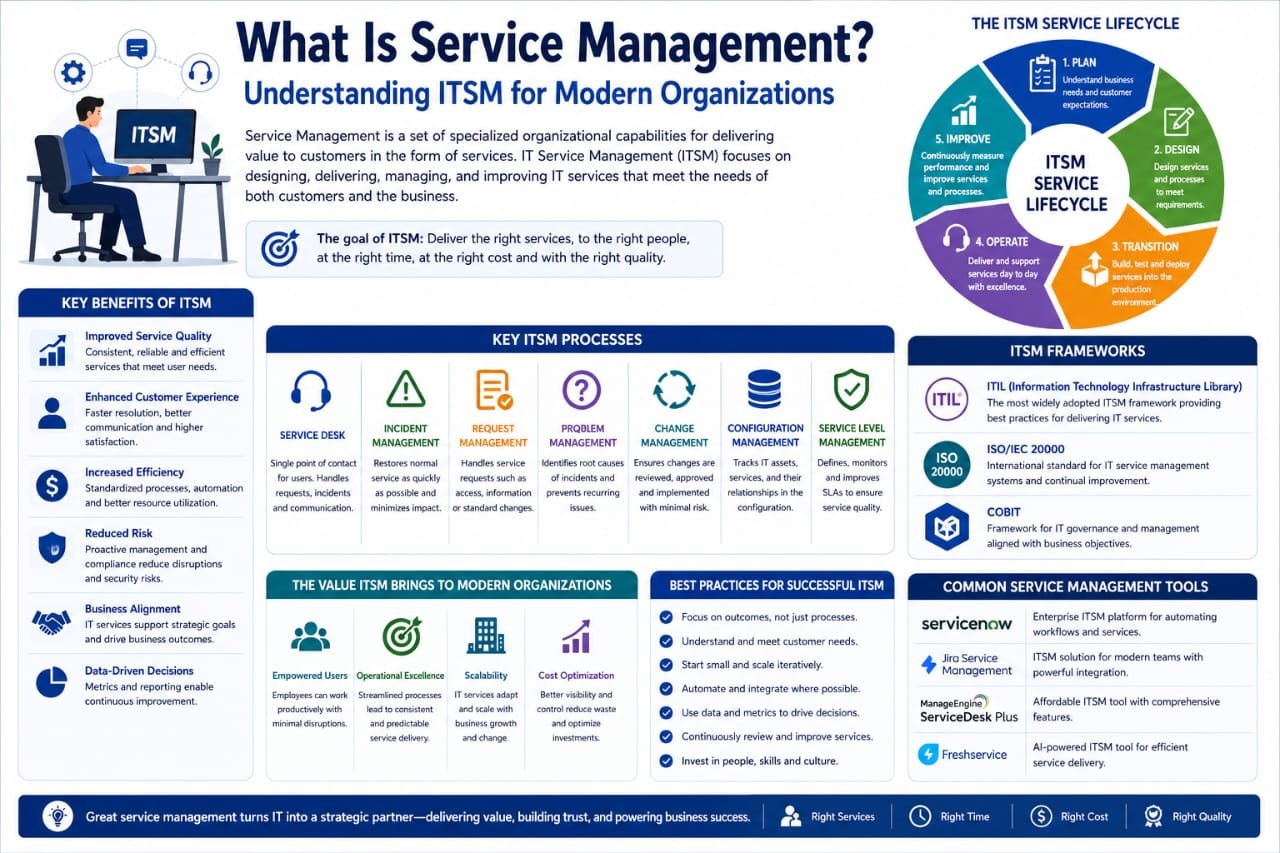
In today’s fast-paced digital landscape, organizations are increasingly reliant on technology to deliver their services. As businesses evolve, so does the need for effective service management. This blog will delve into the world of IT service management (ITSM), exploring its importance, frameworks, and how it impacts IT service delivery in modern organizations, particularly in India.
Understanding Service Management
Service management refers to the activities and practices that organizations use to design, deliver, manage, and improve the way IT services are used. It encompasses a wide range of functions, including managing incidents, problems, changes, and service requests. The goal is to enhance customer satisfaction while optimizing operational efficiency.
The Importance of Service Management
In a world where customer expectations are at an all-time high, effective service management is crucial. Here are a few key reasons why:
- Increased Efficiency: Service management helps streamline processes, which can lead to faster issue resolution and reduced downtime.
- Enhanced Customer Experience: By improving service delivery, organizations can meet customer expectations, leading to higher satisfaction and loyalty.
- Cost Reduction: Efficient service management can lower operational costs by reducing waste and optimizing resource allocation.
What is IT Service Management (ITSM)?
IT service management (ITSM) is a subset of service management that focuses specifically on IT services. ITSM involves a set of practices designed to ensure that IT services are aligned with the needs of the business and its customers. It is not merely about technology; it encompasses the entire lifecycle of IT services, from inception to retirement.
The ITSM Framework
There are several frameworks that organizations can adopt for effective ITSM. Some of the most widely recognized include:
- ITIL (Information Technology Infrastructure Library): ITIL is one of the most popular ITSM frameworks. It provides a comprehensive set of best practices for managing IT services, focusing on aligning IT services with business needs.
- COBIT (Control Objectives for Information and Related Technologies): COBIT focuses on governance and management of enterprise IT. It helps organizations achieve their goals through effective IT management.
- ISO/IEC 20000: This international standard specifies requirements for establishing, implementing, maintaining, and improving an SMS (Service Management System).
Key Components of ITSM
To effectively implement an ITSM strategy, organizations need to consider several key components:
1. Service Strategy
Defining the organizational goals and aligning IT services with business objectives. This includes understanding market demands and defining the service portfolio.
2. Service Design
Planning and designing new or changed services. This includes creating service architecture, processes, and policies that meet business needs.
3. Service Transition
Managing the transition of new or changed services into the live environment. This involves testing, training, and ensuring that everything is in place for a smooth rollout.
4. Service Operations
Managing day-to-day operations of IT services. This includes incident management, problem management, and ensuring services are delivered as promised.
5. Continual Service Improvement (CSI)
Regularly assessing and improving IT services and processes. This involves collecting data, analyzing performance, and implementing improvements.
Benefits of ITSM for Modern Organizations
Implementing an effective ITSM framework can yield numerous benefits for organizations, particularly in the Indian context:
- Improved Agility: With a structured approach to service management, organizations can quickly adapt to changing market conditions and customer needs.
- Enhanced Collaboration: ITSM fosters better communication and collaboration between IT and other departments, leading to more cohesive operations.
- Risk Management: By identifying potential risks and implementing preventive measures, organizations can minimize disruptions and maintain service continuity.
Challenges in Implementing ITSM
While the benefits are significant, there are also challenges in implementing ITSM:
- Cultural Resistance: Employees may resist changes to established processes, making buy-in from leadership crucial.
- Resource Constraints: Smaller organizations may lack the resources to implement comprehensive ITSM practices.
- Complexity: The variety of frameworks and practices can be overwhelming, especially for organizations starting from scratch.
Best Practices for Effective IT Service Delivery
To maximize the benefits of ITSM, organizations should consider the following best practices:
- Define Clear Objectives: Establish clear goals for what you wish to achieve with ITSM practices.
- Invest in Training: Ensure that your team is well-trained in ITSM principles and practices.
- Leverage Technology: Utilize tools and software that facilitate IT service management and automate processes where possible.
- Engage Stakeholders: Involve all relevant stakeholders in the planning and implementation process to ensure alignment and support.
Conclusion
In the digital age, effective service management, particularly through IT service management (ITSM), is essential for organizations looking to thrive. By adopting a robust ITSM framework and aligning it with business objectives, organizations can enhance service delivery, improve customer satisfaction, and drive operational efficiency.
If you're considering implementing or improving your ITSM practices, now is the perfect time to take action and invest in your organization’s success.
FAQs
1. What is the difference between service management and IT service management?
Service management is a broad term that encompasses all types of services, while IT service management specifically focuses on managing IT services within an organization.
2. Why is ITSM important for modern organizations?
ITSM is crucial because it helps organizations effectively manage their IT services, ensuring they meet business needs and customer expectations while optimizing costs and resources.
3. What are some common ITSM frameworks?
Some popular ITSM frameworks include ITIL, COBIT, and ISO/IEC 20000, each offering a unique approach to managing IT services.
4. How can organizations overcome challenges in implementing ITSM?
Organizations can overcome challenges by fostering a culture of change, securing leadership support, investing in training, and clearly defining their ITSM goals.
5. What tools can assist with IT service management?
There are several tools available, including ServiceNow, BMC Remedy, and JIRA Service Management, which help automate and streamline ITSM processes.
If you’re ready to transform your IT service management practices, contact us today for expert guidance and support!



Leave a Comment