
 Quality Management



















 IT Service Management



 Project Management



 Agile Management




 Web Development



 Cloud Computing

In today’s fast-paced digital landscape, managing changes efficiently is crucial for businesses striving for success. With the introduction of ITIL 4, the itil change management process has evolved into a more flexible and responsive framework known as change enablement in ITIL 4. This shift aims to minimize business disruptions while ensuring that IT services remain aligned with the changing needs of the organization. In this blog, we will explore how effective change management can reduce business disruptions and enhance service delivery in your organization.
Understanding ITIL Change Management
The ITIL framework is a set of best practices designed to improve IT service management (ITSM). Change management, a critical component of ITIL, focuses on controlling the lifecycle of changes to IT services. The primary goal is to implement changes with minimal impact on the quality of service.
What is Change Enablement in ITIL 4?
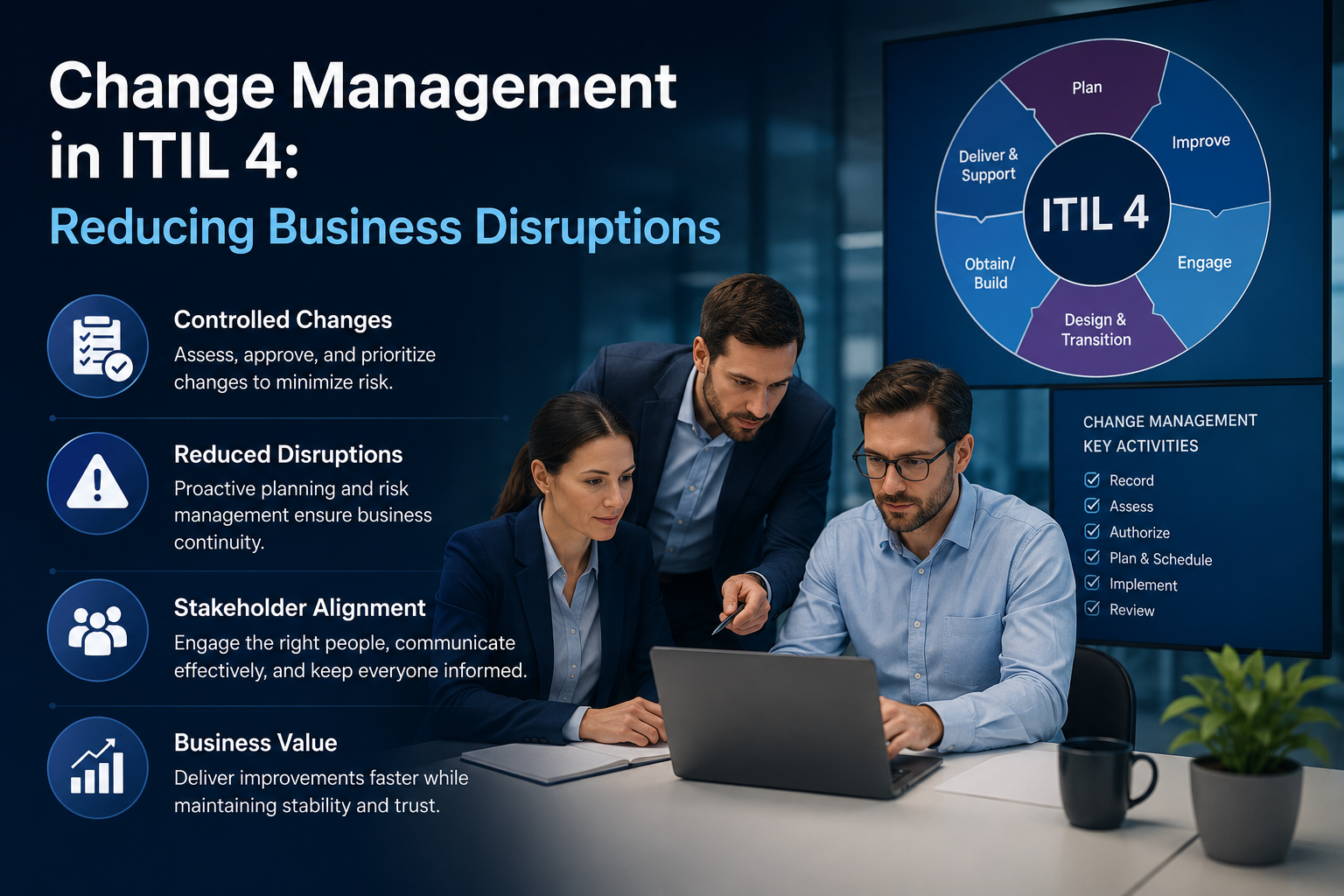
In ITIL 4, change management has been rebranded as change enablement. This new terminology emphasizes the need to facilitate beneficial changes while minimizing disruptions. Change enablement not only involves assessing risks but also ensuring that all stakeholders are engaged throughout the change process. This holistic view of change management aligns with modern business practices, where agility and responsiveness are key.
The IT Change Management Process
Implementing an effective it change management process involves several stages. Each stage plays a vital role in ensuring that changes are executed smoothly, thereby reducing potential disruptions.
1. Change Request Submission
The process begins with a change request. Employees or stakeholders submit requests detailing the proposed change, its rationale, and the expected benefits. A clear and structured submission process helps in capturing all relevant information upfront.
2. Change Assessment
Once the change request is submitted, it undergoes a rigorous assessment. This includes analyzing the potential risks, impacts, and benefits associated with the change. The involvement of cross-functional teams during this stage ensures that diverse perspectives are considered.
3. Change Approval
After assessment, the change request moves to the approval stage. A Change Advisory Board (CAB) typically reviews and approves significant changes. This collaborative approach helps to ensure that decisions are made based on collective input, thus minimizing the likelihood of disruptions.
4. Change Implementation
Once approved, the change is scheduled for implementation. A well-defined implementation plan should outline the steps to be taken, resources required, and timelines. During this phase, communication with stakeholders is crucial to manage expectations and prepare for any temporary disruptions.
5. Change Review
After implementation, it’s essential to conduct a post-implementation review. This step evaluates the success of the change and identifies any areas for improvement. Gathering feedback from the affected stakeholders helps refine the change management process for future initiatives.
Service Management Best Practices for Change Management
To effectively implement service management best practices in change management, organizations should consider the following strategies:
1. Foster a Culture of Collaboration
Encouraging collaboration across departments helps in breaking down silos. When teams work together, they can share insights and identify potential issues early in the change process.
2. Invest in Training and Development
Training employees on the itil framework and the change enablement process is crucial. Regular training sessions ensure that everyone understands their roles and responsibilities, leading to more effective change management.
3. Utilize Technology
Leverage technology to automate and streamline the change management process. IT service management tools can help track change requests, approvals, and implementations, ensuring transparency and accountability.
4. Communicate Effectively
Transparent communication is vital. Keep all stakeholders informed about upcoming changes, their impacts, and the rationale behind them. This fosters trust and reduces resistance to change.
Reducing Business Disruptions through Change Management
By adopting a structured approach to change enablement in ITIL 4, organizations can significantly reduce business disruptions. Here’s how:
1. Proactive Risk Management
Effective change management processes include proactive risk assessment and mitigation strategies. By identifying potential risks early, organizations can develop contingency plans that minimize disruptions during implementation.
2. Enhanced Stakeholder Engagement
Engaging stakeholders throughout the change process helps in building consensus and reducing resistance. When employees feel included, they are more likely to support the change, leading to smoother transitions.
3. Continuous Improvement
The iterative nature of change enablement encourages organizations to learn from each change. By regularly reviewing and refining processes, companies can continuously improve their change management practices, further reducing disruptions.
FAQs about Change Management in ITIL 4
What is the difference between change management and change enablement in ITIL 4?
Change management refers to controlling changes to IT services, while change enablement emphasizes facilitating beneficial changes while minimizing disruptions. ITIL 4 redefined the approach to reflect modern business practices.
How can I implement change management best practices in my organization?
Start by fostering a culture of collaboration, investing in training, utilizing technology, and maintaining effective communication throughout the change process.
What role does the Change Advisory Board (CAB) play in the change management process?
The CAB reviews and approves significant change requests, ensuring that decisions are made based on diverse perspectives and collective input.
Conclusion
Implementing effective it change management processes is essential for organizations looking to thrive in today’s dynamic environment. By embracing change enablement within the ITIL framework, businesses can minimize disruptions, engage stakeholders, and ultimately improve service delivery. As you embark on your change management journey, remember that success lies in collaboration, communication, and continuous improvement.
Ready to transform your change management practices? Contact us today to learn how we can assist you in implementing ITIL 4 change enablement in your organization!



Leave a Comment