
 Quality Management



















 IT Service Management



 Project Management



 Agile Management




 Web Development



 Cloud Computing


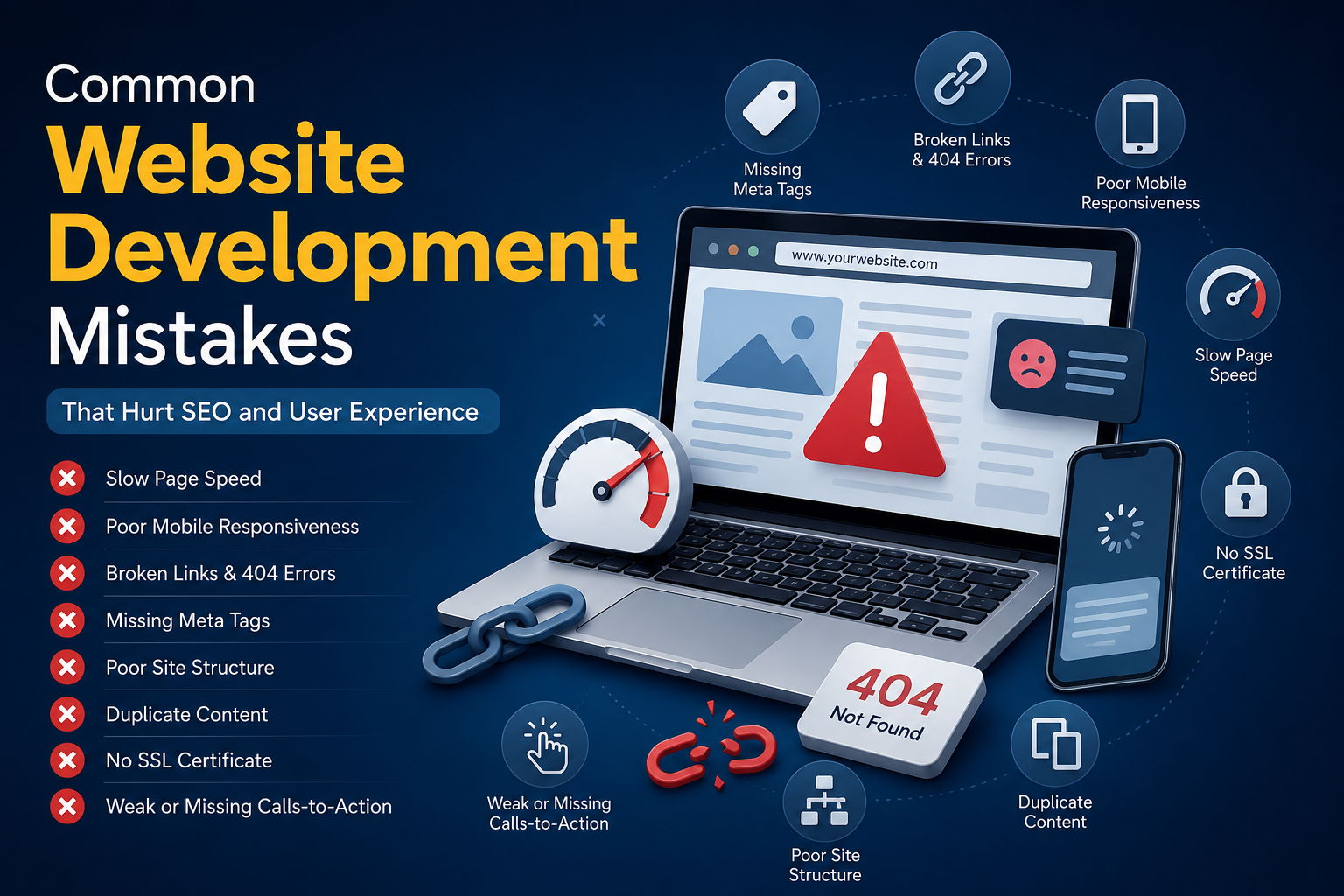
Building a website in today's digital age is more than just creating an attractive design. It’s about ensuring that your site is optimized for search engines and provides a seamless user experience. However, many developers, especially those new to the industry, fall into common traps that can severely impact both SEO and user experience. In this blog, we will explore the most prevalent website development mistakes, how they affect your site's performance, and best practices for avoiding them.
1. Neglecting Technical SEO
Technical SEO forms the backbone of your website’s visibility on search engines. It refers to the optimization of your website’s infrastructure, allowing search engines to crawl, index, and understand your site better. Neglecting technical SEO can lead to numerous issues, such as slow loading times and poor mobile usability.
Key Technical SEO Mistakes
- Improper URL Structure: Using complex URLs makes it difficult for search engines and users to navigate your site. A clean, descriptive URL structure is essential.
- Missing Alt Tags: Forgetting to add alt tags to images can prevent search engines from understanding your content and affect your site's accessibility.
- Not Using HTTPS: Security is a top priority. Websites not utilizing HTTPS can lose trust from users and may be penalized by search engines.
2. Poor Mobile Optimization
With a significant number of users accessing websites via mobile devices, optimizing your site for mobile is no longer optional. A site that is not mobile-friendly can lead to high bounce rates and deter potential customers.
Mobile Optimization Best Practices
- Responsive Design: Ensure your website uses a responsive design, adapting seamlessly to different screen sizes.
- Fast Loading Times: Optimize images and scripts to improve loading speed, as slow sites frustrate users.
- Touch-Friendly Elements: Buttons and links should be easy to click on mobile devices to enhance usability.
3. Overlooking Page Speed
Page speed is a critical factor in both SEO and user experience. A slow-loading website can lead to high abandonment rates and negatively impact your site’s ranking on search engines.
Improving Page Speed
- Minimize HTTP Requests: Reduce the number of elements on your page to decrease loading time.
- Optimize Images: Use appropriate image formats and compress images to enhance speed.
- Leverage Browser Caching: This allows returning visitors to load your site faster, improving overall user experience.
4. Ignoring On-Page SEO Elements
On-page SEO is crucial for ensuring that your web pages are optimized for search engines and user engagement. Neglecting these elements can hinder your site’s ability to rank well.
Essential On-Page SEO Practices
- Title Tags and Meta Descriptions: Craft unique and descriptive title tags and meta descriptions incorporating your primary keywords.
- Header Tags: Use header tags (H1, H2, H3) appropriately to structure your content, making it easier for users and search engines to read.
- Keyword Stuffing: While keywords are essential, overusing them can lead to penalties. Focus on natural language and context.
5. Lack of Quality Content
Content is king in the realm of SEO and user experience. Poor quality or duplicate content can lead to ranking penalties and a lack of engagement from users.
Creating Quality Content
- Unique and Engaging: Ensure your content is original, informative, and engaging to keep users on your site longer.
- Regular Updates: Update your content regularly to keep it relevant and fresh, which can improve rankings.
- Incorporate Visuals: Use images, videos, and infographics to make your content more appealing and digestible.
6. Not Implementing Analytics
Without proper analytics in place, you cannot understand how users are interacting with your website. This lack of insight can lead you to make uninformed decisions about your site’s development and optimization.
Key Analytics Tools
- Google Analytics: This free tool helps you track user behavior, traffic sources, and conversion rates.
- Google Search Console: Gain insights into how your site appears in search results and identify areas for improvement.
- Heatmaps: Tools like Hotjar show where users click and how they navigate your site, helping you optimize layout and design.
7. Failing to Promote the Website
Building a website is just the first step; promoting it is equally essential. Many developers launch their sites but fail to implement a marketing strategy, resulting in low traffic and visibility.
Effective Promotion Strategies
- Social Media Marketing: Utilize platforms like Facebook, Instagram, and LinkedIn to drive traffic to your site.
- Email Marketing: Build an email list and engage your audience with newsletters and updates.
- Search Engine Marketing: Consider pay-per-click advertising to boost visibility on search engines.
8. Not Considering User Experience (UX)
User experience is crucial for keeping visitors on your site and encouraging conversions. A website that is difficult to navigate or aesthetically unpleasing can lead to frustrated users and a high bounce rate.
User Experience Best Practices
- Intuitive Navigation: Ensure your site has a clear and logical navigation structure, making it easy for users to find what they need.
- Consistent Design: Maintain a consistent design across all pages to enhance usability and branding.
- Clear Calls to Action: Use well-placed, clear calls to action that guide users towards desired actions, like signing up or purchasing.
Frequently Asked Questions (FAQs)
What are common website development mistakes?
Common website development mistakes include neglecting technical SEO, poor mobile optimization, overlooking page speed, ignoring on-page SEO elements, and failing to provide quality content.
How does poor SEO affect my website?
Poor SEO can lead to low visibility on search engines, resulting in reduced traffic, lower engagement, and ultimately fewer conversions.
What is the importance of user experience in web development?
User experience is vital as it directly impacts how visitors interact with your site. A positive user experience leads to higher engagement and conversion rates.
How can I improve my website’s SEO?
Improve your website’s SEO by optimizing technical elements, enhancing on-page SEO, creating quality content, and ensuring a positive user experience.
Conclusion
A successful website requires careful planning and execution to avoid common website development mistakes that can harm both SEO and user experience. By implementing web design best practices and focusing on user experience optimization, you can create a site that not only attracts visitors but also converts them into loyal customers. Don't hesitate to evaluate your website for these common pitfalls and take steps to improve your online presence.
If you found this blog helpful, consider sharing it with your network or reaching out for expert assistance in optimizing your website. Together, we can enhance your site’s performance and user experience!





Leave a Comment