
 Quality Management



















 IT Service Management



 Project Management


 Agile Management



 Web Development



 Cloud Computing
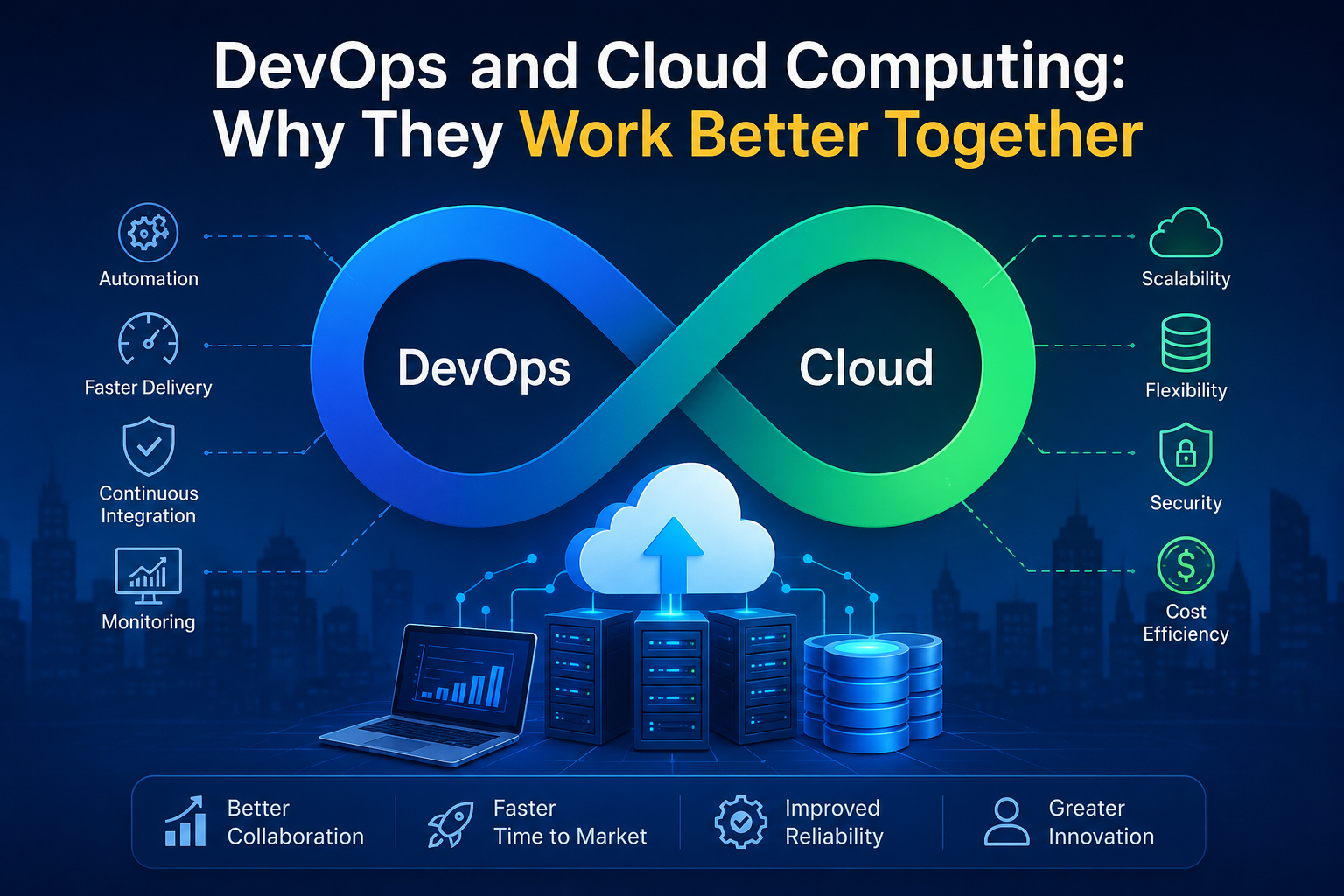
In the ever-evolving landscape of technology, DevOps and cloud computing have emerged as transformative forces for businesses, particularly in India. As organizations strive for agility and efficiency, the integration of cloud DevOps practices has become pivotal. This blog explores how these two methodologies complement each other, enhancing productivity and driving innovation.
Understanding DevOps and Cloud Computing
Before delving into their synergy, it's essential to understand what DevOps and cloud computing entail.
What is DevOps?
DevOps is a cultural and professional movement that seeks to improve collaboration between software development (Dev) and IT operations (Ops). It focuses on shortening the software development lifecycle while delivering high-quality software continuously. Central to this practice are principles like automation, continuous integration, and continuous delivery (CI/CD).
What is Cloud Computing?
Cloud computing refers to the delivery of computing services over the internet (“the cloud”), allowing for flexible resources, faster innovation, and economies of scale. It enables businesses to access a range of services, including storage, databases, servers, networking, software, and analytics, without the need for physical infrastructure.
Why DevOps and Cloud Computing are a Perfect Match
The integration of DevOps practices with cloud computing capabilities offers numerous advantages that can greatly benefit organizations in India.
1. Enhanced Collaboration and Communication
Cloud computing provides a shared environment where teams can collaborate seamlessly. DevOps practices emphasize communication between development and operations teams, and the cloud serves as a central hub for sharing code, documentation, and other resources. This leads to faster issue resolution and a more cohesive workflow.
2. Streamlined CI/CD Pipeline
One of the core tenets of DevOps is the CI/CD pipeline, which automates the process of software development, testing, and deployment. When integrated with cloud computing, this pipeline becomes even more efficient. Cloud platforms offer tools and services that facilitate automation, allowing teams to deploy code changes rapidly and reliably.
3. Scalability and Flexibility
Cloud computing provides the infrastructure necessary for organizations to scale their applications easily. This flexibility is crucial for businesses that experience varying workloads. DevOps practices leverage this scalability, enabling teams to deploy applications in different environments without worrying about hardware limitations.
4. Cost Efficiency
Cloud computing operates on a pay-as-you-go model, which helps organizations reduce their IT costs. By integrating cloud DevOps, companies can minimize expenses related to hardware, maintenance, and other overhead costs. This cost efficiency allows businesses to invest more in innovation and growth.
5. Improved Security and Compliance
Security is a top priority for any organization. Cloud providers invest heavily in security measures, and when combined with DevOps practices, organizations can ensure that security is integrated into every stage of the software development lifecycle. This approach enhances compliance with regulatory requirements, particularly in sectors like finance and healthcare.
Implementing Cloud Automation in DevOps
Cloud automation is a critical aspect of combining DevOps and cloud computing. It involves using tools and technologies to automate manual processes, thereby improving efficiency and reducing the risk of human error.
Key Cloud Automation Tools
- AWS CloudFormation: Automates the deployment of AWS infrastructure.
- Terraform: An open-source tool for building, changing, and versioning infrastructure safely and efficiently.
- Jenkins: A popular automation server that supports building, deploying, and automating software development.
Best Practices for Cloud Automation in DevOps
- Start Small: Begin with automating simple tasks before moving to complex workflows.
- Maintain Version Control: Use version control systems to track changes to your automation scripts.
- Monitor and Optimize: Continuously monitor automated processes and optimize them for performance.
Challenges in Integrating DevOps and Cloud Computing
While the benefits are substantial, integrating DevOps and cloud computing is not without challenges.
1. Cultural Resistance
Organizations may face resistance to change from teams accustomed to traditional methods. Fostering a culture of collaboration and continuous improvement is essential to overcoming this hurdle.
2. Skill Gaps
The rapid evolution of technology can lead to skill gaps within teams. Investing in training and development is crucial to equip team members with the necessary skills to implement cloud DevOps effectively.
3. Security Concerns
While cloud providers offer robust security measures, organizations must remain vigilant about potential vulnerabilities. Implementing a strong security posture and regularly reviewing security practices is vital.
Future Trends in DevOps and Cloud Computing
The future of DevOps and cloud computing in India looks promising. As more businesses adopt digital transformation, several trends are likely to shape the landscape:
1. Increased Adoption of AI and Machine Learning
AI and machine learning will play a significant role in enhancing cloud DevOps practices, enabling predictive analytics and automating decision-making processes.
2. Serverless Computing
Serverless architectures will gain traction, allowing developers to focus on writing code without worrying about the underlying infrastructure.
3. Continuous Everything
The concept of continuous integration, delivery, and deployment will expand to include continuous testing, monitoring, and feedback, creating a more holistic approach to DevOps.
FAQs
1. What is the relationship between DevOps and cloud computing?
DevOps and cloud computing complement each other by enhancing collaboration, streamlining processes, and providing scalable resources for software development and deployment.
2. How does a CI/CD pipeline work in a cloud environment?
A CI/CD pipeline automates the process of integrating code changes, testing them, and deploying them to production. In a cloud environment, it leverages cloud services to ensure faster and more reliable deployments.
3. What are the key benefits of cloud automation in DevOps?
Key benefits include increased efficiency, reduced risk of human error, cost savings, and improved scalability.
Conclusion
The collaboration between DevOps and cloud computing is not just a trend; it’s a necessity for organizations aiming to thrive in the digital age. By embracing cloud DevOps practices, businesses can enhance their efficiency, foster innovation, and significantly improve their software delivery processes.
If you're looking to implement DevOps practices in your organization, consider exploring cloud solutions that align with your business goals. The future of technology is here, and it’s time to harness the power of DevOps and cloud computing together!
Call to Action: Ready to transform your organization with cloud DevOps? Contact us today for a consultation!



Leave a Comment