
 Quality Management



















 IT Service Management



 Project Management


 Agile Management



 Web Development


 Cloud Computing

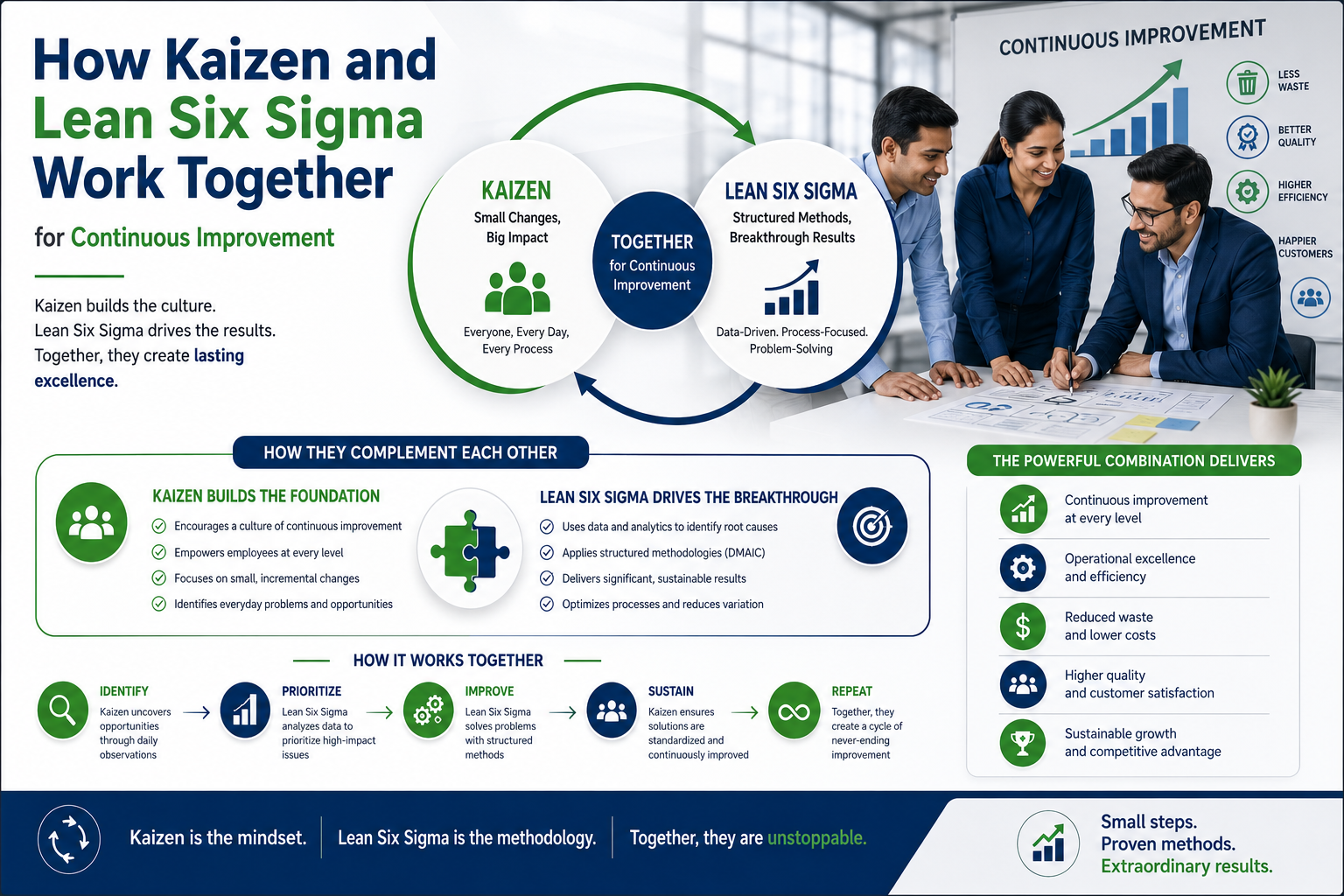
In today's fast-paced business environment, organizations are constantly seeking ways to improve efficiency and enhance customer satisfaction. Two powerful methodologies that have gained traction in this quest for excellence are Kaizen and Lean Six Sigma. Both approaches focus on continuous improvement methods that aim to streamline processes and reduce waste. In this blog, we will explore how Kaizen and Lean Six Sigma work in tandem to foster a culture of operational excellence and instill a lean improvement culture across organizations.
Understanding Kaizen and Lean Six Sigma
What is Kaizen?
Kaizen is a Japanese term meaning "change for better." It emphasizes small, incremental changes that lead to significant improvements over time. The philosophy behind Kaizen is that everyone in the organization, from top management to frontline workers, should be involved in the improvement process. This collective effort helps create a culture where continuous improvement is the norm rather than the exception.
What is Lean Six Sigma?
Lean Six Sigma combines two powerful methodologies: Lean and Six Sigma. Lean focuses on eliminating waste and improving flow, while Six Sigma aims to reduce variability and improve quality. Together, they provide a comprehensive framework for organizations to enhance their processes, minimize defects, and deliver value to customers. By integrating these two methodologies, companies can achieve significant improvements in performance and efficiency.
The Synergy Between Kaizen and Lean Six Sigma
While Kaizen and Lean Six Sigma can function independently, their synergy can lead to even greater results. Here’s how these two methodologies complement each other:
1. Enhancing Employee Engagement
Kaizen encourages every employee to contribute ideas for improvement, fostering a sense of ownership and engagement. When combined with Lean Six Sigma's structured approach to problem-solving, organizations can harness the creativity of their workforce to identify and eliminate inefficiencies effectively.
2. Continuous Improvement Framework
Lean Six Sigma provides a data-driven framework for identifying problems and measuring improvements. When organizations implement Kaizen as part of this framework, they ensure that the process of continuous improvement is not only systematic but also sustainable over time.
3. Focus on Customer Value
Both methodologies emphasize delivering value to customers. Kaizen promotes small changes that enhance customer satisfaction, while Lean Six Sigma uses statistical tools to measure and improve quality. Together, they create a holistic approach to understanding and meeting customer needs.
Implementing Kaizen and Lean Six Sigma in Your Organization
Step 1: Assess Current Processes
Before implementing any improvement methodologies, it's crucial to assess your current processes. Identify areas where waste occurs and where quality can be improved. This assessment will serve as a baseline for your continuous improvement journey.
Step 2: Train Employees
Invest in training your employees on both Kaizen and Lean Six Sigma concepts. Provide them with the tools and knowledge they need to identify problems and suggest improvements. Employee training is essential for building a lean improvement culture within the organization.
Step 3: Foster a Culture of Collaboration
Create an environment where employees feel free to share their ideas and suggestions. Encourage cross-functional teams to work together on improvement projects. This collaboration will enhance creativity and innovation, leading to more significant improvements.
Step 4: Implement Small Changes
Start with small, manageable changes that can be implemented quickly. Kaizen is all about making incremental improvements, so focus on quick wins that can build momentum for larger initiatives.
Step 5: Measure and Analyze Results
After implementing changes, measure their impact. Use Lean Six Sigma tools to analyze data and determine whether the changes have led to improvements in quality, efficiency, and customer satisfaction. This data-driven approach ensures that your efforts are focused on achieving tangible results.
Step 6: Standardize Successful Changes
Once successful changes have been identified, standardize them across the organization. This ensures that best practices are shared and that improvements are sustained over time.
Challenges in Kaizen and Lean Six Sigma Implementation
While the integration of Kaizen and Lean Six Sigma can yield significant benefits, organizations may face challenges during implementation. Here are some common obstacles:
1. Resistance to Change
Employees may resist changes due to fear of the unknown or lack of understanding. To overcome this, effective communication and training are essential.
2. Insufficient Leadership Support
Without strong support from leadership, continuous improvement initiatives may fail to gain traction. Leaders must champion these efforts and actively participate in the process.
3. Lack of Resources
Implementing Kaizen and Lean Six Sigma requires time, effort, and resources. Organizations must allocate sufficient resources to ensure that these methodologies are effectively integrated into their operations.
FAQs
Q1: What are the key differences between Kaizen and Lean Six Sigma?
A1: Kaizen focuses on continuous, incremental improvements, while Lean Six Sigma combines waste reduction (Lean) with quality improvement (Six Sigma). Both methodologies aim for operational excellence but approach it from different angles.
Q2: Can Kaizen be implemented without Lean Six Sigma?
A2: Yes, Kaizen can be implemented independently. However, integrating it with Lean Six Sigma can enhance effectiveness and ensure a structured approach to improvement.
Q3: How long does it take to see results from Kaizen and Lean Six Sigma initiatives?
A3: The timeline for seeing results can vary depending on the complexity of the processes being improved. However, organizations often begin to see positive changes within a few months of implementation.
Q4: Is training essential for Kaizen and Lean Six Sigma implementation?
A4: Yes, training is crucial for ensuring that employees understand the methodologies and are equipped to contribute to improvement initiatives effectively.
Conclusion
Incorporating Kaizen and Lean Six Sigma into your organization can lead to significant improvements in efficiency, quality, and customer satisfaction. By fostering a lean improvement culture and empowering employees to participate in the continuous improvement process, you can achieve operational excellence and stay ahead in a competitive landscape. Remember, the journey toward continuous improvement is ongoing, and every small step counts.
If you're ready to embark on your journey towards operational excellence, contact us today! Let's work together to implement effective continuous improvement methods in your organization.


Leave a Comment