 Quality Management


















 IT Service Management



 Project Management



 Agile Management



 Web Development



 Cloud Computing

In today's competitive business environment, organizations continually seek ways to enhance efficiency, reduce costs, and improve quality. One approach that has gained significant traction in India is Lean Six Sigma. Understanding the lean six sigma career path is crucial for professionals looking to advance their careers in this field. This blog will guide you through the various stages of Lean Six Sigma, from Yellow Belt to Master Black Belt, highlighting the importance of master black belt certification and the overall six sigma certification roadmap.
What is Lean Six Sigma?
Lean Six Sigma is a data-driven approach that combines Lean manufacturing principles and Six Sigma methodologies. Lean focuses on eliminating waste and improving process flow, while Six Sigma aims to reduce variation and defects. Together, they create a powerful framework for organizations to enhance their processes and achieve greater customer satisfaction.
The Importance of Lean Six Sigma Certifications
In India, organizations are increasingly recognizing the value of Lean Six Sigma certifications. These certifications not only enhance your skills but also increase your employability and potential for career advancement. A well-defined six sigma certification roadmap can help you navigate your journey through various levels of certification, leading you to more lucrative roles in your organization.
Lean Six Sigma Career Path Overview
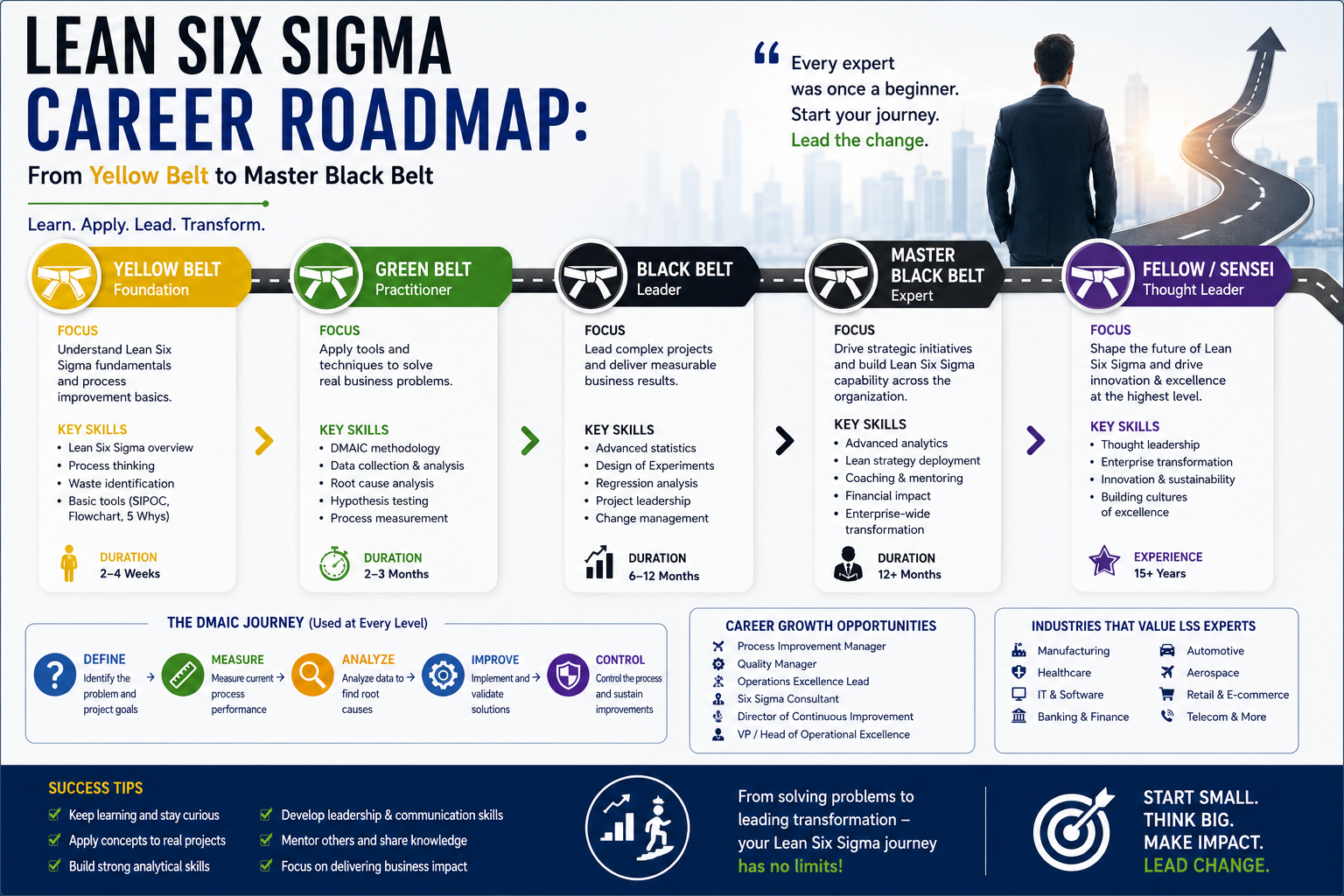
The Lean Six Sigma career path typically comprises several certification levels, each with its own specific focus and requirements. Below are the primary certification levels you will encounter:
1. Yellow Belt
The journey begins with the Yellow Belt certification. This level is designed for individuals who are new to Lean Six Sigma and want to understand the fundamental concepts. Yellow Belts often support Green and Black Belts in projects and contribute to process improvement initiatives within their teams.
- Duration: 2-5 days of training
- Topics Covered: Basic principles of Lean and Six Sigma, DMAIC methodology, and process mapping.
- Career Opportunities: Junior roles in process improvement, quality assurance, and project support.
2. Green Belt
After gaining foundational knowledge, professionals can pursue the Green Belt certification. This level is more in-depth and focuses on applying Lean Six Sigma tools and techniques to real-world problems.
- Duration: 1-2 weeks of training
- Topics Covered: Advanced DMAIC, statistical analysis, project management, and problem-solving techniques.
- Career Opportunities: Mid-level roles such as process improvement specialist, quality manager, and project leader.
3. Black Belt
The Black Belt certification is a significant milestone in the Lean Six Sigma career path. Black Belts are expected to lead projects, mentor Green Belts, and drive strategic improvements across the organization.
- Duration: 2-4 weeks of training
- Topics Covered: Advanced statistical methods, change management, leadership skills, and project management.
- Career Opportunities: Senior roles such as Lean Six Sigma Black Belt consultant, quality director, and operations manager.
4. Master Black Belt
For those looking to reach the pinnacle of the Lean Six Sigma career path, the Master Black Belt certification is essential. This level involves a deep understanding of Lean Six Sigma principles and the ability to train, mentor, and lead teams effectively.
- Duration: 4-6 weeks of intensive training
- Topics Covered: Advanced statistical analysis, strategic planning, business transformation, and organizational change.
- Career Opportunities: Executive roles such as Chief Quality Officer, Lean Six Sigma program director, and strategic consultant.
Lean Six Sigma Career Growth Opportunities in India
As organizations in India continue to adopt Lean Six Sigma methodologies, the demand for certified professionals is on the rise. Here are some key growth opportunities in this field:
- Consulting: Many organizations seek external consultants to implement Lean Six Sigma practices, creating opportunities for experienced professionals.
- In-House Roles: Companies are increasingly hiring Lean Six Sigma experts to lead internal projects and drive continuous improvement efforts.
- Training and Development: Certified professionals can also take on roles as trainers and educators, sharing their knowledge with others in the organization.
Investing in Six Sigma Training
To advance in your Lean Six Sigma career, investing in six sigma training is crucial. Many reputable institutions in India offer courses that cater to different certification levels. Look for programs that provide hands-on training, real-world projects, and industry-recognized certifications.
FAQs about Lean Six Sigma Career Path
1. What is the best way to start my Lean Six Sigma career?
Begin with the Yellow Belt certification, as it provides foundational knowledge and prepares you for more advanced levels.
2. How long does it take to become a Master Black Belt?
The timeline varies based on individual commitment and the organization’s requirements, but it typically takes several years of experience and training.
3. Are Lean Six Sigma certifications recognized globally?
Yes, Lean Six Sigma certifications are recognized worldwide, making them valuable for professionals looking to work in multinational companies.
4. Can I pursue Lean Six Sigma training online?
Yes, many institutions offer online Lean Six Sigma training programs, providing flexibility for working professionals.
Conclusion
Embarking on a Lean Six Sigma career path can be both fulfilling and lucrative. Whether you start as a Yellow Belt or aim for the prestigious Master Black Belt certification, every step you take enhances your skills and opens up new opportunities. With the growing demand for Lean Six Sigma professionals in India, now is an excellent time to invest in your future.
If you're ready to take your career to the next level, explore Lean Six Sigma training options today! For more information on certification programs, training schedules, and career guidance, feel free to contact us.


Leave a Comment