
 Quality Management



















 IT Service Management



 Project Management



 Agile Management




 Web Development



 Cloud Computing


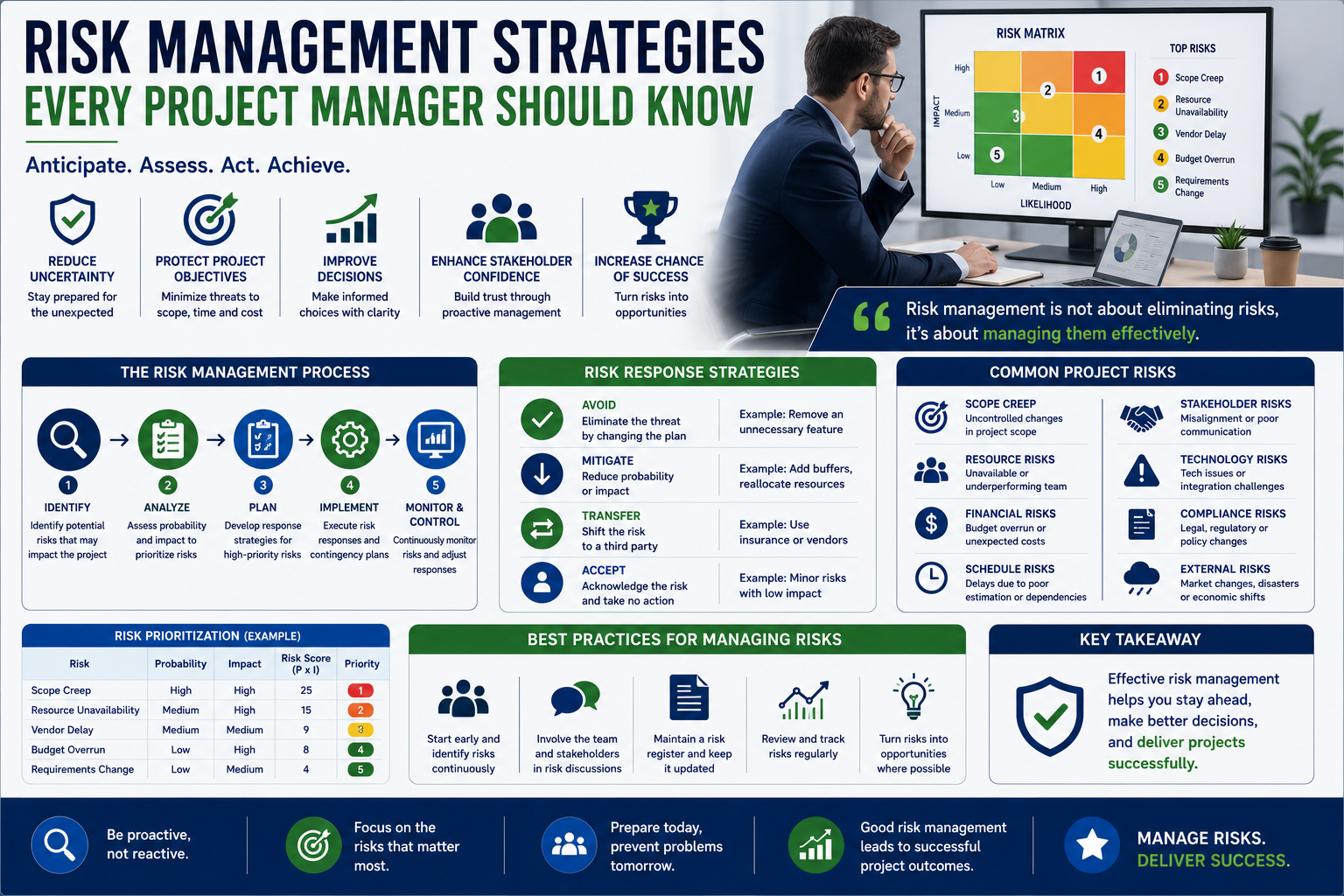
In the world of project management, navigating uncertainties is a crucial skill. Understanding project risk management is essential for every project manager aiming for success. In this blog, we'll explore key risk mitigation strategies, effective risk assessment techniques, and the importance of thorough project planning to minimize project management risks.
Understanding Project Risk Management
Before diving into specific strategies, let's clarify what project risk management entails. It is the process of identifying, assessing, and prioritizing risks followed by coordinated efforts to minimize, monitor, and control the probability or impact of unforeseen events. In India, where project environments can be diverse and complex, mastering these techniques can mean the difference between project success and failure.
The Importance of Risk Assessment Techniques
Effective risk assessment is the backbone of project risk management. By identifying potential risks early, project managers can devise strategies to mitigate them. Here are some widely recognized risk assessment techniques:
1. SWOT Analysis
SWOT (Strengths, Weaknesses, Opportunities, Threats) analysis is a fundamental technique. It helps project managers understand internal strengths and weaknesses, as well as external opportunities and threats. By evaluating these factors, project managers can foresee potential risks and develop strategies to address them.
2. Risk Probability and Impact Matrix
This matrix helps in prioritizing risks based on their likelihood of occurrence and potential impact on the project. By categorizing risks into high, medium, and low, project managers can focus their attention on the most critical issues.
3. Expert Judgment
Leveraging the expertise of team members or stakeholders can provide valuable insights into potential risks. Conducting interviews or brainstorming sessions can reveal hidden risks that might not be apparent initially.
Key Risk Mitigation Strategies
Once risks are identified and assessed, the next step is to create effective risk mitigation strategies. Here are some proven approaches:
1. Risk Avoidance
This strategy involves changing the project plan to eliminate the risk. For instance, if a particular technology poses a risk, opting for a more reliable technology can prevent potential issues.
2. Risk Reduction
Rather than avoiding a risk entirely, this strategy aims to reduce its impact or likelihood. For example, implementing additional quality checks can minimize the risk of defects in project deliverables.
3. Risk Transfer
Sometimes, the best approach is to transfer the risk to a third party. This can be done through outsourcing certain project components or purchasing insurance. This way, the financial burden of the risk is shifted away from the project team.
4. Risk Acceptance
In some cases, the risk may be deemed acceptable if its impact is minor or if the cost of mitigation is higher than the risk itself. However, it’s crucial to monitor these risks closely to ensure they don’t escalate.
Incorporating Risk Management into Project Planning
Project planning is incomplete without integrating risk management. Here’s how to effectively incorporate risk management into your project planning process:
1. Develop a Risk Management Plan
A comprehensive risk management plan should outline how risks will be identified, assessed, and mitigated throughout the project life cycle. This plan should be revisited and updated regularly to reflect any changes in the project environment.
2. Encourage Open Communication
Fostering a culture of transparency and communication among team members can significantly improve risk identification. Team members should feel empowered to speak up about potential risks without fear of repercussions.
3. Utilize Project Management Tools
Leveraging technology and tools designed for project management can enhance your risk management efforts. Tools like Microsoft Project, Trello, or Asana can help in tracking risks and monitoring their mitigation strategies.
Real-World Examples of Successful Risk Management
To illustrate the effectiveness of sound risk management strategies, let’s look at some real-world examples:
1. Tata Group’s Infrastructure Projects
Tata Group has successfully managed risks in its infrastructure projects by employing rigorous risk assessment techniques and engaging stakeholders in the planning process. Their proactive approach to risk management has led to timely project completions and adherence to budgets.
2. Infosys and IT Projects
Infosys, a leader in the IT sector, incorporates risk management into its project life cycle by continuously assessing project risks and implementing mitigation strategies. This has enabled them to maintain high customer satisfaction rates and project delivery timelines.
FAQs About Project Risk Management
What is project risk management?
Project risk management is the process of identifying, analyzing, and responding to project risks. It involves planning, risk assessment, and implementing strategies to minimize negative impacts on project objectives.
Why is risk management important in project planning?
Risk management is crucial in project planning because it helps project managers anticipate potential issues, allocate resources effectively, and increase the likelihood of project success.
What are some common project management risks?
Common project management risks include scope creep, budget overruns, resource availability, stakeholder conflicts, and unforeseen technical challenges.
How can I improve my risk assessment techniques?
You can improve your risk assessment techniques by utilizing various methods, such as SWOT analysis, risk probability and impact matrices, and engaging experts or stakeholders in discussions about potential risks.
What is the role of communication in risk management?
Effective communication is vital in risk management as it encourages team members to share insights and concerns about potential risks, leading to more comprehensive risk identification and management.
Conclusion
Mastering project risk management is not just about mitigating risks; it’s about creating a resilient project environment. By employing effective risk mitigation strategies and integrating comprehensive risk assessment techniques into your project planning, you can significantly enhance your chances of project success. Remember, the goal is not to eliminate risks entirely but to manage them effectively.
Are you ready to take your project management skills to the next level? Start implementing these strategies today and watch your projects thrive!
Call to Action: If you found this article helpful, share it with fellow project managers and subscribe to our newsletter for more insights on effective project management strategies!



Leave a Comment