 Quality Management


















 IT Service Management



 Project Management



 Agile Management



 Web Development



 Cloud Computing

In today’s fast-paced business environment, organizations are constantly seeking ways to enhance efficiency and reduce waste. One powerful tool that has gained traction among Indian businesses is value stream mapping (VSM). This technique not only provides a visual representation of processes but also helps identify hidden inefficiencies that may be costing your organization time and money. In this blog, we will explore how lean value stream mapping can significantly improve your operations, drive lean process improvement, and boost overall productivity.
Understanding Value Stream Mapping
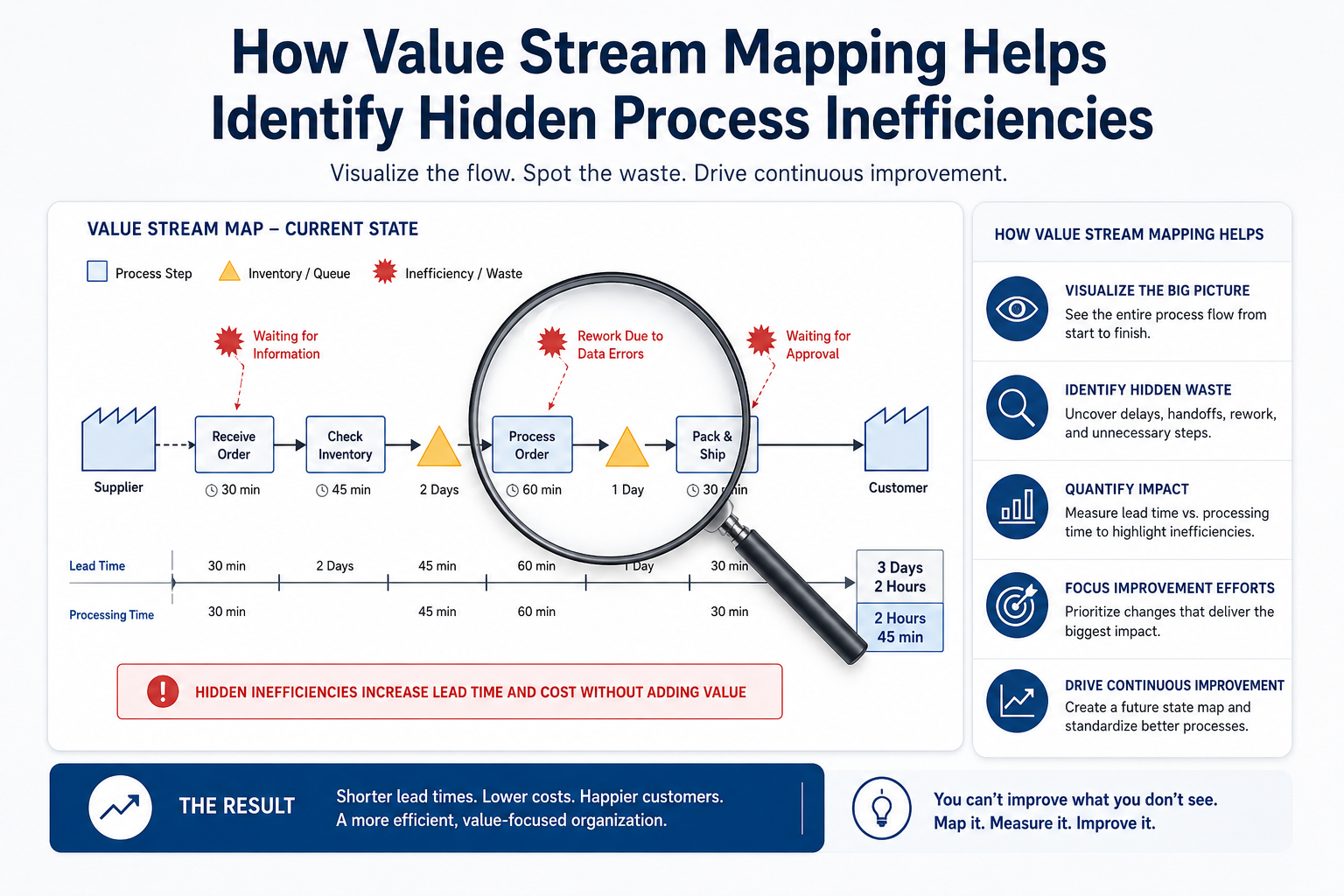
Value stream mapping is a visual tool used to analyze and design the flow of materials and information required to bring a product or service to the customer. By mapping out the current state of processes, organizations can pinpoint areas of waste and create a future state that eliminates inefficiencies. This analysis is particularly beneficial in manufacturing environments but is also applicable in service industries.
The Basics of Value Stream Mapping
At its core, value stream mapping involves two main components: the current state map and the future state map. The current state map illustrates how processes operate today, while the future state map outlines an optimized flow of activities aimed at delivering maximum value to the customer. Key elements of a VSM include:
- Process steps
- Information flow
- Material flow
- Lead times
- Cycle times
- Value-added vs. non-value-added activities
The Role of Lean Value Stream Mapping in Waste Identification
Waste is defined as any activity that does not add value to the product or service from the customer's perspective. In the context of process flow analysis, waste can manifest in various forms, such as excess inventory, unnecessary motion, waiting times, and overproduction. Lean value stream mapping plays a crucial role in identifying these wastes by providing a clear and comprehensive view of the entire process.
Common Types of Waste Identified Through Value Stream Mapping
Lean methodologies classify waste into several categories, commonly referred to as the "Seven Wastes" (TIMWOOD):
- Transport: Unnecessary movement of products or materials.
- Inventory: Excess products or materials that are not being processed.
- Motion: Unnecessary movement of people or equipment.
- Waiting: Idle time when no value is being added.
- Overproduction: Producing more than what is needed.
- Overprocessing: Doing more work than necessary to meet customer requirements.
- Defects: Errors that require rework or result in scrap.
Steps to Implement Value Stream Mapping for Process Improvement
Implementing value stream mapping involves several steps that ensure a comprehensive analysis of your processes:
1. Define the Scope
Start by identifying the specific product or service you want to analyze. Clearly define the beginning and end of the process to keep the mapping focused.
2. Create the Current State Map
Gather a cross-functional team to observe the process and collect data. Document each step, including time taken, resources used, and any delays. This will serve as your current state map.
3. Identify Waste
Analyze the current state map to pinpoint areas of waste. Engage your team in discussions to uncover inefficiencies that may not be immediately visible.
4. Design the Future State Map
Based on your findings, create a future state map that eliminates identified wastes. This map should outline an optimized process flow that enhances efficiency and adds value to the customer.
5. Develop an Action Plan
Formulate a clear action plan that outlines the steps needed to transition from the current state to the future state. Assign responsibilities and set timelines for implementation.
6. Implement and Monitor
Begin implementing the changes outlined in your action plan. Continuously monitor the process to ensure that improvements are sustained and that any new inefficiencies are identified promptly.
Benefits of Value Stream Mapping for Indian Businesses
Value stream mapping offers several benefits that can significantly impact Indian businesses, including:
- Enhanced Efficiency: By identifying and eliminating waste, businesses can streamline their operations and improve overall efficiency.
- Improved Quality: Reducing defects and rework leads to higher quality products and services, which enhances customer satisfaction.
- Cost Reduction: Streamlined processes result in lower operating costs, allowing businesses to allocate resources more effectively.
- Increased Employee Engagement: Involving employees in the mapping process fosters a culture of continuous improvement and empowers them to contribute to operational excellence.
- Better Customer Satisfaction: By delivering products and services more efficiently, businesses can meet customer demands more effectively, leading to increased loyalty.
FAQs About Value Stream Mapping
What is the main goal of value stream mapping?
The primary goal of value stream mapping is to visualize the flow of materials and information in a process to identify and eliminate waste, ultimately improving efficiency and delivering greater value to customers.
Is value stream mapping applicable to service industries?
Yes, while value stream mapping is commonly associated with manufacturing, it is equally applicable to service industries. It can help service organizations identify inefficiencies in processes such as customer support, order processing, and delivery.
How often should I conduct value stream mapping?
It is advisable to conduct value stream mapping periodically, especially when there are significant changes in processes, products, or customer demands. Regular reviews help ensure that improvements are sustained and that new inefficiencies are addressed promptly.
Conclusion
Value stream mapping is an invaluable tool for businesses seeking to enhance their operational efficiency and drive lean process improvement. By systematically identifying and eliminating hidden process inefficiencies, organizations can deliver greater value to their customers while reducing costs. If your business is ready to embark on a journey of continuous improvement, consider integrating value stream mapping into your operational strategy.
Call to Action
Are you ready to uncover the hidden inefficiencies in your processes? Contact us today to learn more about how our value stream mapping services can help your business achieve operational excellence and drive sustainable growth.



Leave a Comment