 Quality Management


















 IT Service Management



 Project Management


 Agile Management



 Web Development



 Cloud Computing
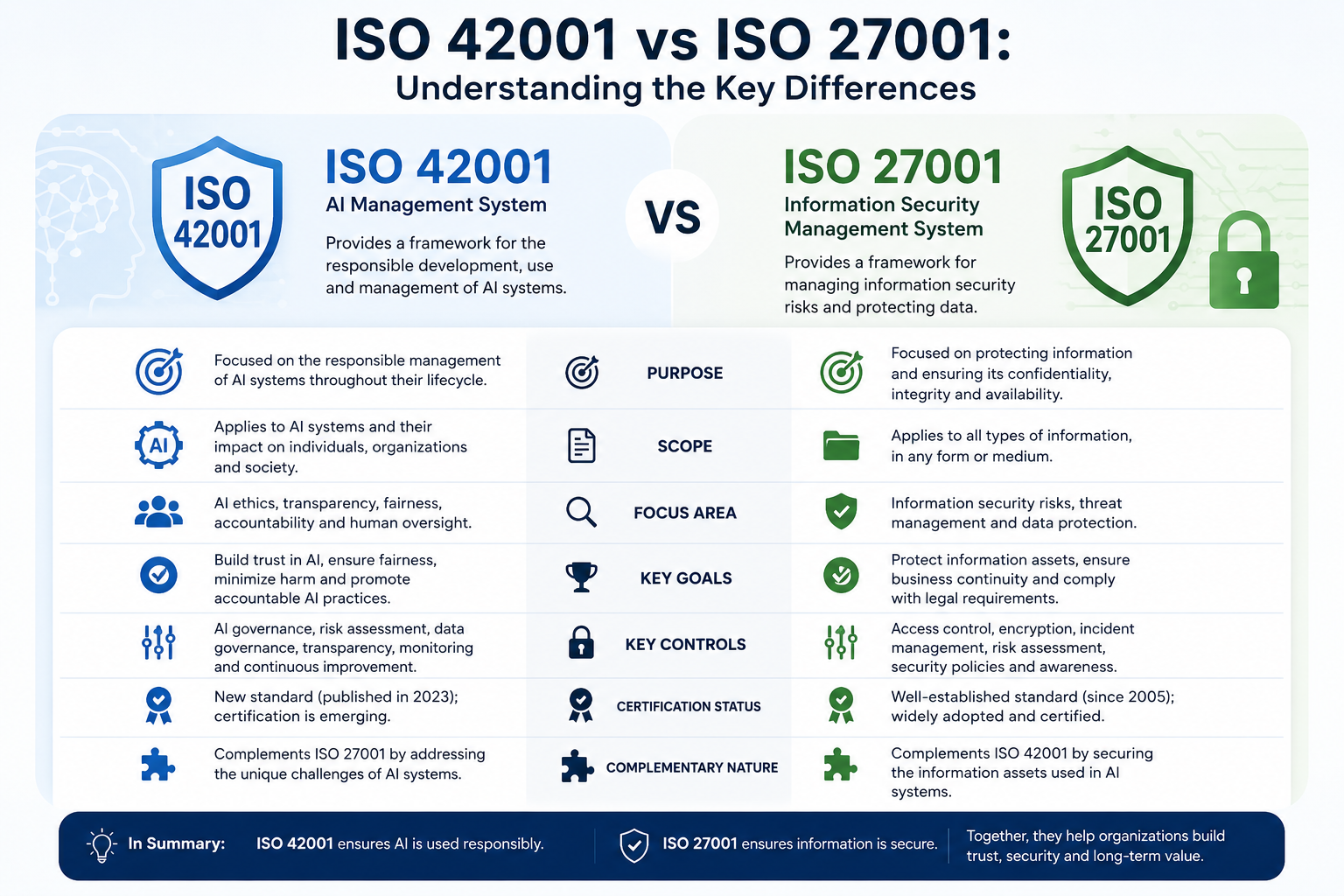
In an ever-evolving digital landscape, understanding compliance and governance standards is crucial for organizations, especially in India. Two prominent standards that often come into discussion are ISO 42001 and ISO 27001. While both play significant roles in information security management, they cater to different aspects of organizational governance. In this blog, we will delve deep into the differences and implications of these standards, helping you navigate through the maze of ISO 42001 vs ISO 27001 AI compliance information security management AI governance standards.
What is ISO 27001?
ISO 27001 is an internationally recognized standard for managing information security. It provides a systematic approach to managing sensitive company information, ensuring its confidentiality, integrity, and availability. The framework emphasizes risk management and the need for a continuous improvement process.
Key Features of ISO 27001
- Risk Management: It focuses on identifying and mitigating risks to information security.
- Documentation: Requires extensive documentation, including policies, procedures, and records.
- Continuous Improvement: Encourages organizations to continually improve their information security management systems (ISMS).
- Audit and Compliance: Regular audits are necessary to ensure compliance with the standard.
What is ISO 42001?
ISO 42001 is a newer standard that addresses governance specifically in the context of artificial intelligence (AI). It provides a framework for organizations to ensure that their AI systems are developed and deployed in a responsible and ethical manner. This standard is particularly relevant as businesses increasingly integrate AI into their operations.
Key Features of ISO 42001
- AI Governance: It focuses on establishing a governance framework for AI technologies.
- Ethical Considerations: Emphasizes ethical AI use, ensuring transparency and accountability.
- Risk Assessment: Addresses risks associated with AI, including bias and data privacy issues.
- Stakeholder Engagement: Encourages involving stakeholders in AI decision-making processes.
Key Differences Between ISO 42001 and ISO 27001
While both ISO 42001 and ISO 27001 address risk management and governance, they do so in different contexts. Here are the primary differences:
1. Focus Area
The most significant difference lies in their focus areas. ISO 27001 is centered around information security management, while ISO 42001 focuses on AI governance. In a world where AI is becoming integral to business operations, understanding the nuances of AI governance is crucial for compliance and ethical considerations.
2. Scope of Application
ISO 27001 applies broadly to any organization that handles sensitive information, regardless of the industry. ISO 42001, on the other hand, is specifically tailored for organizations that use AI technologies, making it essential for tech companies and industries rapidly adopting AI solutions.
3. Risk Management Approach
Both standards emphasize risk management, but the nature of risks varies. ISO 27001 focuses on risks related to information security breaches, while ISO 42001 addresses unique risks associated with AI, such as algorithmic bias, data integrity, and ethical concerns surrounding AI decisions.
4. Compliance and Certification
ISO 27001 certification is widely recognized and often a prerequisite for organizations looking to demonstrate their commitment to information security. ISO 42001, being a newer standard, may still be in the early stages of adoption, but as AI continues to advance, its importance in compliance frameworks will grow.
Which Standard Should Your Organization Choose?
The decision on whether to pursue ISO 42001 or ISO 27001 largely depends on your organization's specific needs. If your organization primarily deals with sensitive information and aims to establish a robust information security management system, ISO 27001 is the way to go. However, if your organization is heavily involved in AI technologies, ISO 42001 becomes crucial to ensure ethical and responsible AI governance.
The Importance of Compliance in India
For Indian organizations, understanding these standards is particularly important given the increasing regulatory scrutiny around data protection and AI ethics. Compliance with ISO standards not only enhances your organization's credibility but also helps build trust with clients and stakeholders.
Conclusion
Understanding the differences between ISO 42001 vs ISO 27001 AI compliance information security management AI governance standards is vital for organizations looking to navigate the complexities of modern governance and compliance. While ISO 27001 offers a robust framework for information security management, ISO 42001 paves the way for responsible AI governance. Depending on your organization's focus, you may need to adopt one or both standards to ensure comprehensive compliance and effective risk management.
FAQs
1. What is the main purpose of ISO 27001?
The main purpose of ISO 27001 is to provide a framework for managing sensitive information, ensuring its confidentiality, integrity, and availability through a systematic approach to information security management.
2. Why is ISO 42001 important for AI technologies?
ISO 42001 is important for AI technologies as it establishes a governance framework that ensures ethical and responsible use of AI, addressing risks such as bias and data privacy issues.
3. Can an organization be certified for both ISO 27001 and ISO 42001?
Yes, an organization can be certified for both standards, especially if it handles sensitive information and uses AI technologies in its operations.
4. How can organizations implement these standards?
Organizations can implement ISO standards by conducting a gap analysis, developing the necessary policies and procedures, and engaging in regular audits to ensure compliance.
Call to Action
If your organization is looking to enhance its compliance framework and navigate the complexities of information security and AI governance, consider seeking expert advice. Contact us today to learn how we can help you implement ISO 27001 and ISO 42001 standards effectively!


Leave a Comment