
 Quality Management









 IT Service Management

 Project Management


 Agile Management


 Web Development


 Cloud Computing
In the ever-evolving digital landscape, technology continues to revolutionize how businesses operate and individuals connect. Among the most pivotal advancements are edge computing and cloud computing. While these two terms are often used interchangeably, they represent distinct approaches to data processing and storage. In this blog, we will explore the nuances of edge computing vs cloud computing, helping Indian readers understand their differences, benefits, and relevance in today's data-driven world.
What is Cloud Computing?
Cloud computing refers to the delivery of various services over the internet, including storage, processing power, and applications. Instead of relying on local servers or personal devices, cloud infrastructure allows businesses and individuals to access and manage their data remotely. Major players in this space include Amazon Web Services (AWS), Microsoft Azure, and Google Cloud Platform, which provide scalable resources and services, making it easier for companies to innovate and grow.
Key Features of Cloud Computing
- Scalability: Cloud providers offer flexible resources that can be scaled up or down based on demand.
- Cost-Effectiveness: Businesses can pay for what they use, reducing the need for hefty upfront investments in hardware.
- Accessibility: Services can be accessed from anywhere with an internet connection, facilitating remote work and collaboration.
- Automatic Updates: Cloud services often include automatic software updates, ensuring users always have the latest features and security patches.
What is Edge Computing?
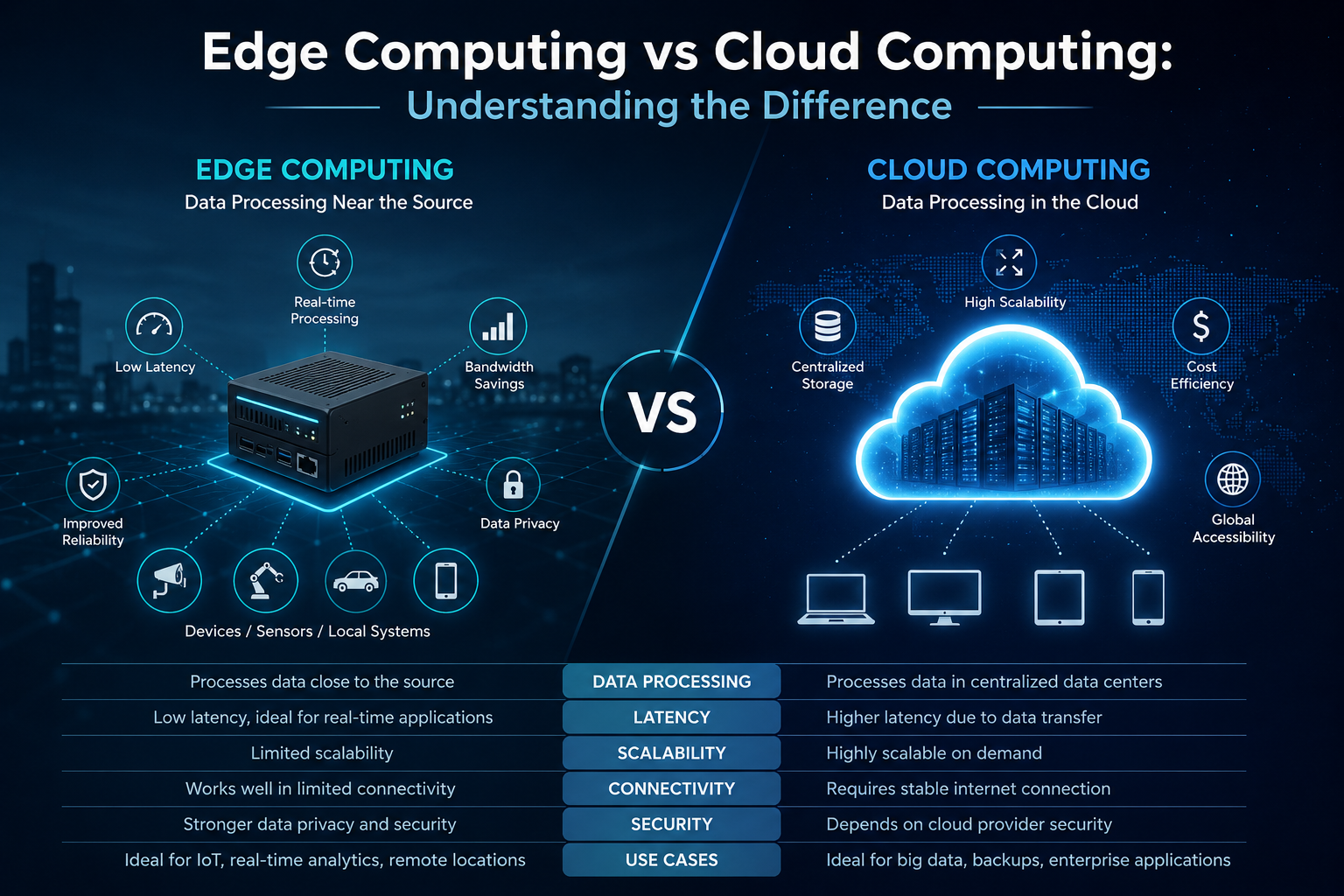
Edge computing, on the other hand, refers to a distributed computing paradigm that brings computation and data storage closer to the location where it is needed. This approach reduces latency and bandwidth use by processing data at the "edge" of the network, near the source of data generation. In a country like India, where the Internet of Things (IoT) is rapidly advancing, edge computing is becoming increasingly relevant for applications requiring real-time data processing.
Key Features of Edge Computing
- Reduced Latency: By processing data closer to the source, edge computing minimizes delays, making it ideal for time-sensitive applications.
- Improved Bandwidth Efficiency: Edge computing reduces the amount of data sent to the cloud, conserving bandwidth and saving costs.
- Enhanced Security: Local data processing can reduce exposure to security threats by keeping sensitive information within the local environment.
- Real-Time Processing: Edge computing supports applications such as autonomous vehicles and smart cities that require immediate data analysis.
Edge Computing vs Cloud Computing: A Comparative Analysis
1. Location of Data Processing
The most significant difference between edge computing and cloud computing lies in where the data processing occurs. Cloud computing relies on centralized data centers, while edge computing processes data on local devices or edge servers. This distinction is crucial for applications where speed and real-time processing are essential.
2. Latency and Speed
Latency is a critical factor in data processing, especially for applications like IoT computing, where delays can lead to unacceptable outcomes. Edge computing significantly reduces latency by processing data closer to the source, whereas cloud computing may introduce delays due to the distance data must travel.
3. Data Bandwidth
As data generation continues to soar, bandwidth management becomes vital. Edge computing alleviates bandwidth strain by processing data locally and only sending necessary information to the cloud. In contrast, cloud computing can lead to higher bandwidth usage, which may incur additional costs.
4. Use Cases
The use cases for edge computing and cloud computing can differ significantly. Edge computing is ideal for applications requiring real-time analytics, such as autonomous vehicles, smart grids, and industrial IoT. On the other hand, cloud computing is well-suited for applications needing extensive computational resources, such as big data analytics, machine learning, and data storage.
When to Use Edge Computing or Cloud Computing?
The choice between edge computing and cloud computing largely depends on your specific needs. If your application requires low latency and immediate processing, edge computing is the better option. Conversely, if your business needs scalable resources for data storage and processing without immediate time constraints, cloud computing is the way to go.
Combining Edge and Cloud Computing
It's essential to note that edge computing and cloud computing are not mutually exclusive. In fact, many organizations are adopting a hybrid model that leverages the strengths of both. This approach allows businesses to enjoy the real-time processing capabilities of edge computing while benefiting from the scalability and extensive resources of cloud computing.
Challenges and Considerations
1. Security Concerns
Both edge and cloud computing have their security challenges. While edge computing can enhance security by processing data locally, it may also create vulnerabilities at multiple edge points. Cloud computing, although centralized, requires robust security measures to protect against breaches.
2. Management Complexity
Implementing a hybrid model can introduce management complexity. Businesses must ensure that their edge and cloud environments are seamlessly integrated, which may require advanced management tools and expertise.
3. Cost Implications
While cloud computing can be cost-effective, edge computing may require investment in local hardware and infrastructure. Companies must evaluate their requirements and potential ROI before deciding on their computing strategy.
Conclusion
In summary, understanding the differences between edge computing vs cloud computing is crucial for businesses looking to optimize their operations in the digital age. While cloud computing offers scalability and cost-effectiveness, edge computing excels in low-latency applications and real-time processing. With the rise of IoT computing and distributed computing, organizations in India and beyond can benefit from adopting the right combination of these technologies to meet their specific needs.
FAQs
1. What is the primary difference between edge computing and cloud computing?
The primary difference lies in where data processing occurs. Edge computing processes data closer to the source, while cloud computing relies on centralized data centers.
2. Which is more suitable for IoT applications?
Edge computing is generally more suitable for IoT applications due to its low latency and real-time processing capabilities.
3. Can edge computing work with cloud computing?
Yes, many organizations use a hybrid approach that combines the strengths of both edge and cloud computing to enhance their operations.
4. What are the security implications of edge computing?
While edge computing can enhance security by processing data locally, it can also create vulnerabilities at multiple edge points, necessitating robust security measures.
Call to Action
Are you ready to leverage the power of edge computing and cloud computing for your business? Understanding the right approach tailored to your needs can unlock new opportunities and drive innovation. Contact us today for personalized guidance and solutions that align with your digital transformation journey!


Leave a Comment