 Quality Management



















 IT Service Management


 Project Management


 Agile Management



 Web Development


 Cloud Computing
In the fast-evolving landscape of web development, choosing the right content management system (CMS) is crucial for businesses aiming to establish a robust online presence. As companies transition to digital-first strategies, the debate between headless CMS and traditional CMS intensifies. This blog aims to provide a comprehensive CMS comparison to help you decide which system best fits your needs in the context of modern web development.
Understanding Traditional CMS
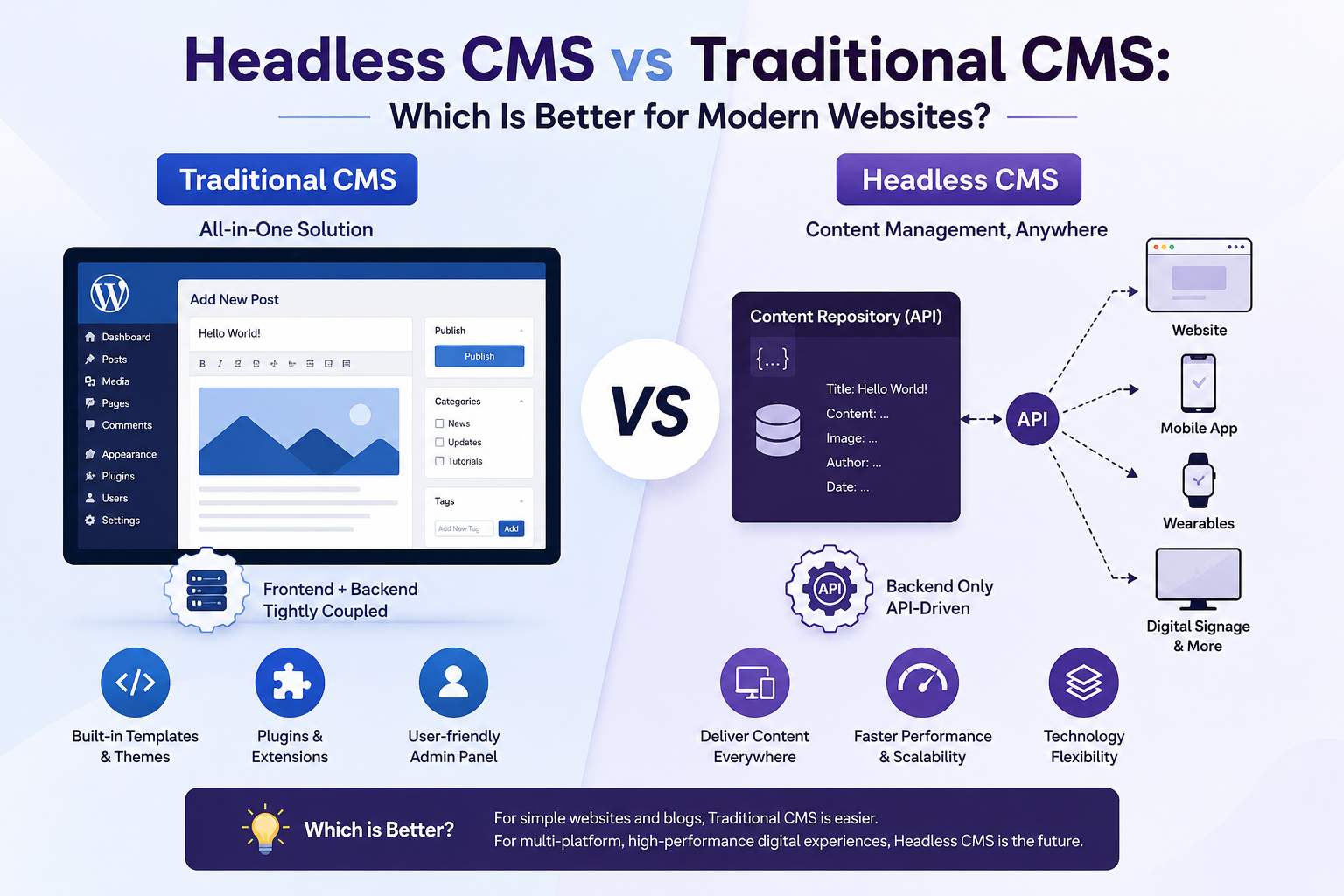
Traditional content management systems, such as WordPress, Joomla, and Drupal, have been the cornerstone of web development for years. These platforms integrate both the front-end (what users see) and back-end (where content is managed) into a single interface. With a plethora of themes and plugins, traditional CMSs offer ease of use, making them popular among small businesses and individual bloggers.
Pros of Traditional CMS
- User-Friendly: Traditional CMS platforms often come with intuitive interfaces that make it easy for non-technical users to manage content.
- All-in-One Solution: They provide a complete package, including hosting, templates, and plugins, reducing the complexity of managing multiple services.
- Rich Community Support: With a vast user base, traditional CMSs benefit from extensive community forums, tutorials, and plug-ins.
Cons of Traditional CMS
- Limited Flexibility: Customization can be challenging, especially for complex web applications.
- Performance Issues: As your website grows, traditional CMSs may face performance bottlenecks due to their monolithic nature.
- Security Vulnerabilities: The popularity of traditional CMS platforms can make them prime targets for hackers.
What is Headless CMS?
A headless CMS decouples the back-end content management from the front-end presentation. This means that while the content is created and stored in one place, it can be delivered to any platform or device via APIs. This flexibility is particularly appealing for businesses looking to deliver content across multiple channels, such as websites, mobile apps, and even IoT devices.
Pros of Headless CMS
- Greater Flexibility: Developers can use any framework or technology to build the front end, allowing for more customized and innovative web solutions.
- Improved Performance: By serving content via APIs, headless CMSs can deliver faster load times and an overall better user experience.
- Omnichannel Capability: Content can be easily reused across different platforms, making it ideal for businesses with a multi-channel strategy.
Cons of Headless CMS
- Complex Setup: The initial setup and configuration can be more complex, requiring technical expertise.
- Higher Costs: Often, headless CMSs can be more expensive due to the need for additional development resources.
- Limited Out-of-the-Box Features: Unlike traditional CMSs, headless solutions may lack built-in features and require additional integrations.
Headless CMS vs Traditional CMS: Key Differences
To make an informed decision, let's examine the key differences between headless and traditional CMSs:
| Feature | Traditional CMS | Headless CMS |
|---|---|---|
| Architecture | Monolithic | Decoupled |
| Flexibility | Limited | High |
| Performance | Can be slow with large content | Optimized for speed |
| Development Skills Required | Minimal | High |
| Multichannel Support | Basic | Extensive |
Which CMS is Right for You?
Choosing between a headless CMS and a traditional CMS ultimately depends on your specific needs, budget, and technical capabilities. Here are some guiding factors:
- Business Size: Smaller businesses or startups might find traditional CMSs more suited to their needs due to ease of use and lower initial costs.
- Future Growth: If you anticipate rapid growth or require extensive omnichannel capabilities, a headless CMS may be a better long-term investment.
- Technical Expertise: If your team lacks technical skills, a traditional CMS could provide a more manageable solution.
- Content Strategy: Consider your content strategy. If delivering content to various platforms is essential, a headless CMS can provide the flexibility you need.
FAQs
1. What is the primary advantage of a headless CMS?
The primary advantage of a headless CMS is its flexibility, allowing developers to create custom front-end solutions and deliver content across multiple platforms.
2. Are traditional CMS platforms outdated?
No, traditional CMS platforms are not outdated. They remain popular for many types of websites, especially those that need to be launched quickly and with minimal technical expertise.
3. Can I convert my traditional CMS to a headless CMS?
Yes, it is possible to transition from a traditional CMS to a headless CMS, but it may require significant development effort and planning.
4. Is a headless CMS more secure than a traditional CMS?
Headless CMS platforms can be more secure due to their decoupled nature, but security ultimately depends on how well the system is maintained and configured.
Conclusion
In the battle of headless CMS vs traditional CMS, there is no one-size-fits-all solution. It is essential to evaluate your unique business needs, technical capabilities, and growth plans before making a decision. Both systems have their strengths and weaknesses, and understanding these can empower you to choose the best content management system for your modern website.
Ready to take your web development to the next level? Whether you choose a headless or traditional CMS, ensure you're equipped with the right tools and strategies. Contact us today for a consultation to find the best CMS solution tailored to your business needs!


Leave a Comment