
 Quality Management


















 IT Service Management



 Project Management



 Agile Management



 Web Development



 Cloud Computing


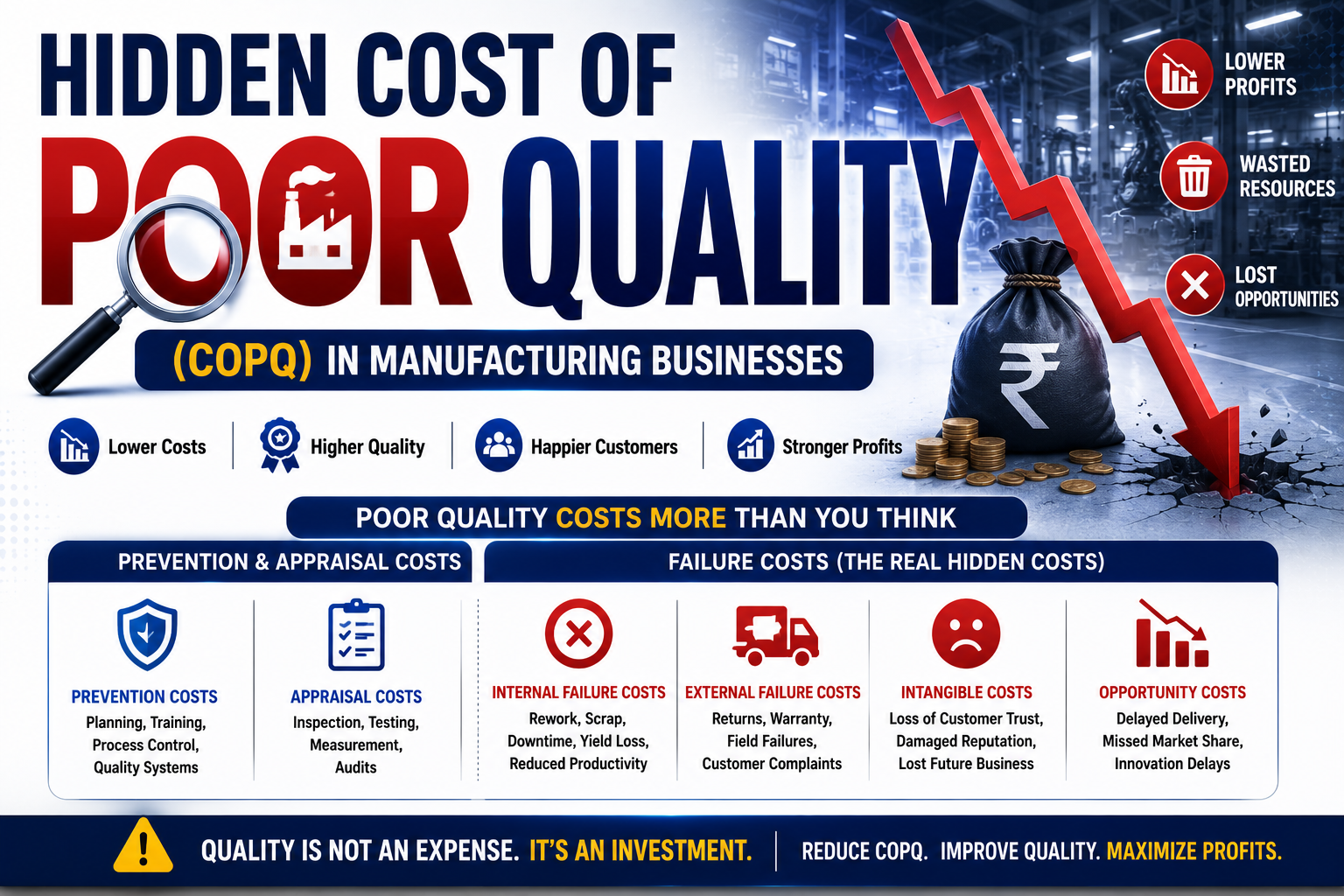
In today's competitive manufacturing landscape, ensuring high-quality products is not just a matter of pride but a necessity for survival. The cost of poor quality, often abbreviated as COPQ, can significantly impact your business’s bottom line and reputation. But what exactly does COPQ entail, and how can it affect your manufacturing business in India? Let’s delve deeper into this crucial topic.
What is the Cost of Poor Quality (COPQ)?
The cost of poor quality refers to the total costs associated with providing poor-quality products or services. These costs can arise from various sources, including:
- Rework and repair costs
- Returns and warranty claims
- Lost sales and customers
- Reduced productivity
- Negative impact on brand reputation
In essence, COPQ is a hidden financial burden that can slowly erode your profitability if left unchecked. Understanding and identifying COPQ examples is key to mitigating these costs and enhancing your operational efficiency.
Types of COPQ in Manufacturing
To effectively address the cost of poor quality, it’s essential to categorize the different types of COPQ that can affect your manufacturing business:
1. Internal Failure Costs
These are costs associated with defects that are identified before the product is delivered to the customer. Examples include:
- Scrap materials
- Rework or repair costs
- Downtime due to quality control issues
2. External Failure Costs
These costs occur after the product has been delivered to the customer and can be even more damaging. Examples include:
- Returns and refunds
- Warranty claims
- Loss of future sales due to poor customer satisfaction
3. Appraisal Costs
These are costs incurred to identify defects in products or services. They include:
- Inspection and testing costs
- Quality audits
- Training employees on quality standards
4. Prevention Costs
Investing in prevention can help reduce the overall cost of poor quality. These costs include:
- Quality improvement initiatives
- Supplier quality evaluations
- Employee training programs on quality management
Real-World COPQ Examples in Indian Manufacturing
To better understand the impact of COPQ, let’s look at some real-world examples from Indian manufacturing businesses:
Case Study 1: Automotive Industry
An Indian automotive manufacturer faced significant losses due to high warranty claims caused by defective parts. After analyzing the issue, they discovered that the root cause was inadequate supplier quality control. By implementing a robust quality management system that involved regular audits and supplier training, they reduced warranty claims by 30% within a year, thus significantly lowering their COPQ.
Case Study 2: Textile Industry
A textile manufacturer experienced high levels of rework due to misaligned production processes. The costs associated with rework and scrap were eating into their profits. By investing in employee training and better quality control processes, they improved their production efficiency and reduced quality loss, ultimately saving costs and improving customer satisfaction.
The Consequences of Ignoring COPQ
Ignoring the cost of poor quality can have severe repercussions for manufacturing businesses. Some of the major consequences include:
- Financial Loss: Increased costs in terms of rework, returns, and warranty claims.
- Reputation Damage: Poor quality can lead to negative reviews and loss of customer trust.
- Lower Employee Morale: A culture of poor quality can lead to frustration among employees and lower productivity.
Strategies to Reduce COPQ
To minimize the cost of poor quality, manufacturers can implement several strategies:
1. Invest in Quality Management Systems
Implementing a robust quality management system (QMS) can help identify and eliminate the sources of poor quality. A good QMS allows for continuous monitoring and improvement of processes.
2. Employee Training and Engagement
Regular training sessions can ensure that employees understand the importance of quality and are well-equipped with the skills necessary to maintain high standards.
3. Supplier Quality Management
Establishing strong partnerships with suppliers and conducting regular quality audits can help ensure that the materials used in production meet the required quality standards.
4. Lean Manufacturing Principles
Adopting lean manufacturing principles can help streamline processes, reduce waste, and enhance overall quality.
Frequently Asked Questions (FAQs)
1. What is the primary cause of COPQ in manufacturing?
The primary cause of COPQ in manufacturing often stems from inadequate quality control processes, poor supplier quality, and lack of employee training.
2. How can I calculate COPQ for my business?
COPQ can be calculated by aggregating all costs related to poor quality, including internal failure costs, external failure costs, appraisal costs, and prevention costs.
3. What are the benefits of reducing COPQ?
Reducing COPQ can lead to increased profitability, improved customer satisfaction, enhanced brand reputation, and better employee morale.
4. How often should I review my quality management processes?
It is advisable to review your quality management processes regularly, at least annually, or whenever significant changes occur in production processes or supplier relationships.
Conclusion
The cost of poor quality is a hidden but significant factor in the manufacturing sector that can impact your business in various ways. By understanding its components and implementing effective strategies to reduce COPQ, manufacturers can enhance their operational efficiency and ultimately boost profitability. Taking the time to invest in quality management not only pays off financially but also builds a solid foundation for long-term success.
If you’re ready to take control of the cost of poor quality in your manufacturing business, start by assessing your current quality management practices and identifying areas for improvement. Remember, quality is not just a goal; it’s a continuous journey.
Call to Action: Want to learn more about optimizing your manufacturing processes for quality? Contact us today for a consultation!




Leave a Comment