
 Quality Management



















 IT Service Management



 Project Management



 Agile Management




 Web Development



 Cloud Computing


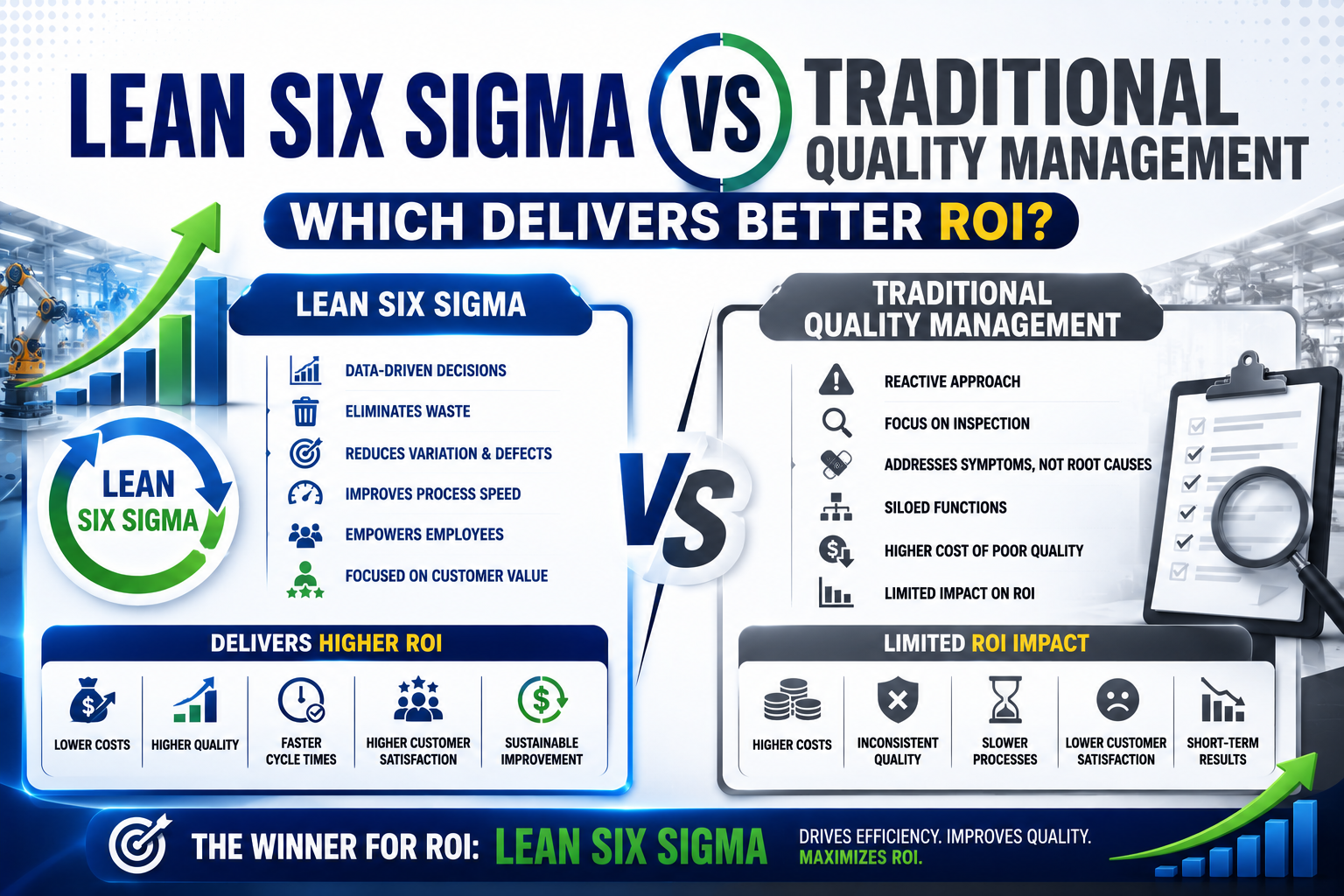
In the constantly evolving landscape of business, maintaining high-quality standards has become more crucial than ever. Organizations in India are increasingly adopting various methodologies to ensure that their processes are not only efficient but also capable of delivering significant returns on investment (ROI). Among these methodologies, Lean Six Sigma and Traditional Quality Management (TQM) are two of the most debated approaches. This article delves into a quality management comparison, focusing on Lean Six Sigma ROI and how it stacks against traditional practices.
Understanding Lean Six Sigma
Lean Six Sigma is a powerful, data-driven methodology that combines the principles of Lean manufacturing and Six Sigma. The primary goal is to eliminate waste and reduce defects in processes, thereby enhancing overall efficiency. By employing statistical tools and techniques, organizations can identify inefficiencies and implement targeted improvements.
Key Principles of Lean Six Sigma
- Define: Clearly outline the problem and project goals.
- Measure: Collect data to understand current performance.
- Analyze: Identify root causes of defects and inefficiencies.
- Improve: Develop and implement solutions to address the identified issues.
- Control: Monitor the new process to sustain improvements.
Traditional Quality Management (TQM)
Traditional Quality Management focuses on enhancing the quality of products and services through continuous improvement practices. TQM is a comprehensive approach that involves all employees in the organization, emphasizing a culture of quality and customer satisfaction.
Core Elements of TQM
- Customer Focus: Understanding and fulfilling customer needs.
- Employee Involvement: Engaging all employees in the quality process.
- Process Approach: Managing processes to enhance efficiency.
- Integrated System: Ensuring all parts of the organization are aligned towards quality objectives.
- Strategic and Systematic Approach: Aligning quality management with organizational strategy.
Quality Management Comparison: Lean Six Sigma vs Traditional Quality Management
When considering which methodology delivers better ROI, it's essential to look at several factors, including implementation costs, training requirements, and the potential for sustainable improvements.
Implementation Costs
Lean Six Sigma often requires a more significant initial investment in training and tools compared to Traditional Quality Management. However, the returns can be substantial. Organizations that effectively implement Lean Six Sigma often see a rapid reduction in waste and defects, leading to cost savings and increased profitability.
On the other hand, TQM is generally less costly to implement because it focuses on cultural changes rather than extensive training in complex methodologies. However, the ROI might take longer to manifest since improvements are gradual and rely on employee engagement and commitment.
Training and Development
Lean Six Sigma programs require specific certifications and training, such as Yellow Belt, Green Belt, or Black Belt, which can be time-consuming and expensive. While this upfront investment is significant, it equips employees with valuable skills that can lead to long-term savings and efficiency gains.
TQM training is less formalized, often relying on workshops and seminars. While this may seem more accessible, it can lead to inconsistencies in application and understanding across the organization.
Sustainability of Improvements
One of the standout features of Lean Six Sigma is its emphasis on data and statistical analysis, which fosters a culture of continuous improvement. The control phase ensures that gains are sustained over time, providing a robust framework for maintaining quality.
TQM, while also focused on continuous improvement, can sometimes lack the rigorous data-driven approach that Lean Six Sigma offers. This can lead to fluctuating quality levels if not managed correctly, impacting ROI negatively in the long run.
Case Studies: Lean Six Sigma and TQM in India
To understand the practical implications of these methodologies, let's look at a few case studies from Indian companies.
Case Study: Lean Six Sigma at Tata Steel
Tata Steel implemented Lean Six Sigma to enhance its operational efficiency. By focusing on waste reduction and process optimization, Tata Steel achieved a 20% increase in productivity and substantial cost savings, showcasing a clear Lean Six Sigma ROI.
Case Study: TQM at Maruti Suzuki
Maruti Suzuki adopted TQM practices early in its operations, fostering a culture of quality that permeated through every level of the organization. This approach has led to consistently high customer satisfaction ratings and a solid market position. However, the ROI was gradual, demonstrating the long-term benefits of a strong quality management culture.
Which Methodology Delivers Better ROI?
Ultimately, the choice between Lean Six Sigma and Traditional Quality Management depends on the specific needs and context of the organization. Lean Six Sigma tends to deliver quicker and more measurable returns, particularly in industries with high competition and low margins. In contrast, TQM may be more suitable for organizations looking to build a strong culture of quality over time.
FAQs
1. What is the primary focus of Lean Six Sigma?
The primary focus of Lean Six Sigma is to eliminate waste and reduce defects in processes to enhance efficiency and quality.
2. How does TQM differ from Lean Six Sigma?
TQM emphasizes a cultural approach to quality involving all employees, while Lean Six Sigma uses data-driven techniques to solve specific problems and improve processes.
3. Can Lean Six Sigma and TQM be used together?
Yes, organizations can integrate both methodologies to leverage the strengths of each, creating a comprehensive approach to quality management.
4. What industries benefit the most from Lean Six Sigma?
Manufacturing, healthcare, and service industries are among those that benefit significantly from Lean Six Sigma due to their focus on efficiency and quality.
Conclusion
In conclusion, the debate between Lean Six Sigma and Traditional Quality Management hinges on various factors, including the organization's goals, industry, and existing culture. For businesses in India looking for rapid improvements and measurable ROI, Lean Six Sigma often proves to be the more effective choice. However, those interested in fostering a long-term quality culture may find TQM to be a better fit.
Are you ready to take your quality management practices to the next level? Whether you choose Lean Six Sigma or TQM, investing in your processes is investing in your future. Explore training options and start your journey towards improved efficiency and greater ROI today!



Leave a Comment