
 Quality Management



















 IT Service Management



 Project Management



 Agile Management




 Web Development



 Cloud Computing


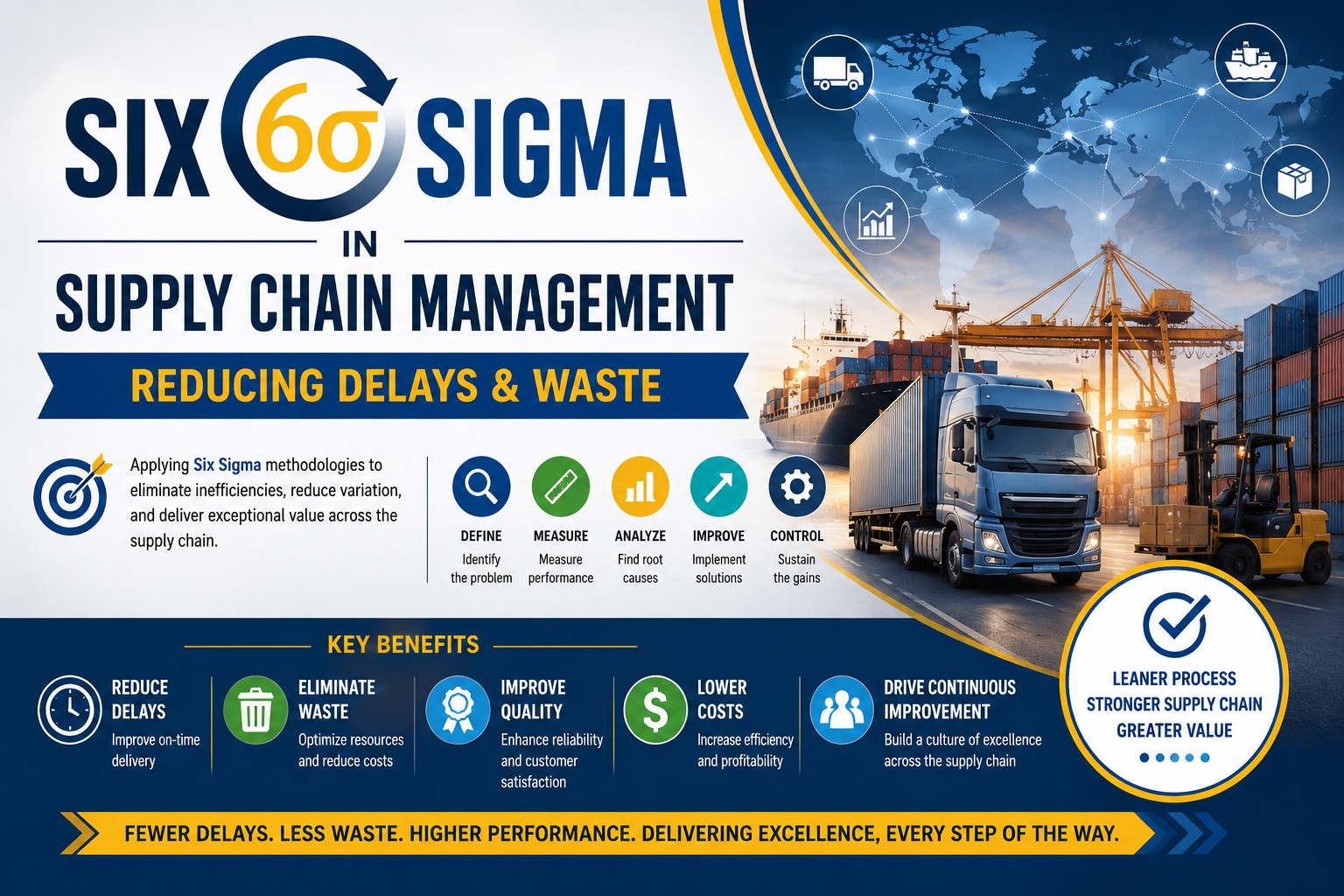
In the fast-paced world of supply chain management, efficiency is paramount. Businesses in India are increasingly turning to methodologies that streamline operations, reduce waste, and enhance customer satisfaction. One such powerful tool is Six Sigma supply chain. By employing Six Sigma principles, organizations can identify inefficiencies, eliminate delays, and create a more responsive supply chain. In this blog, we will explore how Six Sigma integrates with lean logistics to create a robust framework that addresses the challenges faced by businesses today.
Understanding Six Sigma
Six Sigma is a data-driven approach aimed at eliminating defects and ensuring quality in processes. Originating from manufacturing, its principles have now been adapted across various sectors, including supply chain management. The fundamental aim of Six Sigma is to achieve near perfection in process performance, targeting a defect rate of fewer than 3.4 defects per million opportunities.
The Importance of Supply Chain Management
Supply chain management (SCM) involves overseeing the flow of goods and services from raw materials to final product delivery. In India, where the logistics landscape is rapidly evolving, effective SCM is essential for companies aiming to remain competitive. Delays and waste in the supply chain can lead to increased costs, dissatisfied customers, and lost market share. Here, Six Sigma becomes crucial.
How Six Sigma Enhances Supply Chain Efficiency
1. Identifying Bottlenecks
One of the first steps in implementing Six Sigma supply chain strategies is identifying bottlenecks that cause delays. By utilizing tools like DMAIC (Define, Measure, Analyze, Improve, Control), businesses can pinpoint where inefficiencies lie. For instance, if order fulfillment times are longer than expected, Six Sigma analysis can reveal whether it's due to inventory shortages or transportation delays.
2. Reducing Waste through Lean Logistics
Lean logistics focuses on minimizing waste while maximizing value. When integrated with Six Sigma, it creates a powerful synergy that streamlines processes. By analyzing supply chain activities through a lean lens, companies can eliminate non-value-adding activities. This not only speeds up the process but also reduces costs associated with excess inventory, transportation, and storage.
3. Enhancing Quality Control
Quality control is a cornerstone of Six Sigma. In the context of supply chain management, maintaining quality throughout the supply chain is crucial. By implementing Six Sigma methodologies, businesses can establish standardized processes that ensure consistent quality from suppliers to the end customer. This reduces the risk of returns and enhances customer satisfaction.
4. Data-Driven Decision Making
Data is at the heart of Six Sigma. By collecting and analyzing data, companies can make informed decisions that enhance supply chain performance. Six Sigma tools, such as process mapping and statistical analysis, allow organizations to understand trends and patterns in their supply chain, empowering them to make strategic decisions that drive efficiency.
5. Continuous Improvement Culture
Six Sigma fosters a culture of continuous improvement. By encouraging employees at all levels to identify areas for enhancement, businesses can maintain a proactive approach to supply chain management. This culture not only motivates employees but also leads to innovative solutions that can significantly reduce delays and waste.
Real-World Applications of Six Sigma in Indian Supply Chains
Several Indian companies are leading the way in implementing Six Sigma principles within their supply chains. For instance, manufacturing giants and e-commerce platforms are utilizing Six Sigma to refine their logistics processes, reduce delivery times, and enhance customer satisfaction.
Challenges in Implementing Six Sigma in Supply Chains
While the benefits of Six Sigma in supply chain management are clear, organizations may face challenges during implementation. Resistance to change, lack of training, and insufficient data can hinder progress. However, with a structured approach and a commitment to fostering a Six Sigma mindset, these challenges can be overcome.
FAQs about Six Sigma in Supply Chain Management
What is Six Sigma in supply chain management?
Six Sigma in supply chain management refers to the application of Six Sigma methodologies to improve efficiency, reduce waste, and enhance quality in the supply chain processes.
How does Six Sigma relate to lean logistics?
Six Sigma and lean logistics both aim to improve efficiency and reduce waste. While Six Sigma focuses on minimizing defects, lean logistics emphasizes eliminating non-value-adding activities. Together, they create a robust framework for optimizing supply chains.
Can any company implement Six Sigma?
Yes, any company can implement Six Sigma, regardless of size or industry. It requires commitment from leadership, proper training, and a willingness to embrace data-driven decision-making.
What tools are used in Six Sigma?
Common tools used in Six Sigma include DMAIC, process mapping, statistical analysis, control charts, and root cause analysis. These tools help organizations identify issues and implement effective solutions.
Conclusion: Embracing Six Sigma for a Competitive Edge
In India’s dynamic market, businesses must adapt to stay competitive. Implementing Six Sigma supply chain practices can lead to significant improvements in efficiency, quality, and customer satisfaction. By integrating Six Sigma with lean logistics, companies not only eliminate delays and waste but also foster a culture of continuous improvement. As organizations embrace these methodologies, they position themselves to thrive in a rapidly evolving marketplace.
Call to Action
Are you ready to transform your supply chain management with Six Sigma? Contact us today to learn how we can help you implement effective strategies that enhance efficiency and drive growth. Don’t let delays and waste hold you back—take the first step towards a streamlined supply chain today!




Leave a Comment