
 Quality Management



















 IT Service Management



 Project Management



 Agile Management




 Web Development



 Cloud Computing


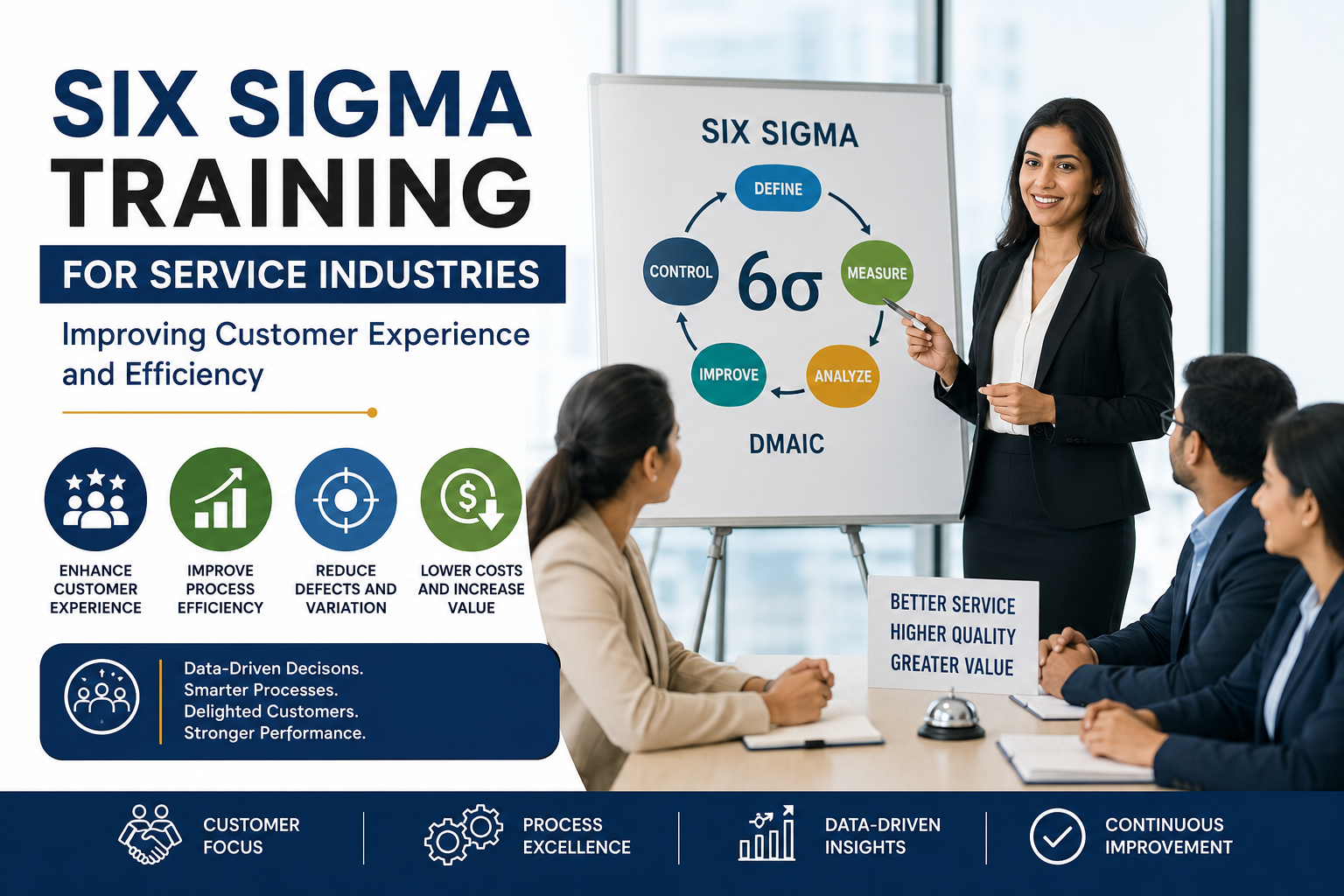
In today’s competitive landscape, the service industry is constantly seeking ways to enhance customer satisfaction and streamline operations. With the growing demand for improved service quality, businesses are turning to methodologies like Lean Six Sigma. This blog explores how Six Sigma training specifically tailored for the service sector can significantly boost customer satisfaction, improve efficiency, and lead to better business process management.
Understanding Six Sigma in the Service Sector
Six Sigma is a data-driven approach that focuses on eliminating defects and improving processes to achieve high levels of quality. Traditionally associated with manufacturing, Six Sigma has found its footing in the service industry as well. The principles of Lean Six Sigma emphasize minimizing waste and maximizing value, making it a perfect fit for service-oriented businesses.
Why Service Industry Training is Crucial
For service sector businesses, training in Six Sigma can lead to a profound transformation in their operational strategies. Here are several reasons why service industry training is essential:
- Enhanced Customer Satisfaction: By identifying and eliminating inefficiencies, businesses can provide faster and more reliable services, leading to improved customer experiences.
- Improved Efficiency: Streamlined processes mean that resources are used more effectively, reducing costs and increasing profitability.
- Data-Driven Decisions: Six Sigma training equips employees with the skills to analyze data, which can inform better decision-making and strategic planning.
- Consistent Service Quality: Implementing Six Sigma methodologies ensures that services maintain high quality, leading to repeat business and customer loyalty.
Key Components of Lean Six Sigma for Service Industries
Lean Six Sigma combines two methodologies: Lean, which focuses on eliminating waste, and Six Sigma, which emphasizes reducing variation. Together, they create a powerful framework for service quality improvement. Here are the key components:
1. Define
The first step involves defining the problem and understanding customer expectations. This phase focuses on identifying what customers value most and how current services measure against those expectations.
2. Measure
In this phase, businesses collect data to measure current performance levels. Key performance indicators (KPIs) are established to assess service quality and customer satisfaction.
3. Analyze
Data analysis is crucial for identifying root causes of inefficiencies and defects. By employing statistical tools, service industries can uncover patterns that affect service delivery.
4. Improve
Once the issues are identified, the next step is to implement changes aimed at process improvements. This may involve redesigning workflows or adopting new technologies to enhance service delivery.
5. Control
To sustain improvements, businesses must establish control mechanisms. This includes ongoing monitoring of processes and continuous training for employees to ensure that standards are maintained.
Benefits of Six Sigma Training for Service Quality Improvement
Investing in Six Sigma training offers numerous benefits that extend beyond just operational efficiency. Here are some of the most significant advantages:
- Increased Customer Loyalty: When customers receive consistent, high-quality service, they are more likely to return and recommend the business to others.
- Cost Reduction: By eliminating waste and streamlining processes, organizations can reduce operational costs significantly.
- Employee Engagement: Training empowers employees to take an active role in improving processes, leading to higher job satisfaction and morale.
- Competitive Advantage: Businesses that implement Six Sigma principles can differentiate themselves in the market by offering superior service quality.
Implementing Six Sigma Training in Your Service Business
To successfully implement Six Sigma training in your service industry, consider the following steps:
1. Assess Current Processes
Begin by evaluating your existing processes to identify areas for improvement. Understanding your current state will help you define your objectives.
2. Choose the Right Training Program
Select a Six Sigma training program that aligns with your business needs. Look for programs that offer practical insights and real-world applications tailored for the service sector.
3. Engage Leadership
Leadership buy-in is crucial for the success of Six Sigma initiatives. Ensure that top management supports training efforts and prioritizes process improvement.
4. Foster a Culture of Continuous Improvement
Encourage employees to embrace a mindset of continuous improvement. This can be achieved through regular training sessions, workshops, and recognition of successful initiatives.
5. Monitor and Adjust
After implementing changes, continuously monitor the results against established KPIs. Be prepared to make adjustments as needed to ensure ongoing improvement.
FAQs
What is Six Sigma training?
Six Sigma training teaches individuals how to use statistical methods and tools to improve processes and reduce defects in service delivery.
How does Six Sigma benefit the service sector?
Six Sigma benefits the service sector by enhancing customer satisfaction, reducing operational costs, and improving overall service quality.
Who should undergo Six Sigma training in a service organization?
Employees at all levels, from management to frontline staff, can benefit from Six Sigma training, as each role plays a part in service delivery.
Is Six Sigma training relevant for small service businesses?
Yes, Six Sigma training is relevant for businesses of all sizes and can help small service businesses improve efficiency and customer satisfaction.
Conclusion
In conclusion, Six Sigma training is a powerful tool for service industries looking to enhance customer satisfaction and improve operational efficiency. By embracing the principles of Lean Six Sigma, businesses can streamline their processes, foster a culture of continuous improvement, and ultimately deliver superior service quality. If you’re ready to take your service business to the next level, consider investing in Six Sigma training today!
Call to Action: Discover how Six Sigma training can transform your service business. Contact us today to learn more about our customized training programs designed specifically for the service sector!




Leave a Comment