
 Quality Management



















 IT Service Management



 Project Management



 Agile Management



 Web Development


 Cloud Computing

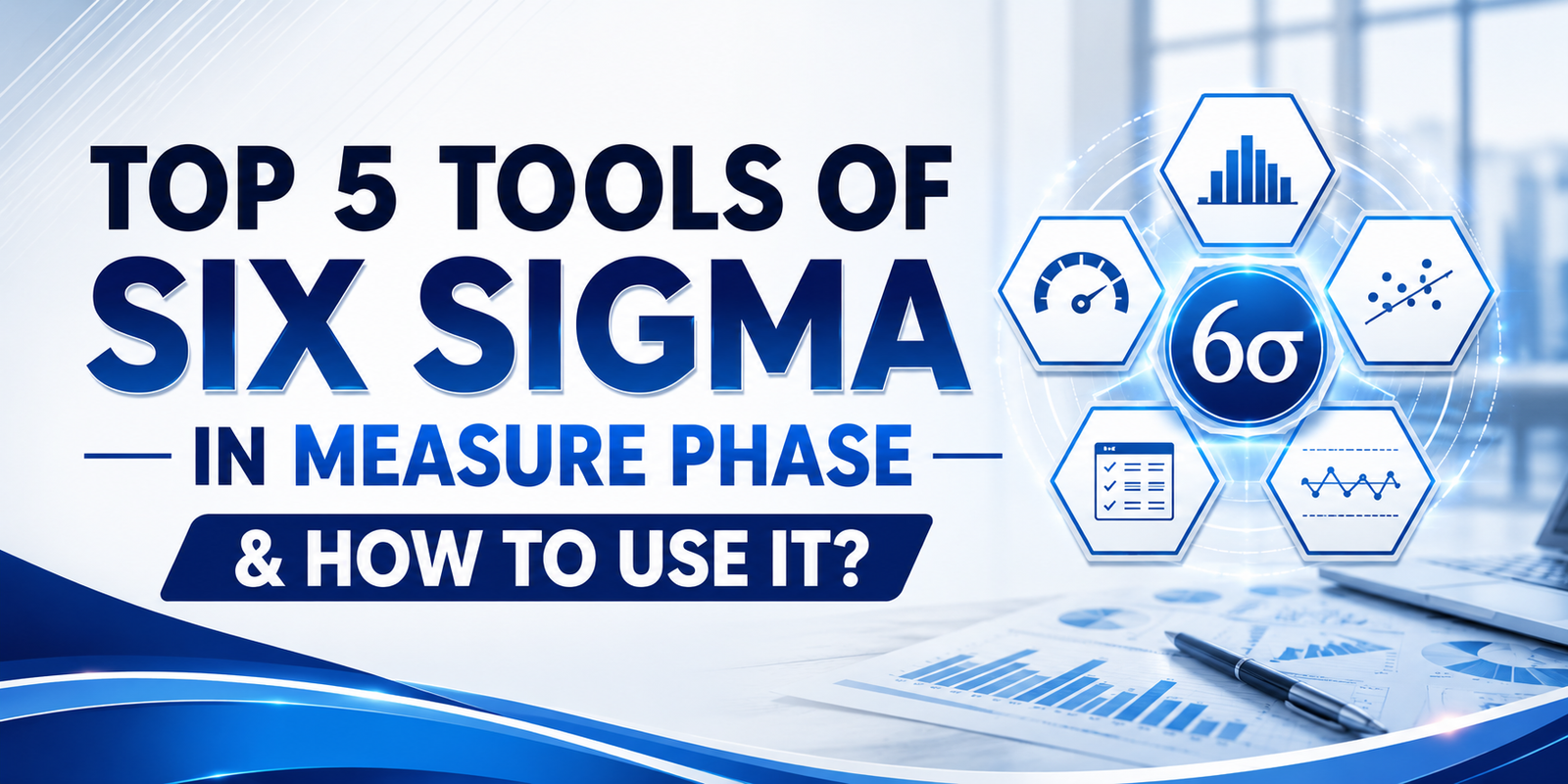
Six Sigma is a powerful methodology for improving processes, reducing defects, and driving quality in organizations. In India, many businesses are adopting Six Sigma principles to enhance operational efficiency and customer satisfaction. The Measure Phase is a crucial part of the Six Sigma process, where teams collect and analyze data to identify the current performance levels of a process. In this blog, we will discuss the Top 5 Tools of Six Sigma in Measure Phase and provide insights on how to effectively use these tools.
Understanding the Measure Phase of Six Sigma
The Measure Phase is the second step in the DMAIC (Define, Measure, Analyze, Improve, Control) framework of Six Sigma. During this phase, teams focus on quantifying the problem identified in the Define Phase. The primary goal is to gather relevant data that will help in assessing the current state of the process. Accurate measurement is vital, as it lays the groundwork for subsequent analysis and improvements.
Top 5 Tools of Six Sigma in Measure Phase
1. Process Mapping
Process Mapping is a visual representation of the workflow within a process. This tool helps teams understand the sequence of activities, inputs, and outputs involved. It aids in identifying bottlenecks and inefficiencies.
- How to Use Process Mapping: Start by defining the scope of the process you want to map. Gather a team of stakeholders, and brainstorm the steps involved. Use flowchart symbols to create a visual diagram that represents the process flow. Identify key metrics at each step to facilitate measurement.
2. Data Collection Plan
A Data Collection Plan is essential for systematic data gathering. It outlines what data will be collected, how, when, and by whom. This tool ensures that the data collected is relevant and sufficient for analysis.
- How to Use a Data Collection Plan: Define the objectives of your data collection. Identify the metrics that will be measured, and select the appropriate tools and techniques for data collection (e.g., surveys, observation, or existing records). Ensure your team understands their roles in the data collection process.
3. Measurement System Analysis (MSA)
Measurement System Analysis is used to assess the accuracy and reliability of the measurement system. It helps ensure that the data collected is trustworthy and valid for decision-making.
- How to Use MSA: Begin by identifying the measurement system and the specific metrics being evaluated. Conduct a Gage R&R (Repeatability and Reproducibility) study to evaluate the variation in measurements. Analyze the results to determine if the measurement system is acceptable or if adjustments are necessary.
4. Descriptive Statistics
Descriptive Statistics summarizes and describes the characteristics of the data collected. It provides insights into the central tendency and variation of the data set.
- How to Use Descriptive Statistics: Once data is collected, calculate key descriptive statistics such as mean, median, mode, range, and standard deviation. Use software tools like Excel or statistical software to facilitate calculations. Present the findings in a clear manner using tables or graphs for better visualization.
5. Control Charts
Control Charts are vital tools for monitoring process stability over time. They help identify variations that may indicate potential problems in the process.
- How to Use Control Charts: Collect data over a specified period to create a baseline. Plot the data points on a control chart to visualize the process performance. Use control limits to determine if the process is in control or if there are any trends or outliers that need addressing.
Implementing the Tools Effectively
Using the Measure Phase Top Tools effectively requires careful planning and collaboration among team members. Here are some tips to ensure successful implementation:
- Engage Stakeholders: Involve team members from different functions to gather diverse insights and ensure comprehensive data collection.
- Train Your Team: Provide training on how to use each tool effectively. Understanding the purpose and methodology behind each tool is crucial for accurate application.
- Continuous Review: Regularly review the data collection process and the tools used. Adjust the approach as necessary to improve accuracy and efficiency.
FAQs
What is the importance of the Measure Phase in Six Sigma?
The Measure Phase is critical in Six Sigma as it establishes a baseline for current performance. It helps teams identify gaps between actual and desired performance, which is essential for effective analysis and improvement in subsequent phases.
How do I know which tool to use during the Measure Phase?
The choice of tool depends on the specific goals of the Measure Phase. For example, use Process Mapping for visualizing workflows, while Control Charts are ideal for monitoring process stability. Assess the data requirements and the nature of the process to make an informed decision.
Can I use these tools in industries outside manufacturing?
Absolutely! While Six Sigma originated in manufacturing, its principles and tools are applicable in various sectors, including service industries, healthcare, finance, and more. The focus is on process improvement, which is relevant across all domains.
Conclusion
Mastering the Top 5 Tools of Six Sigma in Measure Phase is essential for organizations aiming to improve their processes and achieve operational excellence. By effectively using these tools, teams can gather valuable data, identify areas for improvement, and set the stage for successful analysis and enhancements. If you're looking to implement Six Sigma in your organization, consider seeking expert guidance to navigate the process smoothly.
Ready to take your process improvement initiatives to the next level? Contact us today for expert Six Sigma training and consulting services!





Leave a Comment